
Taxila has been giving up its secrets for over a century, and archaeologists still haven’t finished cataloguing them. Among the region’s recognized archaeological zones sits a modest site that rarely makes the highlight reel: Pippala Stupa and Monastery. It doesn’t draw the crowds that Jaulian or Dharmarajika do, but for anyone curious about how monastic life actually worked in ancient Gandhara, Pippala offers something rarer than grandeur — intact detail.
What Is Pippala Stupa?
Pippala Stupa and Monastery dates to the first century CE, within the early Kushan period, when Buddhist monastic architecture across the Taxila valley was expanding rapidly. The site sits within a five-minute walk of both Jaulian and Mohra Moradu, part of a tight cluster of religious complexes built on the hills east of the old city.
What sets Pippala apart is preservation at the wall level. Its rubble-and-mud construction, raised on a stone base roughly 50 centimetres high, still stands in the monastery courtyard largely as it was built. That’s unusual — most Gandhara-era walls have eroded to their foundations. One of Pippala’s cells also holds a plaster stupa in near-original condition, close in quality to the celebrated example at Mohra Moradu.
Pippala carries the official UNESCO designation “Pippala stupa and monastery,” listed under site number 139-014 within the wider Taxila World Heritage inscription granted in 1980. That inscription covers an archaeological landscape shaped by Persian, Greek, and Central Asian influence between the 5th century BCE and the 2nd century CE, a span during which Taxila operated as one of the ancient world’s genuine centres of Buddhist learning.
Why Pippala Stupa Matters Today
Sites like Pippala matter precisely because they’re unglamorous. Researchers studying Gandhara construction methods rely on this kind of intact detail — wall thickness, base masonry, plaster technique — to understand how larger, more famous monasteries were originally built. Heritage tourism benefits too: visitors who’ve already toured Jaulian find Pippala a natural next stop, adding depth to a single-day itinerary without demanding a separate trip.
For historians, students of Gandhara art, and travellers genuinely interested in early Buddhist monastic life, Pippala rewards patience over spectacle — a quieter counterpoint to the region’s bigger names, and part of why the Taxila valley still draws scholars from Japan, South Korea, and Sri Lanka alongside domestic visitors. Many first encounter the corridor through Jaulian Monastery, then work outward to quieter sites like Pippala.
Lakeshore City’s Strategic Location
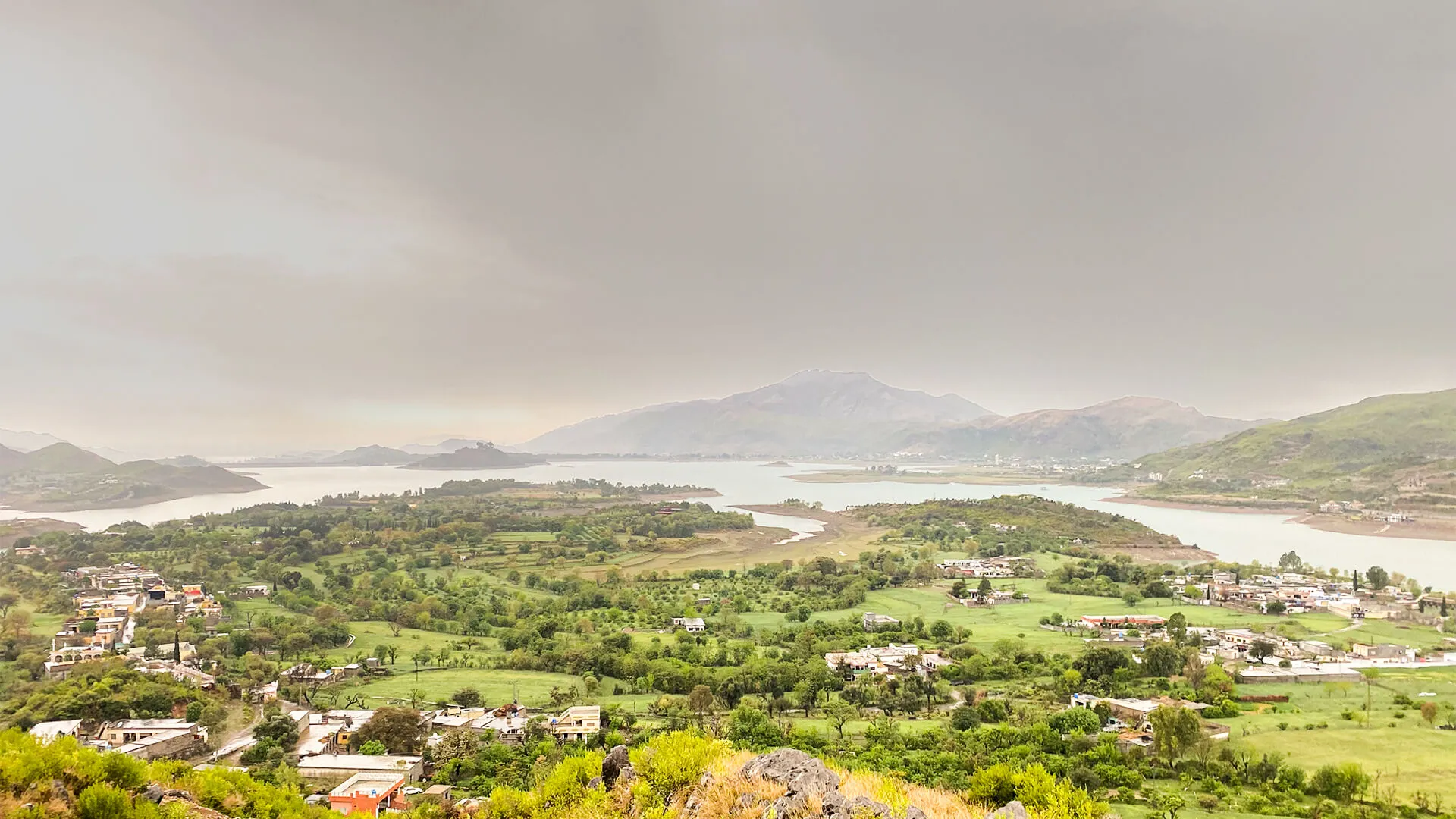
Lakeshore City sits within comfortable reach of this heritage corridor, alongside Khanpur Dam and the Margalla Hills. Residents and visitors can spend a morning walking through Pippala, Jaulian, and Mohra Moradu, then return for an afternoon by the reservoir — a combination of history and recreation that few residential locations near Islamabad can offer. For families, weekend travellers, and heritage-minded buyers, that proximity adds genuine texture to everyday life.
The same logic behind the ancient planning of Sirkap — deliberate structure over organic sprawl — carries into how Lakeshore City’s own master plan takes shape today.
Why This Location Adds Long-Term Value
Corridors close to internationally recognized heritage sites tend to see steadier tourism growth and infrastructure investment over time, a pattern visible around UNESCO destinations worldwide. That doesn’t guarantee appreciation — no location does — but it supports a stronger long-term case than a residential plot disconnected from any cultural draw. Buyers evaluating the corridor should treat this as one factor among several, not a promise.
Conclusion
Pippala Stupa isn’t the site that ends up on postcards, and that’s exactly its appeal. It offers a direct look at how Gandhara’s builders actually worked, standing quietly within a short walk of Taxila’s better-known ruins. Living or investing near this corridor means living near a landscape scholars are still learning from — proximity that doesn’t fade with a marketing cycle.
If the history of this region has you curious about what else the corridor offers, explore current payment plan options, browse Lakeshore Club lifestyle amenities, or register your interest to learn more. You can also complete a booking form directly.