
Pakistan holds some of the ancient world’s most remarkable stories. Most of them are carved into stone, buried beneath centuries of soil, or standing quietly on hillsides that few travellers think to visit. Jaulian Monastery, perched above the plains of Taxila, is one such story — and it has been drawing historians, archaeologists, and curious visitors from across the world for good reason.
Cultural tourism in Pakistan is shifting. International arrivals are climbing. Domestic tourism is booming. And heritage destinations like Taxila are starting to attract the kind of attention that reshapes local real estate markets and long-term investment decisions. For anyone considering property near Islamabad — particularly around Lakeshore residency — understanding what surrounds the project matters as much as the project itself.
What Is Jaulian Monastery?
Jaulian is a Buddhist monastery complex located in Taxila, approximately 35 kilometres northwest of Islamabad. Built during the Kushan period — likely between the 2nd and 5th centuries CE — it served as both a centre of religious practice and a school for Buddhist scholars. The name is believed to derive from a Pali term meaning ‘place of wandering monks.’
The site sits on a natural hill overlooking the Taxila valley and consists of two main courts: one housing a stupa court surrounded by votive stupas, and a residential quadrangle where monks once lived and studied. What makes Jaulian particularly striking are its well-preserved stucco sculptures and relief panels — Buddha figures, decorative medallions, and devotional carvings that have survived nearly two thousand years.
Jaulian is part of the broader UNESCO World Heritage Site of Taxila, a designation granted in 1980 that covers sixteen archaeological zones across the region. That status places Taxila alongside some of the most significant heritage destinations on earth.
The Gandhara civilisation, which flourished in this region from roughly 500 BCE to 1000 CE, produced a distinctive artistic tradition that blended Hellenistic, Persian, and Indian influences. Jaulian’s sculptures are considered among the finest surviving examples of Gandhara Buddhist art anywhere in the world.
Why Jaulian Monastery Attracts Visitors from Around the World
For most visitors, Jaulian is not a checkbox on a tour itinerary. It is a genuine encounter with antiquity. Standing in the monastery’s residential quadrangle, looking out over the Taxila plains toward the Margalla Hills, it is easy to understand why monks chose this hillside. The silence, the elevated position, the scale of the ruins — it reads as a place built for contemplation.
Buddhist pilgrims from Japan, South Korea, Sri Lanka, Thailand, and Myanmar make regular visits to Taxila, and Jaulian is typically the centrepiece of their itineraries. The stucco Buddhas still standing in their niches carry a devotional weight that matters deeply to these travellers.
Archaeologists and academic researchers come for different reasons. Jaulian’s excavation history — first carried out by Sir John Marshall of the Archaeological Survey of India in the early twentieth century — left detailed documentation that continues to attract scholarly interest. New studies on Gandhara architecture, art, and monastic organisation regularly cite Jaulian as primary evidence.
Heritage tourists, students of art history, and international travellers interested in the Silk Road and early Buddhism are among the most consistent visitor segments. Combined with proximity to Taxila Museum — which houses Gandhara artefacts from across the region — Taxila’s archaeological sites create a full-day, sometimes multi-day experience.
How Lakeshore City Benefits from Being Close to Historic Taxila
Geography determines more than convenience. It shapes narrative.
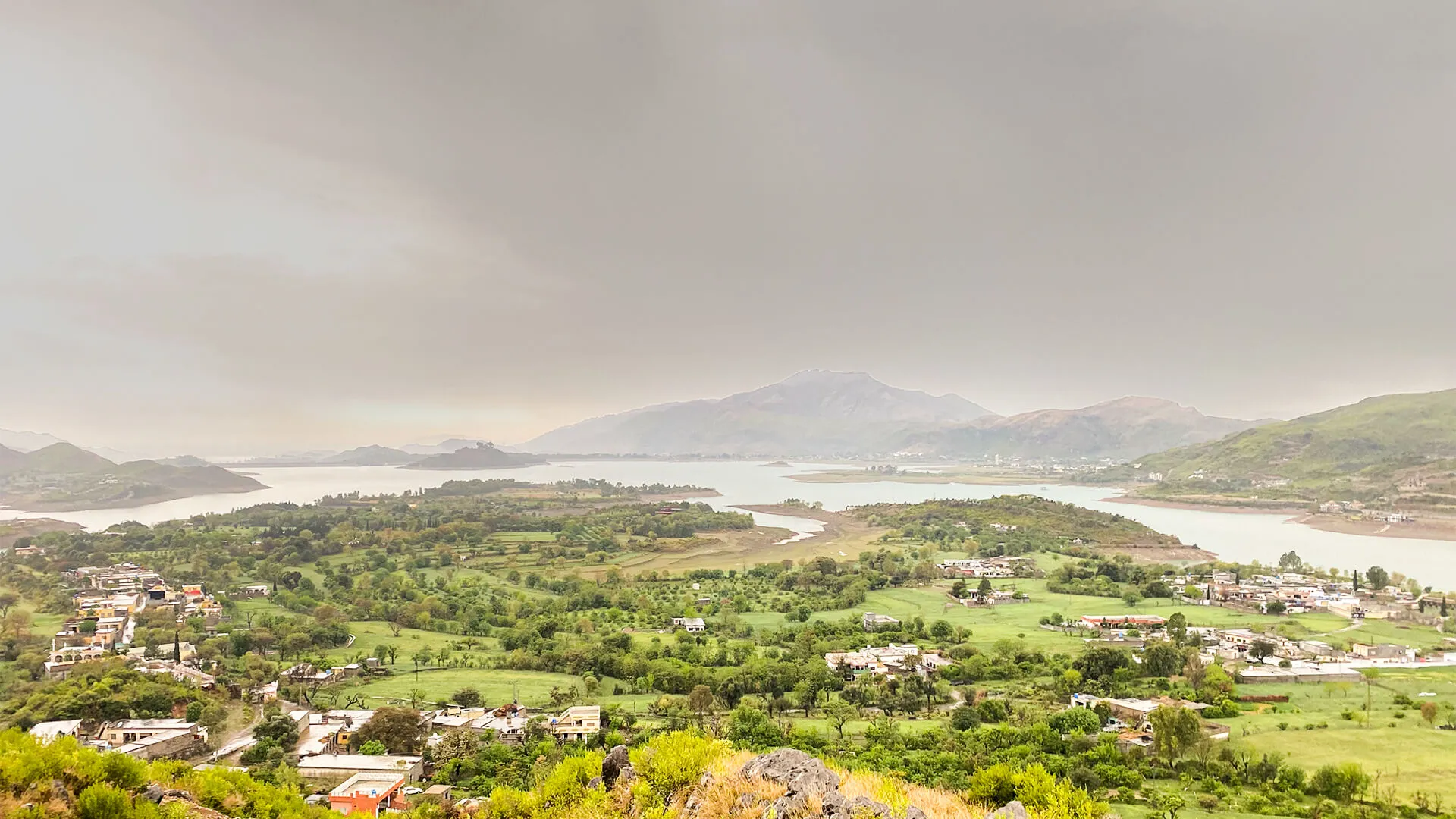
Lakeshore City sits at a location where heritage tourism, natural recreation, and urban accessibility converge. Khanpur Dam is close. The Margalla Hills National Park is accessible. And the archaeological landscape of Taxila — including Jaulian Monastery, Sirkap, Dharmarajika, and the Taxila Museum — lies within a short drive.
This proximity creates something that most residential developments cannot manufacture: a reason for people to visit, stay, and return. A weekend in the Lakeshore area can combine morning hikes, a visit to Jaulian or Sirkap in the afternoon, and an evening by the reservoir. That kind of multi-experience geography is rare near any major Pakistani city.
For families drawn to the Lakeshore Club lifestyle, the cultural dimension adds real texture to what is otherwise a nature-and-recreation story. Children growing up in developments like this have direct access to one of the world’s most significant archaeological landscapes — that matters to a certain kind of buyer.
Accessibility has also improved significantly along this corridor. The Islamabad-to-Taxila-to-Khanpur route is well connected, and continued infrastructure investment in Khyber Pakhtunkhwa and the broader Pothohar plateau region points toward sustained improvement. What took 90 minutes a decade ago is now a comfortable drive.
The Growing Value of Heritage Tourism in Pakistan
Pakistan’s tourism sector registered notable growth in the years following targeted government investment in destination promotion and infrastructure. Taxila consistently ranks among the most visited heritage destinations in the country, with visitor numbers increasing annually as both domestic and international tourism expands.
The economic ripple from heritage tourism extends well beyond entry ticket revenue. Hotels, guesthouses, transport operators, food businesses, and local guides all benefit when visitor numbers climb. In towns adjacent to UNESCO sites globally, real estate values have historically tracked upward as tourism infrastructure matures.
The Gandhara heritage trail — which links Taxila with other significant sites across the region — is still developing as a formalised tourism product. As it does, the hospitality and accommodation demand it generates will look for supply. Projects near this corridor are positioned to benefit from that demand, whether as residential investments or future commercial activity.
Sustainable and eco-conscious tourism is also growing as a preference among younger Pakistani travellers. Heritage sites like Jaulian appeal specifically to this demographic: they offer historical depth without the environmental footprint of large commercial attractions. That alignment between cultural tourism and sustainability strengthens the long-term case for the Taxila-Khanpur corridor.
Why Investors Are Looking Beyond Traditional Real Estate
Islamabad’s real estate market has matured enough that buyers are looking beyond square footage and plot categories. Location premium — the kind derived from natural assets, cultural proximity, and lifestyle infrastructure — has become a measurable factor in purchase decisions.
The pattern is visible in real estate markets globally. Heritage corridors, national parks, waterfronts, and cultural destinations consistently command price premiums in adjacent residential markets. Pakistan is no different, and the dynamics are now clearly visible in areas like Khanpur, Taxila, and the broader Margalla foothills.
For buyers considering investment in this corridor, the payment plan options at Lakeshore City reflect a project that understands its market position. The value proposition here is not purely square footage — it is access to a lifestyle that combines nature, heritage, and community in a way that standard DHA or Bahria offerings cannot replicate.
The commercial potential of the corridor should also not be overlooked. As heritage tourism grows and the Taxila-Khanpur route becomes a more established leisure destination for Rawalpindi-Islamabad residents, demand for hospitality, retail, and services will follow. Early residential investment in this corridor historically precedes that commercial growth.
Experience History While Investing in Tomorrow
There is a particular kind of investment that makes sense on multiple levels simultaneously. Lakeshore City occupies a position where the argument for purchase works as lifestyle choice, as heritage proximity, and as long-term value play. Visitors to Jaulian Monastery who then drive toward Khanpur Dam pass through this corridor. Families looking for a weekend retreat find it here. Investors searching for a differentiated asset in the Islamabad residential market encounter it in discovering what Lakeshore City offers near ancient Buddhist sites.
Jaulian Monastery has stood on its hilltop for roughly two thousand years. The civilisation that built it valued learning, contemplation, and the careful stewardship of a remarkable landscape. The communities that grow around that landscape today benefit from inherited significance — the kind of cultural weight that no amount of marketing can manufacture.
That is the real argument for proximity to Taxila. Not nostalgia, but the sustained human interest in remarkable places — and the downstream value that interest creates over time.
If you would like to understand how Lakeshore City fits your investment or lifestyle goals, register your interest here or submit a booking enquiry and a member of the project team will be in touch. Heritage does not depreciate. Neither does a well-chosen location.
FAQs
What is Jaulian Monastery?
Jaulian Monastery is a 2nd–5th century CE Buddhist monastery complex in Taxila, Pakistan. Part of the UNESCO-listed Taxila archaeological site, it is notable for its well-preserved stucco sculptures and residential quadrangle used by Kushan-era monks.
Why is Jaulian Monastery famous?
Jaulian is renowned for its surviving Gandhara Buddhist sculptures — stucco relief panels and Buddha figures that represent a fusion of Hellenistic, Persian, and Indian artistic traditions. It is among the finest examples of Kushan-period Buddhist architecture in the world.
Is Jaulian Monastery a UNESCO World Heritage Site?
Yes. Jaulian is part of the Taxila UNESCO World Heritage Site, inscribed in 1980. The designation covers sixteen archaeological zones in Taxila, making it one of Pakistan’s most significant heritage listings.
How far is Jaulian Monastery from Islamabad?
Jaulian Monastery is approximately 35 kilometres northwest of Islamabad, accessible via the Grand Trunk Road through Taxila. The drive takes roughly 45–60 minutes depending on traffic.
Why should investors consider real estate near Taxila?
Taxila sits within a heritage-tourism corridor that also includes Khanpur Dam and the Margalla Hills. Proximity to UNESCO sites, growing cultural tourism, and improving infrastructure make the corridor a compelling long-term investment location relative to more saturated Islamabad markets.