
What Is Taxila Museum?
Taxila Museum sits about 35 kilometers northwest of Islamabad, in the Rawalpindi district of Punjab. It’s a site museum, meaning it was purpose-built next to the ruins it interprets rather than assembled somewhere convenient. That distinction matters more than it sounds like it should. Walk out the museum’s back door and you’re a few kilometers from Bhir Mound, Sirkap, and Jaulian — the actual ground where most of what’s on display was dug up.
The museum holds one of the most complete collections of Gandharan Buddhist art anywhere in the world. Roughly 7,000 objects are on public display, and the reserve collection runs to about 30,000 more — stone and stucco sculpture, coins spanning several empires, jewelry, pottery, inscriptions, and weapons, most of it dated between the 1st and 7th centuries CE, with some pieces reaching back to the 6th century BCE.
If you’re trying to understand Pakistan’s pre-Islamic past in one stop, this is close to the best single place to do it.
A Brief History of the Museum
The story starts with excavation, not construction. Sir John Marshall, then Director General of the Archaeological Survey of India, began digging at Taxila in 1913, and the work continued in phases until 1934. As artifacts piled up, it became obvious they needed somewhere to live that wasn’t a storage crate in Lahore or Calcutta.
Lord Chelmsford, Viceroy of India, laid the foundation stone in 1918. Construction dragged on for a decade — these things rarely move fast — and the museum finally opened to the public on April 5, 1928, with Sir Muhammad Habibullah, then Minister for Education, presiding over the ceremony. M.N. Dutta Gupta served as the first curator.
Marshall had originally planned something larger. He didn’t get to see the full vision realized before his retirement from the Archaeological Survey that same year. What did get built has held up well: a central hall flanked by galleries, designed around natural light and a logical walk-through of the collection rather than a maze of rooms.
After independence, Pakistani archaeologists picked up where the British excavations left off, and fieldwork around Taxila has continued, in one form or another, right up to the present.
What Visitors Can See: The Collection in Detail
The collection is organized so you move roughly chronologically and thematically as you walk through. Here’s what makes up the bulk of it.
Stone Sculpture
The centerpiece gallery houses stone carvings from the 1st to 3rd centuries CE, including figures of Gautama Buddha alongside Greek-influenced deities, Maitreya, and Padmapani. This is the most photographed section, and for good reason — the Hellenistic influence on the Buddha’s face and drapery is something you don’t expect to see in South Asia until you’ve seen it.
Stucco and Terracotta Work
Dating from the 1st to 5th centuries CE, these pieces include a striking depiction of the Mahaparinirvana (the Buddha’s death scene), along with figures of lay worshippers and donors. Stucco was cheaper and faster to work than stone, which is partly why so much survives — it let sculptors produce devotional images at scale for monasteries across the valley.
Coins
The numismatic collection is one of the museum’s quiet strengths. It spans Mauryan, Indo-Greek, Scythian, Parthian, Kushan, and Hephthalite issues — a coin sequence that essentially tracks every major power that controlled or influenced this stretch of the Silk Road between the 6th century BCE and the 5th century CE.
Jewelry, Pottery, and Metalware
Gold and silver ornaments, household crockery, and metal tools and utensils round out the picture of daily life rather than just religious art.
Inscriptions
Texts in Kharoshthi, Brahmi, and Aramaic scripts, some referencing the Mauryan emperor Ashoka, give epigraphists material that connects Taxila to the wider political history of the subcontinent.
The Sun God Images
A small but distinctive set of sculptures depicts a solar deity — a human figure with a sunburst halo, riding a chariot drawn by four horses. It’s a motif shared across Greek, Indo-European, and Gandharan traditions, and it’s one of the clearest visual signs of how many cultural currents passed through this valley.
| Collection Category | Approximate Date Range | Notable Highlights |
|---|---|---|
| Stone sculpture | 1st–3rd century CE | Buddha figures, Maitreya, Padmapani |
| Stucco and terracotta | 1st–5th century CE | Mahaparinirvana scene, donor figures |
| Coins | 6th c. BCE–5th c. CE | Indo-Greek, Kushan, Hephthalite issues |
| Jewelry | 1st–3rd century CE | Gold and silver pendants, rings |
| Inscriptions | Various | Kharoshthi, Brahmi, Aramaic scripts |
| Pottery and metalware | 6th c. BCE–5th c. CE | Jars, utensils, cooking vessels |
Gandhara Civilization and Why It Matters
Gandhara wasn’t a single kingdom so much as a region and an artistic tradition that outlasted any one ruling power. It sat at a genuine crossroads — Persian, Greek, Central Asian, and South Asian influence all passed through, and you can see the fingerprints of each in the art.
The region was part of the Achaemenid Persian Empire before Alexander the Great’s campaigns reached it in 327 BCE. After Alexander, the Mauryan Empire under Chandragupta Maurya absorbed it, and Chandragupta’s grandson Ashoka introduced Buddhism here in a serious, state-sponsored way — a decision that eventually pushed Buddhist art and teaching outward into Central Asia and China.
What makes Gandharan art distinctive, and the reason art historians outside Pakistan care about Taxila at all, is that this is where the Buddha was first shown in human form. Earlier Buddhist art avoided depicting him directly, using symbols instead — an empty throne, a footprint, a wheel. Gandharan sculptors, working under strong Hellenistic influence left over from Greek rule in the region, started carving the Buddha with wavy hair, draped robes that look almost Roman, and a calm, classical facial expression. That stylistic choice spread across Asia and shaped how the Buddha has been represented ever since.
UNESCO Status and the Wider Taxila Site
Taxila was added to the UNESCO World Heritage List in 1980, and the designation covers far more than the museum building. It’s a serial site: 18 separate locations across the Taxila valley, ten in Punjab and eight in Khyber Pakhtunkhwa, protected jointly by the two provincial archaeology departments under Pakistan’s 18th Constitutional Amendment.
UNESCO’s own description frames Taxila as a record of urban development on the Indus, shaped in turn by Persian, Greek, and Central Asian influence, and functioning as a major Buddhist center of learning from the 5th century BCE through the 2nd century CE. Sir Alexander Cunningham first identified the ruins in the mid-19th century, and his work is what eventually led to the World Heritage listing more than a century later.
The most significant individual sites within the listed area include:
- Bhir Mound — the earliest of Taxila’s city sites, rebuilt at least three times before the Bactrian Greeks founded the newer capital at Sirkap.
- Sirkap — a fortified Greek-period city with a grid street plan, located a short distance from Bhir Mound.
- Sirsukh — the youngest of the three city sites, associated with the Kushan period.
- Dharmarajika Stupa and Monastery — a major Buddhist complex spanning roughly the 3rd century BCE to the 7th century CE, divided into a stupa area and a separate monastic area.
- Jaulian Monastery — a hillside monastic complex about 7 km from the museum, home to one of the world’s earliest universities before its destruction in the 5th century CE.
- Mohra Moradu — a smaller, well-preserved stupa and monastery site, often praised for its tranquil setting.
UNESCO’s own assessment notes that conservation funding from the Punjab and Khyber Pakhtunkhwa governments has historically been insufficient relative to what the site needs — pressure from vegetation, nearby industry, and stone quarrying are all flagged as ongoing concerns. That funding gap is exactly what recent provincial investment plans are now trying to close, which we’ll get to shortly.
Planning Your Visit
Location
The museum sits on Taxila’s main road, close to the Bhir Mound site, roughly 35–40 minutes by car from Islamabad via the Srinagar Highway or the Grand Trunk Road. Reaching it by motorway is also straightforward via the M-1.
Hours
Summer hours generally run from 8:30 AM to 5:00 PM; winter hours shift to roughly 9:00 AM to 4:00 PM. The museum is typically closed on the first Monday of each month and on major Islamic holidays. Because holiday schedules shift each year, it’s worth confirming before you travel.
Entry Fees
Tickets are inexpensive for local visitors — around Rs. 20 for adults and Rs. 10 for children — with a separate, higher rate of roughly Rs. 500 for foreign tourists. Children under 12 are often admitted free. Prices are set by the Punjab archaeology department and can change, so treat these as a guide rather than a guarantee.
Time Needed
Most visitors spend one to two hours inside the museum itself. If you’re planning to combine it with nearby ruins — which most people should — budget half a day at minimum.
Photography
Personal photography is generally allowed, though flash use may be restricted in certain galleries to protect the artifacts. Check with staff on arrival rather than assuming.
Best Time to Visit
October through March brings cooler, more comfortable weather for walking between the museum and outdoor archaeological sites. Mornings tend to be quieter than afternoons, particularly on weekends.
Accessibility
Parking is available near the entrance, and the museum is on level ground, though the outdoor ruins sites (especially Jaulian, which sits on a hill) involve uneven terrain and some walking.
| Detail | Information |
|---|---|
| Location | Taxila, Rawalpindi District, Punjab |
| Distance from Islamabad | Approx. 35–40 km / 35–45 minutes by road |
| Summer hours | 8:30 AM – 5:00 PM |
| Winter hours | 9:00 AM – 4:00 PM |
| Closed | First Monday of each month, Islamic holidays |
| Local adult entry | Approx. Rs. 20 |
| Foreign tourist entry | Approx. Rs. 500 |
| Displayed artifacts | Approx. 7,000 |
| Reserve collection | Approx. 30,000 |
| UNESCO listing | 1980 |
Nearby Attractions Worth Combining With Your Trip
A museum visit on its own only tells half the story. The ruins it interprets are scattered within a few kilometers, and most travelers find the trip more rewarding when they see both.
- Dharmarajika Stupa and Monastery — a short drive from the museum, this site covers the longest span of Buddhist activity at Taxila.
- Jaulian Monastery — about 7 km away, set on a hilltop with meditation cells still visible.
- Bhir Mound — within walking distance, the oldest city layer at Taxila.
- Sirkap — the Greek-influenced fortified city, worth seeing for its grid layout alone.
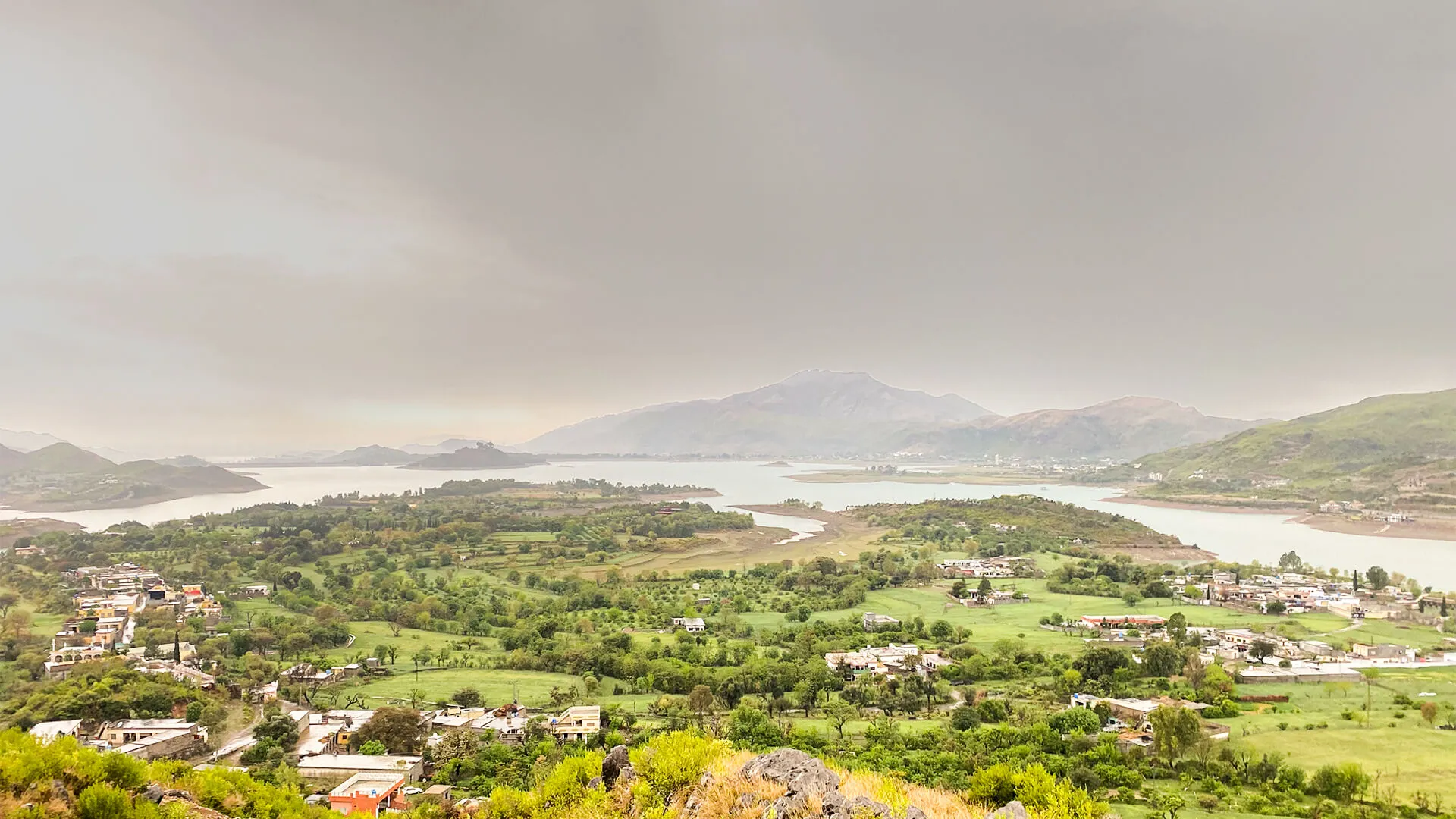
- Khanpur Dam — roughly 30–40 km away, a reservoir on the Haro River that’s become one of the region’s most visited recreational spots, with boating, jet skiing, and hiking. Many travelers pair a heritage-focused morning at Taxila with an afternoon at Khanpur, and the rebirth of heritage tourism near Khanpur Dam has become its own draw as restoration work connects the two areas more visibly.
- Bhamala Buddhist Complex — near Khanpur, notable for a rare cruciform-shaped stupa.
For a deeper look at what’s inside the museum’s individual galleries — including the full artifact-by-artifact breakdown — see our complete Taxila Museum guide.
How Museums and Heritage Sites Drive Tourism
It’s worth stepping back and asking why a single museum matters to a regional economy. The honest answer is that museums rarely drive tourism on their own — they anchor it. A well-curated, well-maintained museum gives travelers a reason to extend a day trip into an overnight stay, gives tour operators a structured itinerary to sell, and gives international visitors something specific to search for before they book a flight.
UNESCO World Heritage status amplifies that effect. It’s a recognizable label that shows up in guidebooks, travel articles, and search results, and it tends to draw a different category of visitor — slower-paced, research-minded, often willing to spend more on guided experiences and accommodation than a typical day-tripper.
Taxila benefits from both effects: the museum itself, and the broader UNESCO designation covering 18 sites in the valley. Globally, the pattern is consistent — heritage sites with active conservation and visitor-facility investment see tourist numbers grow faster than sites left to decline, because word of mouth and travel content respond to visible improvement, not just historical importance.
The Economic Ripple Effect on the Region
Heritage tourism doesn’t stay contained to ticket sales. Once a site draws steady visitor traffic, the surrounding economy adjusts to serve it.
- Hospitality — hotels, guesthouses, and homestays fill a gap for visitors who want to stay overnight rather than rush back to Islamabad.
- Food and retail — restaurants, tea stalls, and souvenir shops cluster around popular routes between sites.
- Transport — taxi and rickshaw operators, and increasingly ride-hailing services, see steadier demand along the Islamabad–Taxila corridor.
- Guiding and education — licensed guides, school trip coordinators, and university research groups all generate recurring, non-seasonal income tied to the site.
- Employment — conservation projects are labor-intensive; skilled stonework, site security, visitor management, and administration all create local jobs that didn’t exist before the investment arrived.
None of this is unique to Taxila. It’s the standard pattern wherever heritage tourism is managed well, from Petra to Angkor Wat. What makes Taxila worth watching right now is timing — the investment cycle driving this pattern is actively underway, not a hopeful projection on a planning document somewhere.
Government Investment in Taxila’s Future
This is where Taxila’s story has shifted meaningfully in the past year. The Punjab government’s tourism strategy for FY2026-27 set a province-wide investment target of Rs. 471 billion, and Taxila’s heritage renovation is named as one of the priority projects within that plan, alongside the North Potohar Eco-Tourism Project and the Walled City of Rawalpindi initiative.
More specifically, the Punjab Department of Archaeology and Museums launched a dedicated Rs. 3.97 billion project in 2026, titled “Preservation, Restoration, Improvement, Management and Upgradation of World Heritage Site, Taxila.” It’s a three-year initiative running through 2028, and its scope is genuinely substantial:
- Conservation work across major sites including Mankiala Stupa, Giri Fort, Sirkap, Dharmarajika Stupa, Bhir Mound, and Mohra Moradu, integrated into a single regional tourism network rather than treated as isolated stops.
- Two new exhibition galleries at Taxila Museum itself, displaying around 40 additional showcases of artifacts that have been sitting in storage — including rare Buddha statues recovered in excavations over the past two decades.
- Fourteen thematic parks planned across the Taxila valley, featuring replicas of Gandhara-era art and sculpture to create open-air cultural space beyond the museum walls.
- Special conservation measures targeting Taxila’s black stone artwork, which deteriorates faster than other stone types without intervention.
- A planned art and craft bazaar along Museum Road, between the museum and Mohra Moradu, intended to support traditional stone-carving artisans.
Separately, provincial officials have floated a longer-term plan — tied to a broader Rs. 60 billion heritage restoration commitment across Punjab — to formally designate Taxila as an International Heritage City, alongside expanded museum space, improved access roads, and a digital tourism platform connecting visitors to roughly 160 heritage locations across the province. Senior Punjab officials have also referenced in-principle approval for restoration work across 170 tourism sites and routes provincewide, with Taxila repeatedly named as a flagship project within that effort.
None of these figures should be treated as locked-in guarantees. Public infrastructure timelines shift, and documentation for some of these projects was still being finalized as of late 2025. What’s clear is the direction: provincial authorities are treating Taxila as a priority asset, not a forgotten ruin, and the funding commitments on the table are large enough to materially change the visitor experience over the next two to three years if delivered on schedule.
Why Tourism Growth Changes Real Estate Demand
This is the part of the story that connects heritage preservation to property markets, and it’s worth explaining plainly rather than asserting it.
When a region’s visitor numbers rise steadily — and stay elevated rather than spiking for a season and fading — several things tend to happen in sequence. First, hospitality businesses move in to capture overnight stays, which they can only do if land and construction costs make sense. Second, retail and food service follow the hospitality footprint, because staff and guests both need somewhere to eat and shop. Third, as the area becomes more economically active, infrastructure spending — roads, utilities, public transport links — tends to improve, partly through government investment and partly because private developers lobby for it once they have capital at stake.
The combined effect is that land near an improving heritage or tourism corridor often sees rising commercial interest before residential demand catches up. Investors who understand this sequence tend to look at infrastructure announcements and conservation budgets as leading indicators, not just cultural news.
| Important Note on Investment Outcomes This pattern holds broadly across heritage-adjacent real estate markets worldwide, though pace and scale vary by location, regulatory environment, and how well local infrastructure keeps up with visitor growth.Past trends in tourism-driven property appreciation do not guarantee future results in any specific location.Outcomes depend on execution, broader economic conditions, and how individual projects are managed. |
Lakeshore City and the Taxila-Khanpur Corridor
Lakeshore City sits within the same regional corridor that’s benefiting from this tourism momentum — close enough to Khanpur Dam to share in its established visitor base, and within reasonable driving distance of the Taxila heritage zone that’s now seeing serious provincial investment.
A few things make this location relevant to the broader trend described above, without claiming any direct causal guarantee:
- Strategic positioning — the development sits near Khanpur Dam, an already-established recreational destination, while remaining within a manageable drive of Islamabad and the Taxila heritage corridor.
- Modern infrastructure — planned road access, utilities, and amenities are being built with the area’s growing visitor and resident base in mind, rather than retrofitted later.
- A genuine tourism ecosystem — boating, hiking, and heritage day trips already draw steady footfall to the wider area, so Lakeshore City is positioned within an existing ecosystem rather than trying to create demand from nothing.
- Connectivity — improving roads between Islamabad, Taxila, and Khanpur reduce friction for both tourists and future residents, which is part of why infrastructure spending in the region matters to long-term land use.
- Balanced lifestyle — the combination of lakeside and mountain surroundings with proximity to a major heritage zone offers a lifestyle proposition distinct from purely urban developments.
- Long-term outlook — as provincial tourism investment in Taxila plays out over the next several years, areas within the same regional corridor are positioned to benefit from broader infrastructure and visitor growth, though, as with any property investment, returns are not guaranteed and depend on market conditions, project execution, and timing.
Readers should treat real estate appreciation projections as informed expectations rather than promises, and should conduct independent due diligence — including site visits, legal verification of title and approvals, and consultation with independent financial advisors — before making any investment decision.
Expert Insights
Heritage tourism specialists generally agree on a few points relevant to Taxila’s current trajectory:
- Sites with active, visible conservation work tend to outperform static sites in visitor growth, because ongoing investment generates its own media coverage and word-of-mouth interest.
- UNESCO designation alone is not sufficient to drive sustained tourism — visitor facilities, signage, transport access, and guide availability matter just as much as historical significance.
- Religious and cultural tourism segments (in Taxila’s case, Buddhist heritage tourism specifically) tend to bring longer average stays and higher per-visitor spending than general sightseeing traffic, because these visitors often travel specifically for the site rather than passing through.
- Regional tourism corridors — clusters of attractions within an hour or two of each other — generally retain visitors longer and generate more local economic activity than isolated single-site destinations.
Taxila’s positioning fits this pattern closely: a UNESCO-listed core site, an active government restoration budget, and a nearby recreational anchor at Khanpur Dam that gives visitors a reason to extend their stay in the region rather than visit and leave the same day.
Frequently Asked Questions
What is Taxila Museum?
Taxila Museum is a site museum in Taxila, Punjab, built to house artifacts excavated from the surrounding archaeological region. It holds roughly 7,000 displayed objects, primarily Gandharan Buddhist art, alongside a larger reserve collection.
Why is Taxila Museum famous?
It’s famous for housing one of the world’s most complete collections of Gandharan art — sculpture that blends Buddhist subject matter with Hellenistic Greek artistic style, much of it excavated directly from the surrounding valley.
What can visitors see at Taxila Museum?
Visitors can see stone and stucco Buddhist sculpture, ancient coins spanning several empires, gold and silver jewelry, pottery, inscriptions, weapons, and a distinctive collection of Sun God imagery.
Why is Taxila important historically?
Taxila was a major center of learning and Buddhist scholarship from roughly the 5th century BCE to the 2nd century CE, situated at a crossroads of Persian, Greek, Central Asian, and South Asian influence. It’s also where Buddhist art first depicted the Buddha in human form.
Is Taxila Museum a UNESCO World Heritage Site?
The museum itself sits within the broader Taxila archaeological region, which UNESCO listed as a World Heritage Site in 1980, covering 18 sites across Punjab and Khyber Pakhtunkhwa.
How much does it cost to visit Taxila Museum?
Local adult entry is approximately Rs. 20, with reduced rates for children and a separate fee of around Rs. 500 for foreign tourists. Prices can change, so confirm current rates before visiting.
How far is Taxila Museum from Islamabad?
It’s roughly 35–40 kilometers from Islamabad, about a 35–45 minute drive via the Srinagar Highway, Grand Trunk Road, or M-1 motorway.
What is the best time to visit Taxila Museum?
October through March offers the most comfortable weather for combining the museum with outdoor archaeological sites. Mornings tend to be quieter.
Can I combine a Taxila Museum visit with other attractions?
Yes. Bhir Mound, Sirkap, Dharmarajika Stupa, and Jaulian Monastery are all within a short drive, and Khanpur Dam is roughly 30–40 km away, making it possible to combine heritage and recreational tourism in a single trip.
How does tourism growth at heritage sites help real estate investment?
Rising visitor numbers typically draw hospitality, retail, and food service investment first, followed by infrastructure improvements. This combination tends to increase commercial and residential interest in the surrounding area, though outcomes vary by location and are not guaranteed.
Why does tourism increase demand for property near heritage corridors?
As visitor numbers grow, businesses need land to build hotels, restaurants, and shops, which increases commercial land demand. Improved roads and utilities — often funded partly through tourism-driven government investment — also make residential development more viable nearby.
Is Taxila currently undergoing restoration work?
Yes. The Punjab government launched a Rs. 3.97 billion, three-year restoration project in 2026 covering multiple sites, alongside separately announced plans for new museum galleries, thematic parks, and a possible International Heritage City designation.
What is Gandhara civilization?
Gandhara was a historical region and artistic tradition spanning parts of modern Pakistan and Afghanistan, shaped by Persian, Greek, and Buddhist influence, known particularly for producing the first human depictions of the Buddha.
Are there hotels or accommodation near Taxila?
Most visitors stay in Islamabad or Rawalpindi and day-trip to Taxila, though smaller guesthouses exist locally. Accommodation options near Khanpur Dam, roughly 30–40 km away, are also commonly used by travelers combining both destinations.
Is photography allowed inside Taxila Museum?
Personal photography is generally permitted, though flash photography may be restricted in some galleries. It’s best to confirm current rules with staff on arrival.
Conclusion
Taxila Museum has spent nearly a century doing one job well: giving physical, walkable context to a civilization that most people only encounter in textbooks. What’s changed recently isn’t the history — that’s settled — it’s the scale of investment now flowing into protecting and presenting it. Billions of rupees in committed restoration funding, new galleries, thematic parks, and a serious push toward international heritage recognition are turning Taxila from a worthwhile day trip into a genuine regional anchor.
That kind of investment rarely stays contained to one site. It tends to lift the whole surrounding corridor — and the area stretching toward Khanpur Dam, where Lakeshore City is located, sits inside that same broader pattern of growing visitor interest and infrastructure attention. Whether that translates into long-term property value depends on execution, timing, and broader market conditions, but the underlying direction of regional investment is, at minimum, worth watching closely.
| Curious what this growth means for property in the Taxila–Khanpur corridor? Book Your Plot Consultation Today → |