Introduction
Khanpur Dam used to be a weekend detour. Today it is a demand driver. Boating clubs, lakeside cafes, hiking trails, and a growing rotation of resort operators have turned what was once a quiet reservoir into one of the most visited recreational sites within a two-hour radius of Islamabad. That shift matters to anyone evaluating land near the dam, because tourism does not just bring visitors. It brings infrastructure spending, hospitality investment, and a buyer pool willing to pay a premium for proximity.
Lakeshore City sits inside that growth radius. This article breaks down how Khanpur Dam tourism investment is translating into measurable upside for Lakeshore City Pakistan plot holders, what the data on tourism-driven real estate actually supports, and where the realistic opportunity lies for investors deciding whether to act now or wait.
| Tourism does not inflate land value on its own. It compounds the value that infrastructure and location have already started building. Khanpur Dam is now doing both at once. |
Khanpur Dam Tourism Growth Overview
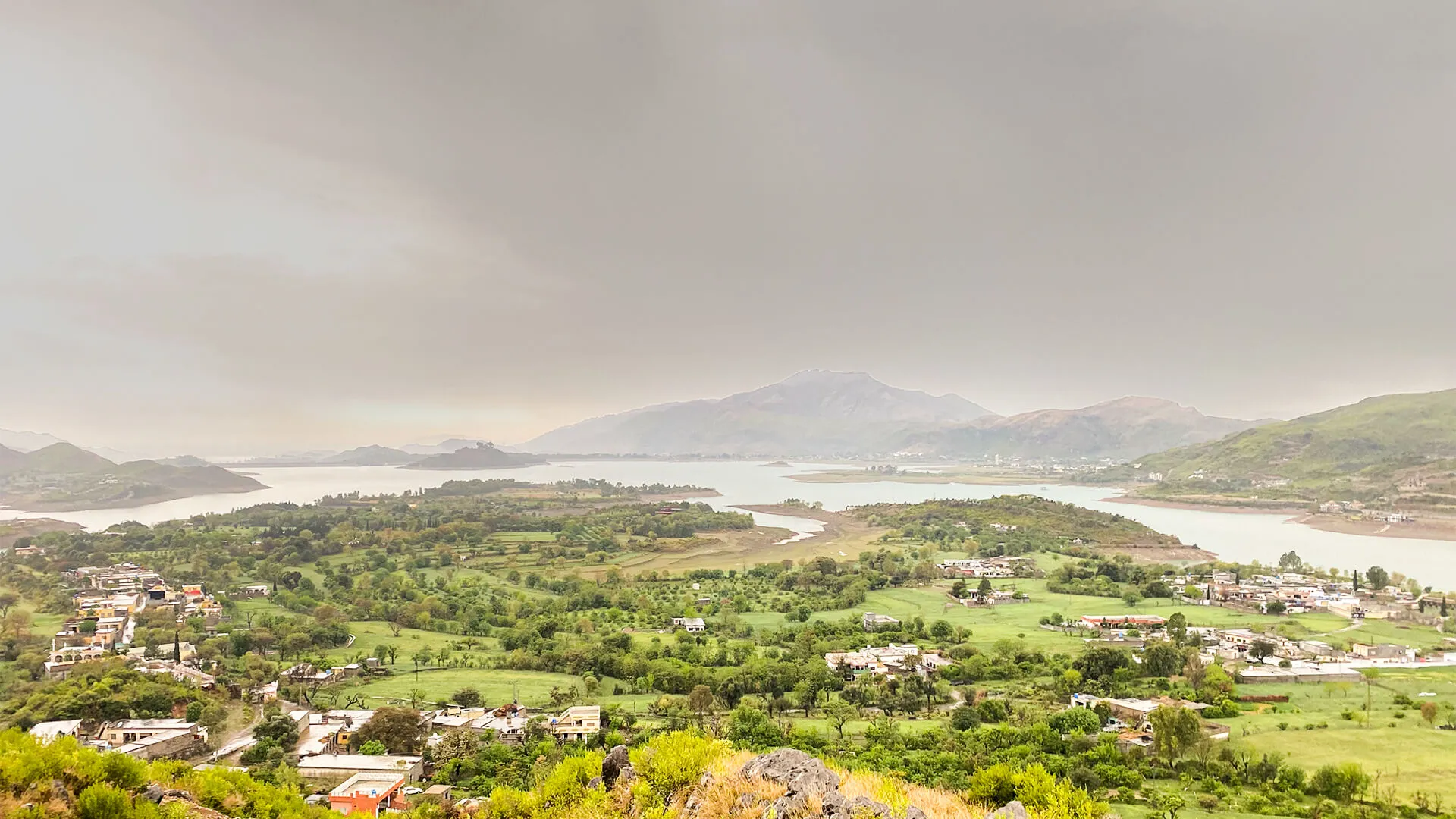
Khanpur Dam was built primarily for water supply and irrigation, but its setting did the rest. Surrounded by the foothills of the Margalla and Kala Chitta ranges, with clear water and a cooler microclimate than Islamabad or Rawalpindi, it became an obvious escape for city residents long before any formal tourism push existed.
What has changed in the last several years is organization. Boating services have expanded and professionalized. Local food and rest-stop businesses have multiplied along the access roads. Provincial tourism departments have run awareness campaigns positioning Khanpur as a flagship recreational site for Khyber Pakhtunkhwa’s tourism corridor, and private operators have added jet-ski rentals, lakeside seating areas, and small guesthouses to capture overnight and weekend traffic.
None of this happened in isolation. It happened because the dam sits less than an hour from Islamabad and Rawalpindi, two cities with a combined population well into the millions and a growing appetite for short, low-cost getaways. Weekend tourism numbers at the site have grown enough that traffic congestion on access roads during peak season is now a regular topic in local reporting, which itself is a signal investors should not ignore: congestion is what happens before infrastructure catches up, not after.
| How has tourism at Khanpur Dam changed in recent years? Khanpur Dam has shifted from an informal day-trip spot to an increasingly organized recreational destination, with expanded boating services, lakeside food and rest businesses, and growing weekend visitor traffic from Islamabad and Rawalpindi. |
How Tourism Directly Impacts Real Estate Prices
The relationship between tourism and land value is well documented across Pakistan’s real estate market, and the mechanism is straightforward. Visitor traffic creates demand for short-stay accommodation, food service, and recreational infrastructure. That demand pushes commercial operators to lease or buy land near the attraction. Once commercial activity establishes itself, residential demand follows, because hospitality and service jobs need nearby housing, and lifestyle buyers want to be close to an area that now has restaurants, shops, and weekend energy instead of empty fields.
This is precisely the pattern that has played out around other dam and lake destinations in Pakistan, and it is reflected in the broader economic growth forecast for the Haripur region, where tourism inflow is already identified as one of the structural drivers behind rising property price trends.
Three effects show up consistently in tourism-adjacent land markets:
- Land scarcity near the attraction itself, since waterfront and near-lake plots are finite by definition.
- Commercial rent appreciation, as cafes, guesthouses, and retail operators compete for visibility near access roads.
- Spillover residential demand, as people who work in or visit the tourism economy look for nearby housing rather than commuting long distances.
Khanpur Dam is now generating all three effects at once, which is a stronger signal than tourism growth alone. A destination that draws visitors but has no commercial buildout around it produces little land value lift. A destination that is actively being built out commercially, the way Khanpur’s access corridor now is, produces compounding lift, because land near it is being repriced for both residential and commercial use simultaneously.
| KEY TAKEAWAYS → Tourism growth at Khanpur Dam is following the same demand sequence seen at other Pakistani lake and dam destinations: commercial buildout first, residential spillover second. → Land scarcity near the water is structural, not cyclical. There is a fixed amount of lakeside frontage and no way to create more of it. → Lakeshore City’s position inside this growth radius means it benefits from both tourism demand and the underlying connectivity gains driving the wider region. |
Why Lakeshore City Benefits Directly from Khanpur Dam Tourism
Proximity is the foundation of this opportunity, but it is not the only factor. Lakeshore City’s positioning works because it combines three things that tourism-driven land plays usually have to choose between: closeness to the attraction, planned infrastructure, and a residential product that goes beyond short-stay use.
Many tourism-adjacent land markets in Pakistan are built almost entirely around guesthouses and seasonal rental units, which makes them vulnerable to off-season demand drops. Lakeshore City is structured differently. It is a master-planned residential and lifestyle development, which means its value is not solely dependent on tourist footfall. Tourism adds a demand layer on top of a primary residential and lakeside-living thesis, rather than being the only thesis.
That distinction matters for risk. A development that has only tourism demand behind it is exposed to seasonality and to shifts in travel patterns. A development that has tourism demand layered onto genuine residential appeal, supported by plot appreciation in Pakistan dynamics that apply to land regardless of tourism cycles, has a more durable value case.
Lakeshore City’s lakeside frontage, gated community structure, and dedicated recreational sections such as the club and residencia give it a dual identity: a place people want to live, and a place people want to visit. Few developments near Khanpur Dam can credibly claim both. That dual identity is what allows Lakeshore City to capture upside from rising tourist numbers without depending on tourism as its only growth engine.
| See how lakeside living is structured inside Lakeshore City. Explore premium lakeside living residences → |
Investor Opportunity Analysis: ROI, Demand, and Future Value
Investors evaluating Lakeshore City against the backdrop of Khanpur Dam tourism growth are really asking three separate questions: how strong is current demand, what does the return profile look like, and how durable is that return likely to be.
Demand Signals
Demand for plots near Khanpur Dam is being driven by overlapping buyer groups rather than a single segment. Local investors from Haripur and Abbottabad see a familiar, accessible asset. Islamabad and Rawalpindi buyers see a weekend-home and rental-income opportunity within driving distance. Overseas Pakistanis see a lakeside development with formal payment structures, which lowers the friction of investing from abroad. That breadth of buyer interest is itself a demand signal, because narrow buyer pools are the ones most exposed to demand shocks.
Return Profile
Pakistan’s general plot appreciation trends, combined with the specific tourism and infrastructure tailwinds around Khanpur Dam, point toward annual appreciation in the broad 15% to 25% range for well-positioned lakeside plots over a multi-year holding period. This figure should be read as a market-level estimate drawn from regional land appreciation patterns, not a guaranteed outcome. Real estate returns vary by plot location within a development, by entry timing, by holding period, and by broader macroeconomic conditions including interest rates, currency stability, and construction cost inflation. No legitimate investment, in real estate or elsewhere, can promise a fixed return, and any analysis suggesting otherwise should be treated with caution.
Durability of the Trend
What separates a durable trend from a temporary spike is whether the underlying drivers are structural. Tourism at Khanpur Dam is being reinforced by road and access improvements rather than a single marketing push, which is the kind of pattern that tends to hold up over multiple years rather than fading after one tourist season. For a closer look at how this kind of demand has historically translated into pricing behavior across similar developments, see this breakdown of plot investment trends in the wider Lakeshore City context.
| What kind of returns can investors realistically expect near Khanpur Dam? Industry estimates for well-positioned lakeside plots near Khanpur Dam suggest annual appreciation in a broad 15 to 25 percent range over a multi-year holding period. This is a market-level estimate, not a guarantee, and actual returns depend on plot location, entry timing, and broader economic conditions. |
Why Early Investment Advantage Is Critical
Tourism-driven land markets reward early entry more than almost any other category of real estate, because the price lift tends to front-load around the period when an attraction transitions from informal to organized. Khanpur Dam is in that transition window now. Boating infrastructure, food and hospitality businesses, and access road improvements are being built out in real time rather than already fully established, which means the area has not yet reached the price ceiling that comes once a destination is fully mature and widely known.
Investors who wait until a tourism corridor is universally recognized are, by definition, buying after most of the early appreciation has already happened. The plots that see the steepest early gains are typically bought by people who understood the trajectory before it was obvious to the broader market. That is the position Lakeshore City investors are in today relative to Khanpur Dam’s tourism growth curve.
There is also a practical, non-speculative reason early entry matters in master-planned developments specifically: pricing tiers and payment structures tend to become less flexible as a project sells through its initial phases and moves closer to full development. Early-phase buyers generally have access to more accommodating terms than buyers entering during later, more developed phases.
| Current payment terms are tied to the project phase, not fixed indefinitely. Review flexible payment plans → |
Risk-Free Positioning and Long-Term Growth Narrative
No real estate investment is risk-free, and any content that claims otherwise should be treated skeptically. What can be said honestly about Lakeshore City’s position is that it carries a lower risk profile than tourism-only developments, because its value case does not collapse if visitor numbers to Khanpur Dam plateau in any given year.
The development’s risk-mitigating factors are structural rather than promotional:
- Land scarcity at the lakeside means existing plot holders benefit from a fixed supply even as demand grows.
- A residential master-plan, not just a tourism play, gives the project a demand base independent of seasonal visitor swings.
- Regional infrastructure investment, including road access improvements, tends to be a multi-year government commitment rather than a reversible policy.
- A documented track record of regional land appreciation gives investors a historical reference point rather than a purely speculative pitch.
Investors looking to understand how land has historically performed as a defensive asset during periods of currency and inflation pressure in Pakistan can review this investment hedge strategy analysis, which lays out the broader case independent of any single development.
The long-term narrative for Lakeshore City is not that Khanpur Dam tourism alone will drive returns. Tourism is one of several reinforcing demand drivers, alongside regional connectivity and residential appeal, working in the same direction at the same time. That convergence is what separates a credible long-term thesis from a single-factor bet.
| See the recreational and lifestyle infrastructure built into the development. Explore Lakeshore Club membership benefits → |
Conclusion
Khanpur Dam’s transformation from a quiet reservoir into an organized tourism destination is not a short-term story. It is the kind of structural shift, road access, hospitality investment, and rising weekend traffic happening together that tends to compound land value over years rather than months. Lakeshore City’s position inside that growth radius, combined with its residential master-plan foundation, gives it a demand base that does not depend on tourism numbers alone.
The window for early-phase entry narrows as any master-planned development moves through its sale phases. Investors evaluating Khanpur Dam tourism investment opportunities have a clearer picture today than they will once the area’s growth trajectory becomes common knowledge across the wider market.
Investors ready to move forward can register for investment opportunities or book a free investment consultation to review current plot availability and payment terms directly with the Lakeshore City team.
Frequently Asked Questions
How does Khanpur Dam tourism affect Lakeshore City property values?
Tourism growth at Khanpur Dam increases commercial and residential demand for nearby land. Lakeshore City, positioned within this growth radius, benefits from both the tourism-driven demand layer and its underlying residential appeal.
Is Lakeshore City a good investment for overseas Pakistanis?
Overseas Pakistanis are a growing buyer segment for Lakeshore City because of its formal payment structures and lakeside positioning. As with any cross-border investment, buyers should independently verify documentation and terms before committing funds.
What makes property near Khanpur Dam different from other Pakistani real estate markets?
Property near Khanpur Dam combines lakeside scarcity with active tourism and infrastructure development. That combination of finite supply and rising demand is a pattern strongly associated with above-average land appreciation in other Pakistani lake and dam markets.
What is a realistic ROI timeline for plot investment near Khanpur Dam?
Most lakeside land appreciation plays out over a multi-year holding period rather than months. Investors should plan for a multi-year horizon and treat any specific percentage projection as a market estimate rather than a guarantee.
Does tourism growth at Khanpur Dam carry any risk for investors?
Yes. Tourism demand can be affected by seasonality, broader economic conditions, and shifts in travel patterns. This is why developments with a residential foundation alongside tourism appeal, rather than tourism-only developments, generally carry a more durable demand base.
How does plot investment near Khanpur Dam compare to other Islamabad-area options?
Plot investment near Khanpur Dam offers lakeside scarcity and tourism-linked demand that many Islamabad-area developments without waterfront access cannot replicate. Buyers should still compare specific location, documentation, and payment terms across any developments they are evaluating.
What should a first-time investor check before buying near Khanpur Dam?
First-time investors should confirm the specific plot location relative to the dam and access roads, review the complete payment schedule, and request documentation on the development’s regulatory and approval status before committing.