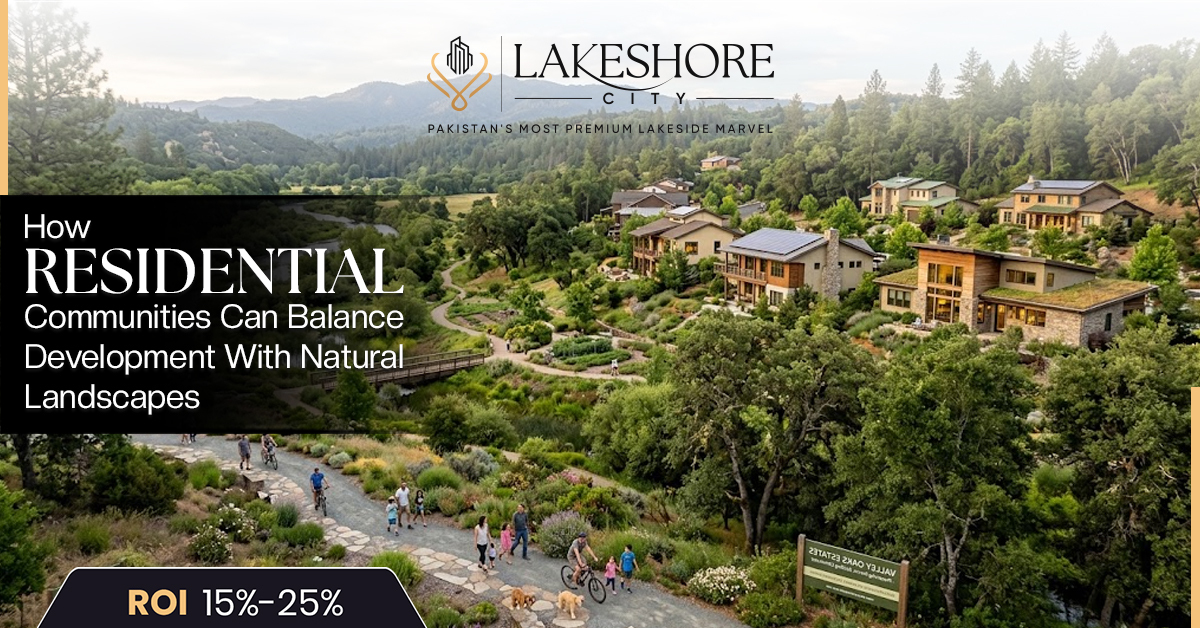
Open water, a ridge line or a stretch of mature trees can make a housing project worth visiting. The construction that follows can also erode the very thing buyers came for. Roads cut across natural drainage lines. Cleared slopes wash silt into the water. Trees come down for plot access and rarely come back.
Balancing development with natural landscapes means planning growth so the land keeps doing its job: holding water, shading streets and giving residents somewhere pleasant to walk. This article covers why the balance matters, which principles work, what they cost, and how a lakeside community such as Lakeshore City can apply them.
What Does It Mean to Balance Development With Natural Landscapes?
It means building at a density and in a pattern the site can absorb, protecting the features that give the land its value, and planning drainage, green space and access before any plot is sold. It is a planning discipline, not a marketing label. A community that does it well can show you the plan behind the claim.
Why the Balance Matters in Pakistan
Housing schemes in Pakistan have often been sold on plot size and location, with the landscape treated as scenery to build over. That is changing as buyers ask what daily life looks like once construction ends.
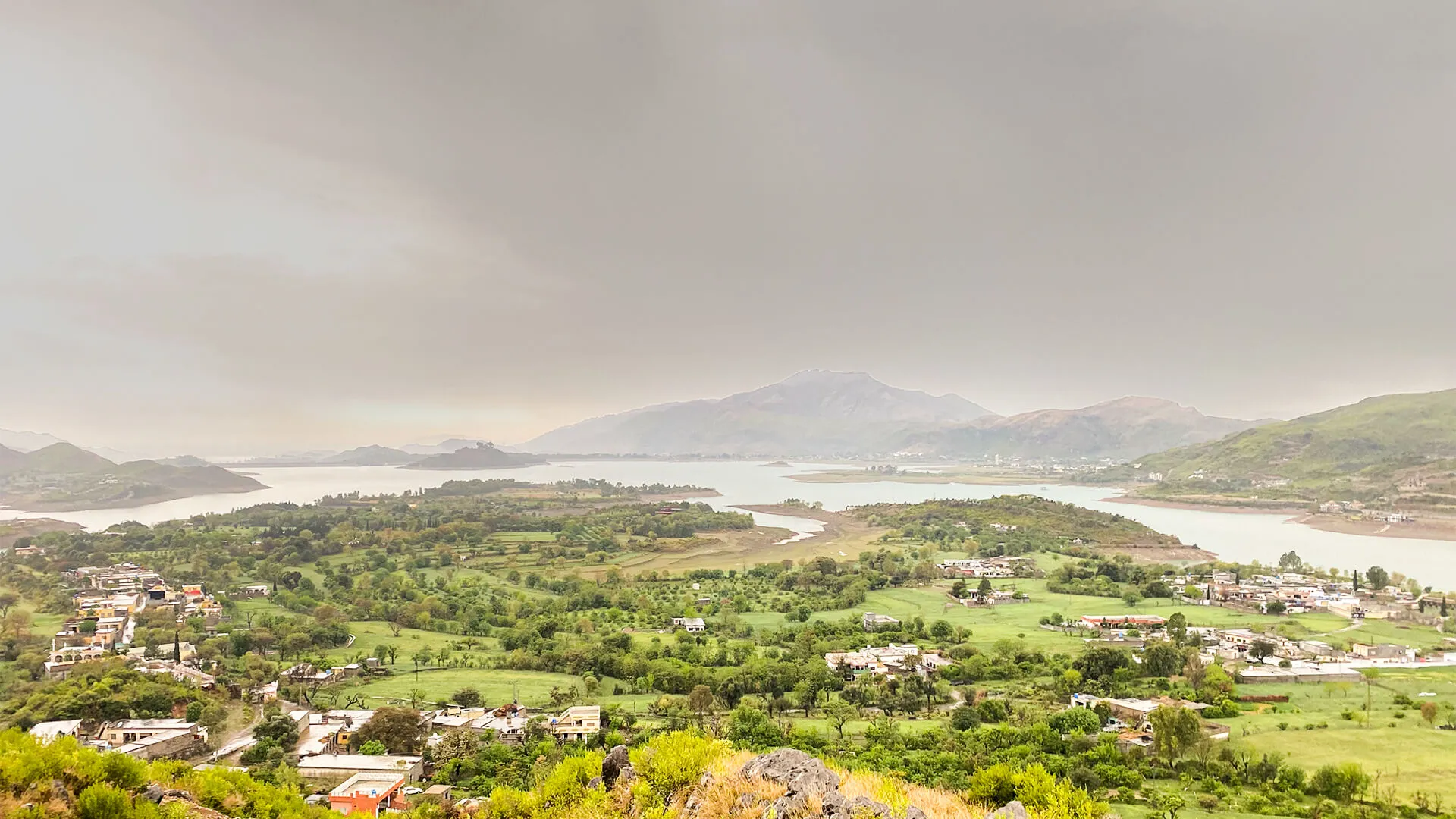
Water makes the stakes concrete. Khanpur Dam, on the Haro River, supplies drinking water to Islamabad and Rawalpindi, so anything built near its shoreline has to manage waste and runoff with care. A lakeside community that pollutes its own lake loses its best asset. The same logic applies along the Margalla foothills, where slope stability and runoff need equal attention.
Residents notice the difference. Tree cover tends to cool streets in hot summers, and preserved drainage channels give monsoon rain somewhere to go. A buyer who visits a site during the monsoon sees quickly whether drainage was planned or improvised, and that first impression shapes trust in everything else the developer says.
Six Planning Principles That Protect Land and Livability
1. Reserve green space before selling plots
Parks, shoreline walks and tree belts belong in the master plan from day one. Added later, they cost more and often lose out to the next block of plots.
2. Treat water as infrastructure
Keep natural drainage channels open, set buildings back from the shoreline, and treat wastewater before it reaches any water body. Stormwater swales and permeable surfaces slow runoff and help rain soak in.
3. Protect biodiversity with native planting
Native trees and shrubs usually need less irrigation than imported ornamentals, and they give birds and insects familiar habitat. Keeping existing mature trees beats replanting saplings.
4. Design for walking
Short blocks, shaded paths and daily services within walking distance cut car trips. This sits at the heart of placemaking, which we explain in our guide to placemaking in Pakistani real estate.
5. Fit roads and utilities to the terrain
Roads that follow contours need less cutting and filling than a rigid grid. Less grading means less erosion and fewer scars on the landscape.
6. Fund long-term maintenance
Common areas decay without a budget. Ask who maintains parks, drainage and tree belts after the developer leaves, and how that work is paid for.
| Planning decision | Conventional approach | Balanced approach |
|---|---|---|
| Green space | Leftover plots, added late | Mapped before plot layout |
| Drainage | Piped and diverted | Natural channels kept open |
| Roads | Rigid grid, heavy grading | Follow contours, less cutting |
| Upkeep | Unassigned | Funded and owned by someone |
The Real Challenges of Building Near Natural Landscapes
Balance has costs, and honest planning admits them.
- Fewer sellable plots. Green space and shoreline setbacks reduce the land available for sale.
- Higher upfront spending. Wastewater treatment and drainage work add cost before any revenue arrives.
- Changing water levels. Reservoirs rise and fall with rainfall and demand, so shoreline plans must allow for variation.
- Enforcement. Rules on tree cutting, construction and waste only work when someone checks them.
How a Lakeside Community Like Lakeshore City Can Apply These Principles
Everything above is general planning practice. What follows is specific to Lakeshore City, and it covers only what the project says publicly.
Lakeshore City is located at Khanpur Dam. Its website presents three parts: Lakeshore Residencia, Lakeshore Farms and Lakeshore Club. Public pages describe the project and its payment terms, but they do not replace technical documents. Prospective buyers should ask the team for the master plan, the drainage and wastewater approach, any tree-retention commitments and a written list of what is built versus what is planned.
A lakeside setting sharpens these questions. Lakefronts abroad, which we cover in what Pakistan can learn from successful lakeside communities, point the same way: public access and respect for the water come first.
Check the answers against the current payment plan so that timelines, development charges and balloting terms are clear. Property values depend on approvals, delivery, infrastructure and market conditions. Nothing in this article guarantees appreciation or returns.
Take the Next Step
If this is the kind of community you want to evaluate, register your interest and the team will get back to you. If you already know what you want, complete the clients booking form online or submit it at the Lakeshore City office. Visit the site first, walk the shoreline and the common areas, and ask for documents in writing so you can decide with the paperwork in front of you.
Frequently Asked Questions
What does balancing development with natural landscapes mean?
It means planning a community so that building does not destroy the water, trees and terrain that give the site its value. Green space, drainage and access are decided before plots are sold.
Why do sustainable residential communities matter in Pakistan?
Pakistan faces heavy rain, summer heat and pressure on water sources. Communities that protect drainage, tree cover and water quality cope better with these conditions and stay more pleasant to live in.
How can lakefront development protect water quality?
Through shoreline setbacks, treated wastewater, open drainage channels and limits on construction runoff. Khanpur Dam supplies drinking water to Islamabad and Rawalpindi, so these controls carry real weight there.
Can eco-friendly housing communities still be good investments?
They can appeal to buyers who value livability, but no layout guarantees resale value or returns. Prices depend on approvals, delivery, infrastructure and market conditions.
What should I ask a developer about environmental planning?
Ask for the master plan, drainage and wastewater arrangements, tree-retention plans, approval documents and a written list of amenities marked built or planned. Verify the documents with the issuing offices.
Is Lakeshore City a sustainable community?
This article makes no certification or environmental claim about Lakeshore City. Ask the team for planning documents and judge the project against the principles above after a site visit.
Where is Lakeshore City?
Lakeshore City is located at Khanpur Dam, which is in Haripur District and roughly an hour from Islamabad by road, according to the project’s own published content.