Placemaking is the practice of designing a neighbourhood around the people who will use it, not only around plots and roads. Parks, walking routes, markets, waterfronts and meeting spots count as part of the product, because they turn land into somewhere people want to spend time.
For years, Pakistani property was sold mostly by plot size and address. That is shifting. Families now ask what life looks like once the boundary wall goes up. Overseas Pakistanis ask whether their relatives will enjoy visiting. Investors ask whether a place will keep drawing people. Here is how placemaking works, where it already shows up in Pakistan and what it means near Khanpur Dam.
| Placemaking means planning shared spaces such as parks, waterfronts, walkways and gathering points so a development becomes a place people want to live in and visit. In real estate, it shifts the focus from plots alone to the quality of everyday life around them. |
What Is Placemaking in Real Estate?
The idea comes from urban planning. Project for Public Spaces, the US nonprofit that helped popularise the term, describes it as a collaborative process of shaping public spaces to bring out shared value. In property terms, a developer plans the spaces between buildings with the same care as the buildings themselves.
How It Differs from Conventional Plot Development
| Plot-led development | Placemaking-led development | |
|---|---|---|
| Starting point | Land parcels and road grid | How people will live, meet and move |
| Shared spaces | Added later, if at all | Planned from the first layout |
| Buyer’s question | “How big is the plot?” | “What will daily life feel like?” |
| Long-term test | Price on the day | Whether people stay, visit and return |
Where Placemaking Already Works in Pakistan
You can find it without searching for the word. Saidpur Village in Islamabad, a restored village at the foot of the Margalla Hills, draws diners and craft shoppers because the setting itself is the attraction. In Lahore, the restoration of Shahi Hammam inside the Walled City, carried out with the Aga Khan Trust for Culture, gave a historic building a public purpose. Fatima Jinnah Park in F-9 shapes how nearby sectors live by giving thousands of households a shared green space.
Heritage tourism follows the same logic. Visitors to the Bhamala Buddhist complex near Taxila come for the site, then look for food and transport. Nearby real estate does best when it supports that visit.
Benefits for Residents, Investors and Property Values
For Families and Residents
Shared spaces give children somewhere to play and older relatives somewhere to walk, and they ease the isolation new housing schemes often have in their first years.
For Investors
Developments with an active public life tend to hold buyer interest longer, because people choose them for how they feel and not only for the price per marla. That is an observation, not a promise. Prices can fall as well as rise, and no layout can guarantee resale value.
For Overseas Pakistanis
If you buy from abroad, you cannot check the site every week. Built, visible amenities let you judge a project from a visit or a video call.
Why Placemaking Matters for the Future of Real Estate in Islamabad
Established sectors in Islamabad are crowded, and many buyers now look at planned communities near the capital for more space. As choices multiply, they compare lifestyle communities in Islamabad on more than price. Tourism adds another layer, since visitors and residents share the same roads and shorelines. We explored that overlap in how tourism and real estate can grow together around Khanpur Dam.
Placemaking Around Khanpur Dam: Where LakeShore City Fits
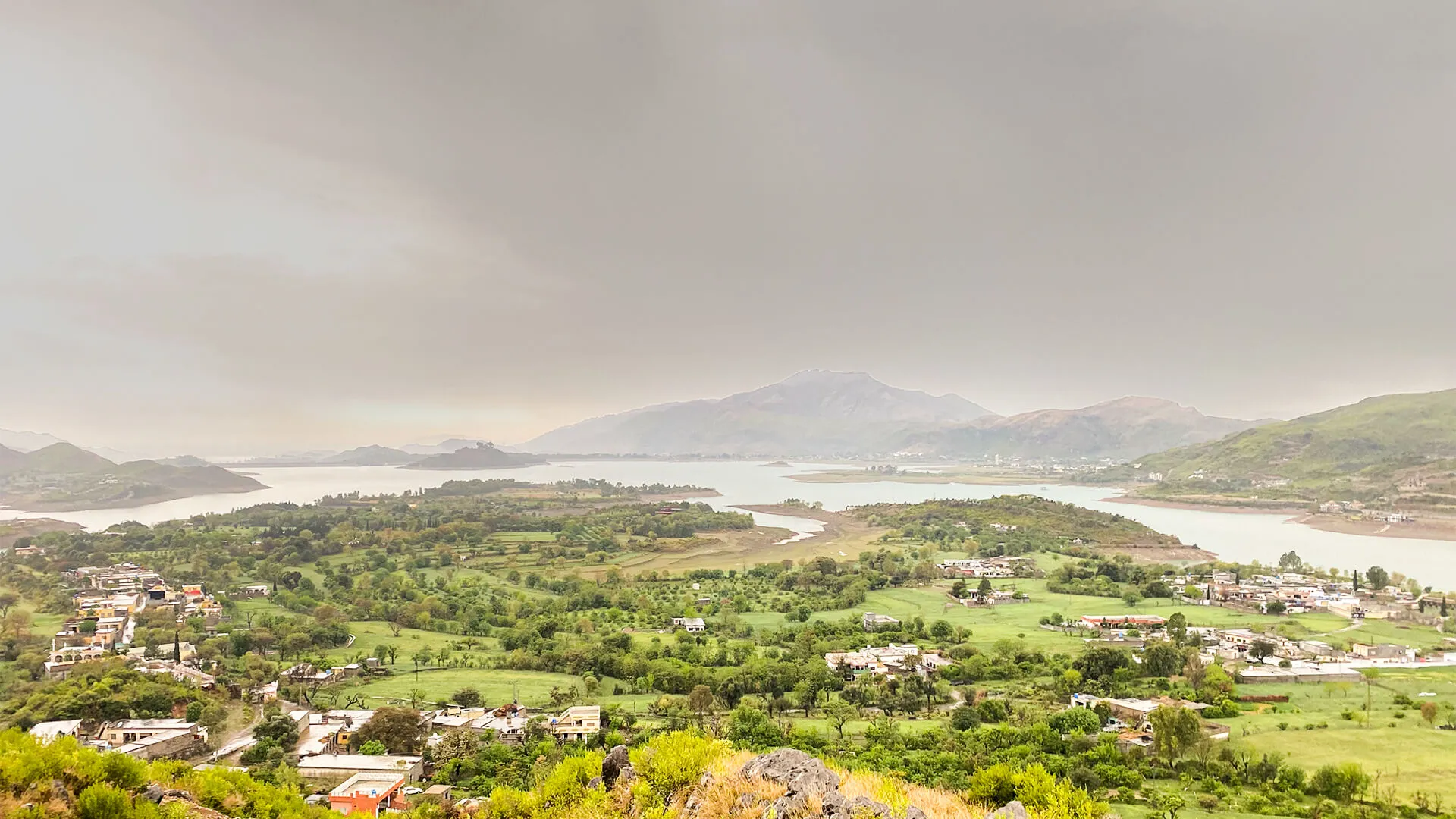
Khanpur Dam sits on the Haro River in Haripur District, about an hour from Islamabad by road. The lake is its biggest asset and its biggest risk. Dawn reported in June 2025 that water levels had fallen sharply and picnic visitors had dropped. A lakeside project depends on the water staying put.
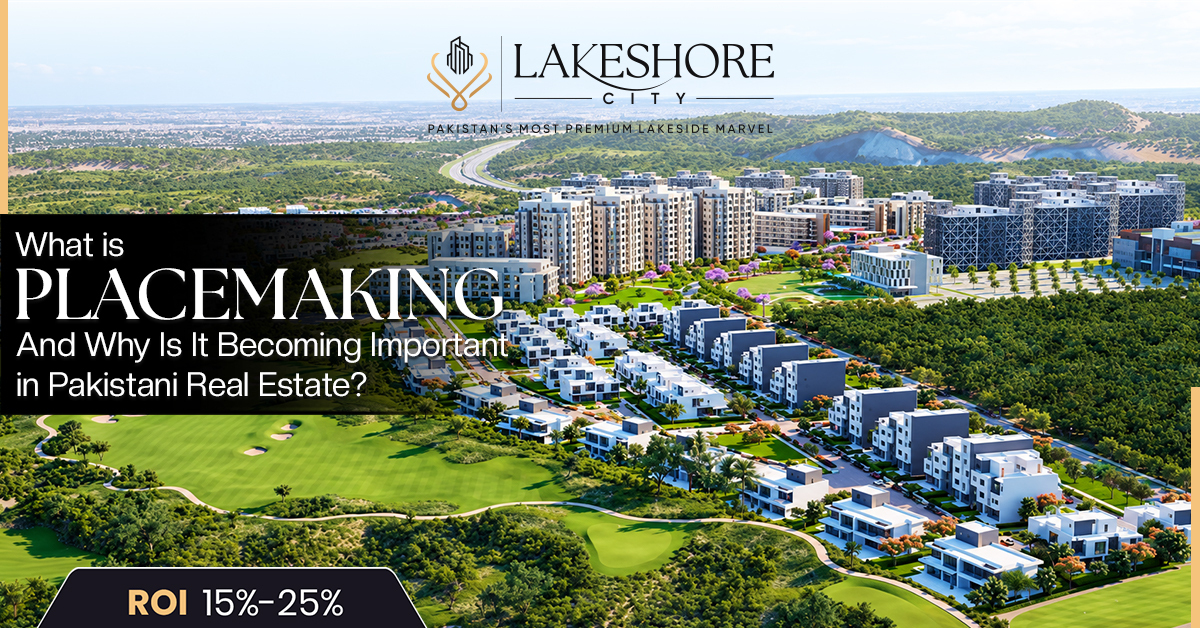
LakeShore City is a planned community at the dam. Its website lists residential plots of 5, 7 and 10 marla and 1 kanal, farmhouse plots, and a club page that mentions boating, a golf course, a spa and event spaces. These are the kinds of shared amenities placemaking relies on. Ask which are built and operating today and which are still plans. We cover timing and due diligence in whether LakeShore City is entering an important investment window.
Practical Takeaways for Buyers
- Visit the site. Walk the shoreline, the roads and the common areas yourself.
- Separate built from planned. Ask for a written list of amenities and their completion status.
- Verify approvals. Request the approval documents and confirm them with the issuing office.
- Check the total cost. Include development charges, balloting, transfer fees and taxes.
Take the Next Step at Your Own Pace
If a lakeside community near Islamabad fits your plans, register your interest with the LakeShore City team, ask for documents and a site visit, and decide only after you have seen both.
Frequently Asked Questions
What is placemaking in simple words?
It is planning shared spaces, such as parks and waterfronts, so a neighbourhood supports community life and not only buildings.
Why is placemaking important in Pakistani real estate?
Buyers increasingly compare projects on daily life, not only plot size and price. Developments that plan shared spaces give them more to compare.
Does placemaking increase property value?
It can improve a location’s appeal, but it does not guarantee higher prices. Values depend on delivery, infrastructure, approvals and market conditions.
What should I check before buying in a lifestyle community?
Check approvals, title, the total payment schedule and which amenities already exist. Visit in more than one season if you can.