There’s a question every serious property investor eventually asks: which locations actually hold their value over time, not just during a bull run?
The answer, more often than not, comes back to history.
Locations with deep historical roots, natural landmarks, cultural relevance, or heritage status have an almost stubbornly reliable track record in real estate. They attract tourism. They draw institutional attention. Governments spend on their upkeep. People want to live near them, visit them, photograph them, and write about them.
That kind of consistent demand doesn’t happen by accident, and it doesn’t disappear when interest rates shift or when a new development pops up twenty kilometers away.
This piece breaks down the real reasons behind that pattern, with examples from around the world and a closer look at how those same forces are now playing out in and around Islamabad.
What Makes a Location “Historically Significant” in Real Estate Terms?
Historical significance isn’t only about ancient ruins or protected monuments. In property investment, the definition is a bit wider.
A location earns that label when it has one or more of the following:
- A natural landmark, heritage site, or cultural institution that consistently draws visitors
- A track record of being desirable for long enough that infrastructure has grown around it
- Government or civic recognition that offers some protection from arbitrary development
- A name or identity that people outside the immediate area already know and respect
- Limited land supply in or around the area due to geography, regulation, or both
That last point — limited land supply — might be the most important of all. You can’t build more Lake District. You can’t manufacture a second Margalla Hills. Scarcity, paired with ongoing demand, is what makes values durable.
Global Examples: When History Protects Property Values
This isn’t theory. The data from mature property markets tells a consistent story.
Edinburgh’s Old Town, Scotland
Edinburgh’s historic core has been a UNESCO World Heritage Site since 1995. Property prices in and around the Old Town have consistently outpaced the Scottish national average by a wide margin. Even through the 2008 financial crisis and subsequent years of UK economic uncertainty, values in the historic center held firmer than comparable cities without that heritage status. Tourism — over 4 million visitors annually — keeps demand for short-term rentals, hotels, and residential units persistently high.
Kyoto, Japan
Kyoto is a textbook case. Despite Japan’s broader property market having gone through decades of stagnation after the 1990s bubble, Kyoto’s historic districts held value better than almost any other urban area in the country. The reason is straightforward: it’s irreplaceable. The machiya townhouses, the temple districts, the strict height restrictions that preserve the skyline — all of this kept Kyoto desirable in ways that generic Japanese suburbs simply weren’t.
Cape Town’s Waterfront District, South Africa
V&A Waterfront properties in Cape Town consistently command the highest square-meter prices in the country, often by a factor of two or three compared to inland areas. It’s a combination of the historic dock heritage, mountain views, and waterfront access. Investors who bought there in the early 2000s and held on have seen returns that easily outpaced the national property index.
The pattern holds across continents. Florence, Sydney Harbour precincts, Prague’s Malá Strana, and Lahore’s Gulberg corridor (built around pre-partition heritage roads) all tell a version of the same story: proximity to something historically rooted and physically irreplaceable creates a floor that typical market corrections don’t easily breach.
Also Read: Road Infrastructure Developments Around Khanpur Dam in 2026
Why Areas Near Natural Landmarks and Tourism Destinations Perform Better
When a location has genuine tourism draw, several things happen to the property market that don’t happen elsewhere.
Rental Demand Stays Elevated Year-Round
Tourism creates an additional layer of rental demand that local residential supply alone doesn’t generate. Short-term visitors, weekend travelers, and seasonal guests all compete for accommodation near the landmark. This keeps occupancy rates high and rental yields healthier than in areas that depend purely on resident demand.
Infrastructure Investment Follows the Footfall
Governments and municipalities invest in roads, public transport, utilities, and amenities in areas that generate tourism revenue. That infrastructure spending raises property values in surrounding areas, often regardless of what’s happening in the broader market. It’s one of the quieter benefits of buying near a natural or heritage destination — public money keeps flowing in.
There’s a Built-In Desirability Floor
Properties near genuinely desirable landmarks carry a built-in identity. A flat near the Eiffel Tower isn’t just a flat; it’s an address that carries weight. That identity creates persistent buyer interest from both local purchasers and overseas investors, which smooths out the volatility that hits less distinguished locations harder during downturns.
Infrastructure, Accessibility, and Limited Land: The Three Pillars of Durable Value
Any investment thesis around historically significant locations rests on three things working together.
1. Infrastructure: Quality roads, water, power, and broadband aren’t optional in premium real estate. When a location already has this and is backed by ongoing government investment due to its heritage or tourism importance, it removes one of the biggest long-term risks for buyers.
2. Accessibility: Proximity to a major city, airport, or arterial road network matters enormously. Historically significant locations that are also easy to reach from commercial hubs hold a significant edge over remote heritage sites that require half a day’s travel. Convenience amplifies desirability.
3. Limited land supply: This is non-negotiable. When physical or regulatory barriers prevent unlimited development near a desirable location, the existing properties in that zone appreciate more reliably. A hillside that can’t be built on, a protected waterfront, a heritage buffer zone — these restrictions are actually good news for existing property owners.
How This Applies to Property Investment in Islamabad
Islamabad is a relatively young capital by global standards, but its surroundings are anything but. The Margalla Hills National Park — a designated protected area — forms the northern boundary of the city. Rawal Lake has been a recreational and ecological anchor since the city was first planned. The broader Potohar Plateau has cultural and archaeological layers that stretch back thousands of years.
What this creates is a city where certain corridors carry far more long-term investment weight than others. Property near the hills, near the lake, near protected zones, or along major access arteries connecting to the larger region is not in the same category as generic residential plots in satellite towns.
Islamabad’s property market has also shown an interesting pattern over the past decade: premium societies positioned near natural or heritage-linked zones have appreciated faster and recovered quicker after slowdowns than projects in purely commercial corridors without that anchor.
For overseas Pakistanis and long-term investors, this matters. Buying near a natural landmark in Islamabad isn’t just about aesthetics; it’s about buying into a location that has structural reasons to hold value.
Lakeshore City: Where These Factors Converge
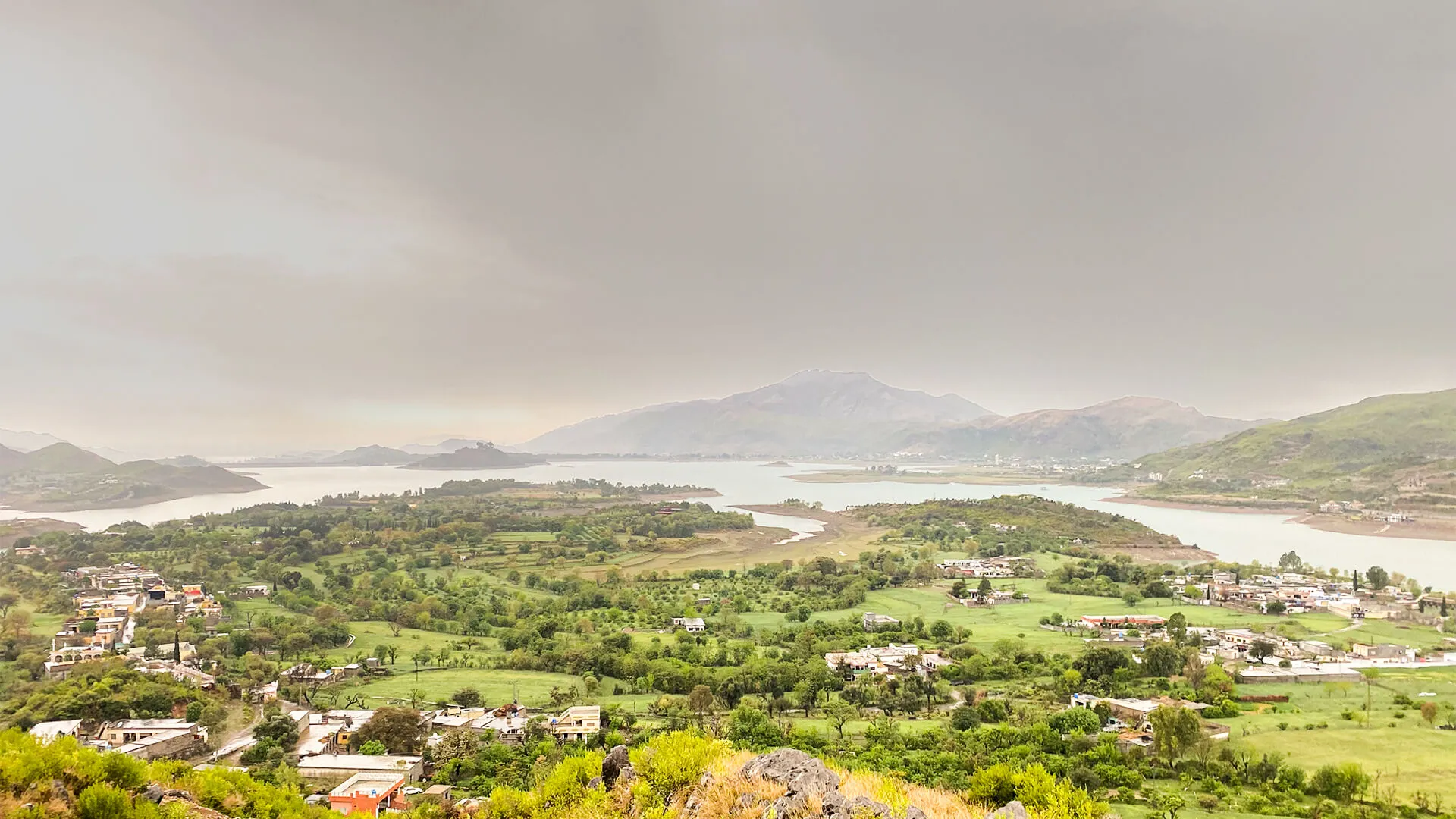
One development that sits at the intersection of several of these themes is Lakeshore City. It’s positioned along the scenic lakefront corridor, in an area that benefits from both natural landscape value and reasonable proximity to the capital’s core.
What makes it worth paying attention to isn’t marketing language; it’s the underlying geography. Waterfront real estate is inherently supply-constrained. You cannot manufacture a new shoreline. That physical scarcity, combined with the area’s tourism-relevant position and improving road connectivity, puts it in a different risk-return bracket than generic housing colonies without a compelling location anchor.
From an investor’s perspective, several things stand out:
- Scenic setting with direct access to the waterfront, creating a lifestyle proposition that is difficult to replicate in the region
- Growing accessibility through road infrastructure improvements connecting the area to Islamabad’s main arteries
- Tourism and recreational activity in the wider lake zone, which keeps the area on the radar for short-term rental demand
- Early-stage investment pricing relative to where comparable waterfront developments in other Pakistani cities have ended up
- Future growth potential linked to Islamabad’s outward expansion and continued interest from both resident buyers and the overseas Pakistani community
For those interested in learning more about investment opportunities near Khanpur Dam or exploring luxury waterfront living as a long-term asset, Lakeshore City is worth a serious look. Not because of any sales pitch, but because the location logic is sound.
Why These Locations Hold Up Better During Market Fluctuations
Property markets go through cycles. Pakistan’s is no different. There are periods of sharp appreciation followed by corrections, periods of regulatory uncertainty, and stretches where sentiment drives things more than fundamentals.
During those downturns, properties near historically significant or naturally distinctive locations tend to fall less and recover faster. A few reasons:
Buyer motivation is more durable. People buy near a lake or a heritage site for reasons that don’t disappear when the economy softens. The desire to live somewhere beautiful and meaningful is persistent.
Overseas and high-net-worth buyers keep interest alive. These buyer segments, which matter enormously in premium Islamabad projects, are more likely to target distinctive locations than cookie-cutter developments. They also tend to hold, rather than panic-sell, which steadies the market.
Rental income provides a cushion. When sale values dip, owners near tourist or recreational destinations can typically generate rental returns that help weather the cycle.
The replacement cost argument works in your favor. It is genuinely not possible to build another waterfront property once the shoreline is developed. That physical fact gives existing owners leverage even in a softer market.
A Final Word on Long-Term Investment Thinking
The investors who tend to do best in real estate over a 10 to 20-year horizon are not the ones who found the cheapest land. They are the ones who found the right land — land that had genuine, structural reasons for people to keep wanting it.
Historically significant locations, natural landmarks, protected zones, and waterfront areas all qualify. They are not immune to downturns. No investment is. But they carry a resilience that comes from something beyond market sentiment: from geography, from culture, from the basic human desire to be somewhere that feels worth being.