The Buyer Has Changed. The Product Hasn’t — Until Now.
Walk through any real estate office in Islamabad or Rawalpindi and you’ll hear the same pitch. Files, plots, possession dates, per-marla rates. The conversation rarely goes deeper than that. For decades, that was enough. Pakistan’s housing market grew almost entirely on land scarcity and urban migration. You bought because prices went up. You sold because prices went up more. The product itself was almost irrelevant.
That logic still holds in plenty of markets. But something is quietly shifting among a specific segment of Pakistani buyers — the ones who have lived or studied abroad, the ones who scroll through Dubai or Istanbul property content on Instagram, the ones raising families in cities that were not designed for families. These buyers are not just asking about price per marla anymore. They are asking what they will actually wake up to every morning.
That shift is slow, but it is real. Lakeshore City Islamabad is one of the first projects in the country that seems to have been built with this new buyer in mind from the very beginning.
Lakeshore City: What It Actually Is
Lakeshore City is a large-scale planned community near Islamabad, developed around a concept that is more common in parts of Malaysia, Turkey, and the UAE than it is in Pakistan. The central idea is not to sell land and move on. It is to build a place that functions as a complete living environment — where the amenities, the natural setting, the commercial layer, and the residential zones work together.
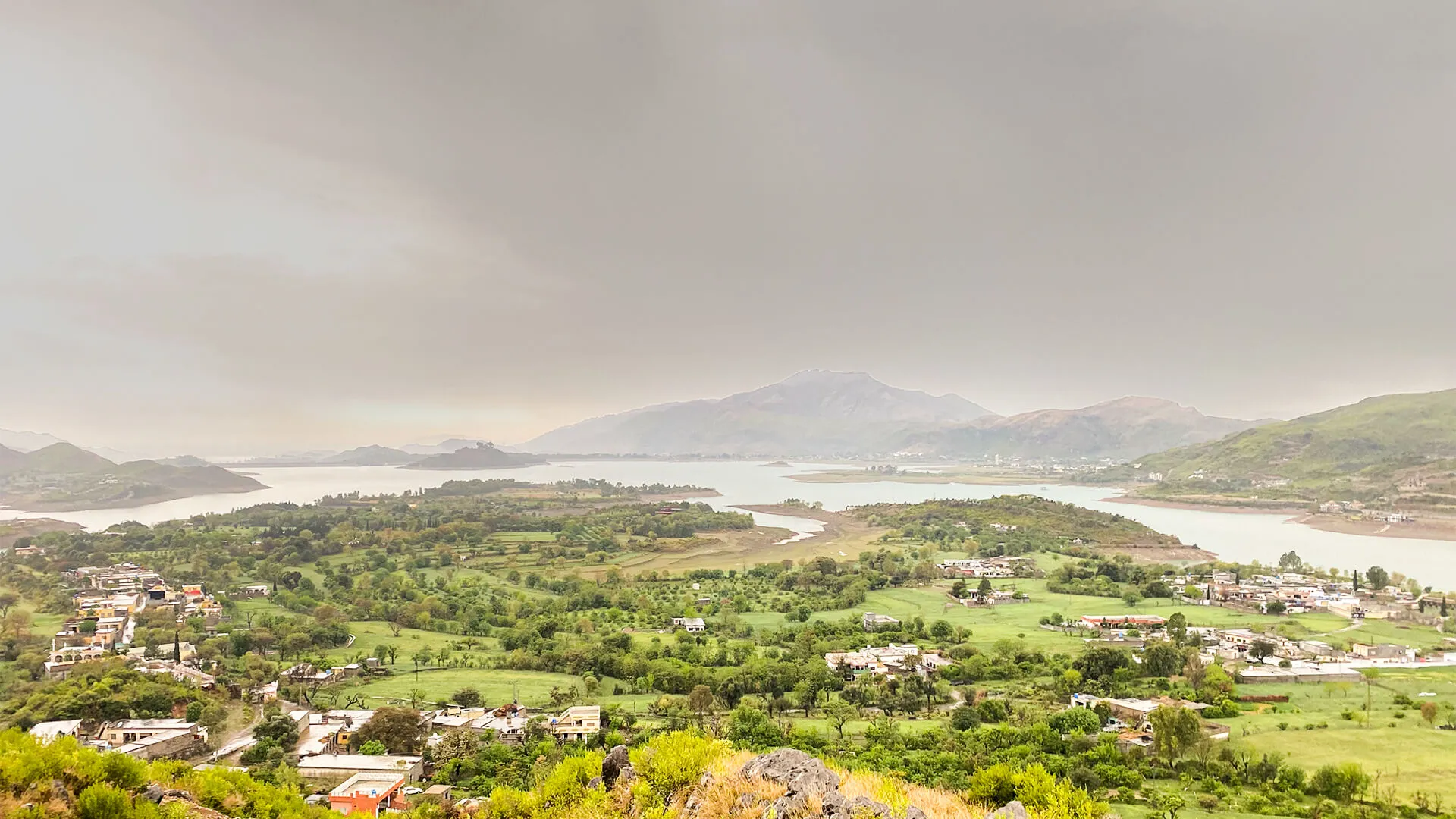
The name is not just branding. The project is designed around water-facing development, with a lake as a central feature of the community’s character. That single decision changes everything downstream. It changes what the walkways look like. It changes how the commercial areas are placed. It changes the experience of simply walking outside your home in the evening.
Also Read: Lakeshore City: Location, Lifestyle & Growth from Rs. 25,000
This is what gets called tourism-inspired development in urban planning circles. It borrows from hospitality thinking — the idea that people’s daily environment should feel like somewhere they want to be, not just somewhere they ended up.
| Lakeshore City is not just another housing society. It is an attempt to answer a question most developers never bothered to ask: what does it feel like to actually live here? |
Community Living as the Core Product
Most planned communities in Pakistan treat community living as an add-on. A park here. A mosque. Maybe a school. Lakeshore City treats it as the product itself. The layout is built to encourage movement, interaction, and daily life outside the home rather than inside it.
This matters more than it sounds. Residential areas that are genuinely walkable, that have places to sit, eat, exercise, and just exist in public, hold their value differently from those that don’t. Families who choose them tend to stay longer. Communities that form around shared spaces become self-sustaining in ways that pure-investment communities never do.
The Lifestyle Planning Component
Lakeshore City has put visible effort into what developers call lifestyle planning — which is just a technical way of saying they thought about how people would spend their time, not just where they would sleep. The hospitality zone, the commercial corridor, the green spaces: these are not placed at random. They follow a logic that says people should not need to leave the community for most of what they do week to week.
In Pakistan’s real estate context, this is unusual. Most projects are essentially subdivisions with a boundary wall. Lakeshore City is attempting something closer to what international buyers call a master-planned community — a place that has been thought through as a whole rather than assembled in phases.
Sustainable and Long-Term Design Thinking
There is something else worth noting about how Lakeshore City is positioned: the emphasis on green spaces, water features, and low-density zoning is not just aesthetic. Dense, poorly planned communities age badly. They become congested, they lose greenery, they eventually lose value. Projects built around natural assets — a lake, a ridge, a green belt — tend to retain character as they grow.
The Pakistani market has enough examples of housing societies that looked impressive on launch and deteriorating ten years later. What makes Lakeshore City worth paying attention to is that its physical design appears to be working against that pattern from the start.
How Most Housing Societies Are Built (And Why That’s Fine — For What They Are)
To understand what makes Lakeshore City different, it helps to be honest about what traditional housing societies are and what they are not. Most of them are not trying to build a lifestyle destination. They are trying to deliver legally titled, well-located plots at a competitive price. For a large segment of Pakistani buyers, that is exactly what they want.
The model works on a straightforward premise: acquire land, develop infrastructure, divide into files, sell files. The developer monetizes quickly. The buyer holds the asset and waits for appreciation. There is nothing wrong with this. It has housed millions of Pakistanis and created genuine wealth across generations.
Where it falls short is when buyers want something more than an asset. When they want a place to actually live. When they have children and want those children to have somewhere to go. When they are paying mortgage-equivalent installments and quietly wondering what they are paying for beyond a patch of earth.
That gap — between what the traditional model delivers and what a growing number of buyers now want — is exactly where projects like Lakeshore City operate.
Why Lakeshore City Gets Attention in a Crowded Market
Pakistan’s real estate market is not short on new projects. Every major city has housing societies in various stages of development, many of them marketed with the same language: prime location, modern amenities, guaranteed growth. Buyers have become fairly good at filtering that language out.
What tends to cut through is physical evidence. Not renders. Not brochures. But things you can visit and experience. Lakeshore City’s lake-facing layout is something a buyer can drive out and stand in front of. The landscaping, the scale of the open spaces, the commercial zone — these are tangible in a way that most pre-launch promises are not.
That matters for investor confidence, but it matters even more for end-users. The segment of buyers who actually intend to live in a community rather than flip it are doing a different kind of due diligence. They are walking the streets at evening time. They are thinking about schools and grocery access and whether it feels safe and quiet. Lakeshore City speaks to that evaluation in a way that plot-only projects simply cannot.
| In a market full of similar-sounding projects, the ones that survive long term are the ones that build something people actually want to come back to. |
The Airport Corridor Advantage
Location is always part of the equation in real estate, but Lakeshore City’s proximity to the Islamabad International Airport corridor adds a dimension that goes beyond commuting convenience. As Islamabad grows outward, the airport corridor is likely to develop into one of the capital’s more significant commercial and transit hubs. Communities already established along that corridor will benefit from that growth rather than scrambling to access it later.
This is the kind of structural positioning that makes long-term investors take notice. It is not about today’s infrastructure. It is about where the infrastructure is going.
Tourism-Inspired Development in a Pakistani Context
The phrase tourism-inspired development might sound abstract, but its logic is straightforward. Tourist destinations succeed because they invest in experience. The food, the walkways, the lighting, the water views — everything is designed to make people want to spend time there. Lakeshore City applies that thinking to a residential community.
Pakistan has a serious lack of quality leisure destinations, especially for families. Islamabad’s options are limited. So a development that offers a lake, green space, dining, and open-air activity within a short drive from the city center is not just a housing society. It functions as a local destination. That dual nature — residential and recreational — is what gives Lakeshore City a value proposition that is genuinely hard to replicate.
How Pakistan’s Real Estate Investors Are Starting to Think Differently
A few years ago, the conversation among Pakistani real estate investors was almost entirely about rates. Rawalpindi’s file prices. DHA sectors. Capital Smart City plots. The discussion was transactional, numerical, short-horizon.
That conversation has not disappeared. But it now runs alongside a different one — quieter, but present among investors who have been burned by undelivered projects or who are simply tired of sitting on plots with no clear exit. These investors are starting to ask different questions. Is this project actually being built? What is the experience like for the people already living there? Does this place have a reason to keep growing?
Vision-driven developments answer those questions better than plot-centric ones. A project built around a lake, a lifestyle concept, and a real community layer has a self-sustaining narrative that pure land plays do not. Word of mouth from residents is more durable than any marketing campaign.
Lakeshore City fits this new investor logic more naturally than most projects in its category. It is not promising any specific return — no responsible developer should. But it is offering something that has historically correlated with long-term value creation: a well-designed, well-located community that people choose over other options.
| What Vision-Driven Investors Look for in 2025-26 |
| Physical evidence of delivery — not just renders and future phases |
| A community that end-users actively choose to live in |
| Natural or experiential assets that cannot be easily replicated nearby |
| Structural location advantages tied to infrastructure growth |
| Developer track record and transparent communication |
| Long-term community demand beyond the speculative launch window |
Real Estate Is Becoming About More Than Real Estate
There is a version of Pakistan’s housing market that looks exactly the same in ten years as it does today: files, plots, per-marla rates, and developments that start strong and fade. That version is still real, and it will keep finding buyers.
But there is another version emerging alongside it. One where developers ask harder questions before breaking ground. Where buyers factor in daily life quality and not just resale potential. Where a project is judged by what it feels like to actually be there.
Lakeshore City Islamabad is not perfect, and no large development is. Construction delays, phased delivery, and market volatility are realities in this sector regardless of the developer’s intentions. But the core concept — building a community around a lake, designing for lifestyle, applying hospitality logic to residential development — is the kind of thinking that separates projects with lasting appeal from those that peak at launch.
If you are evaluating real estate in Pakistan right now, the most useful question is not just where prices are going. It is whether the place you are buying into is somewhere people will want to live ten years from now. On that question, Lakeshore City gives a clearer answer than most.
Frequently Asked Questions
What makes Lakeshore City different from other housing societies in Islamabad?
Lakeshore City is built around a lake-facing community concept with integrated lifestyle features — walkable zones, leisure areas, and a hospitality-inspired layout. Most housing societies in the area focus primarily on plot development without this kind of integrated planning.
Is Lakeshore City a good investment option in Pakistan’s current real estate market?
It depends on your investment horizon and goals. For buyers looking for a liveable, well-designed community with long-term location advantages near the airport corridor, Lakeshore City presents a compelling case. Like any real estate investment in Pakistan, it carries market risks and timelines should be evaluated carefully.
What does tourism-inspired development mean in residential real estate?
Tourism-inspired development applies hospitality thinking to residential communities — designing spaces that people genuinely want to spend time in, not just live in out of necessity. This includes water features, walkable public spaces, dining and leisure options, and natural amenity integration.
Where is Lakeshore City Islamabad located?
Lakeshore City is located on the outskirts of Islamabad, in proximity to the Islamabad International Airport corridor — a location that gives it both scenic character and long-term connectivity advantages as the capital region grows.
What is the difference between lifestyle-based real estate and traditional plot development?
Traditional plot development focuses on land delivery and price appreciation. Lifestyle-based real estate — like Lakeshore City — focuses on building an environment with amenities, community features, and design quality that supports long-term liveability. The two serve different buyer needs and investment strategies.