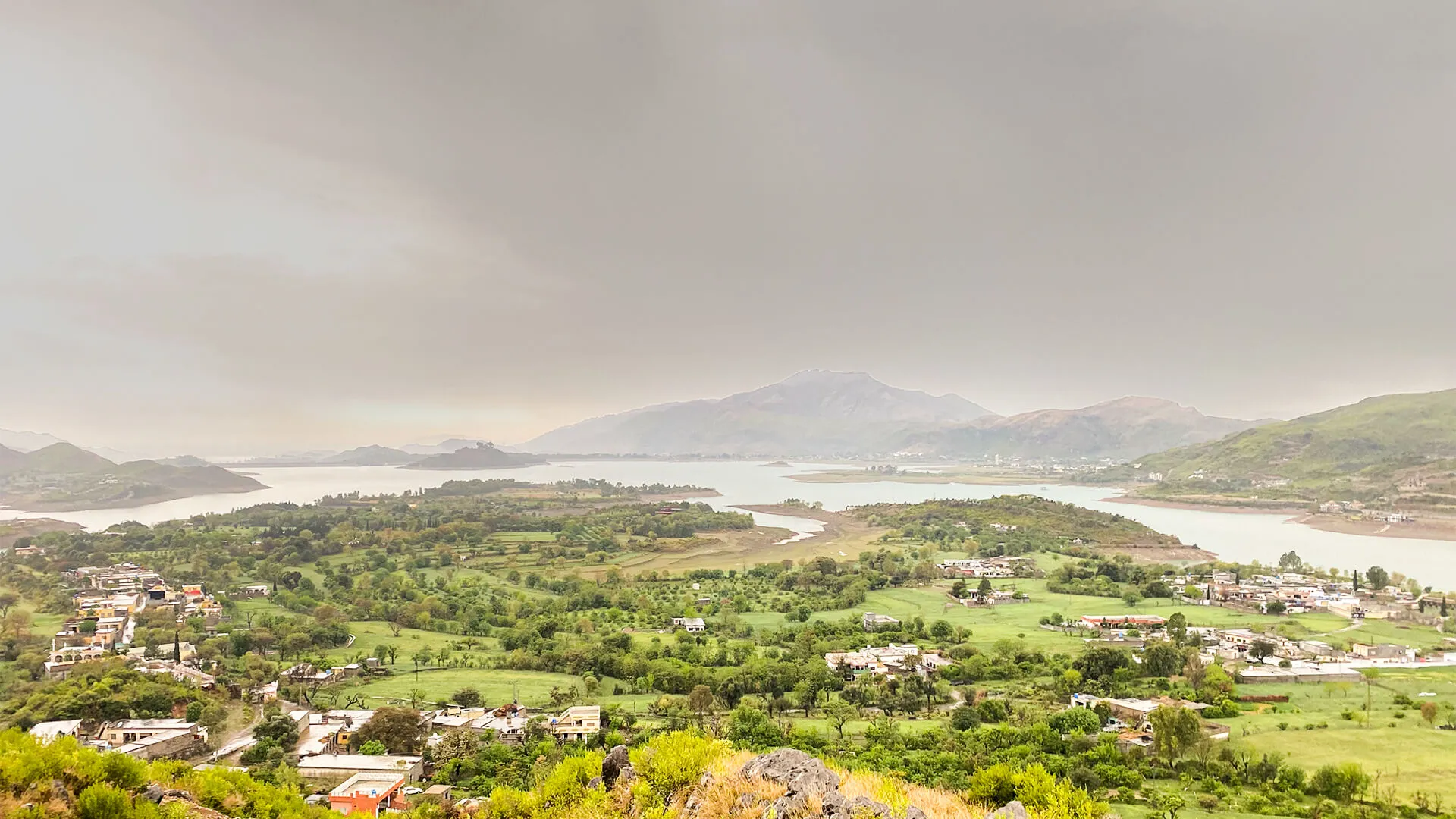
When the City Gets Too Loud, the Dam Calls
There is a particular kind of Friday evening that people in Islamabad and Rawalpindi know well. The motorway traffic has slowed to a crawl, the week has dragged on longer than it should have, and somewhere in the back of your mind a single thought keeps surfacing: there has to be somewhere better to be right now. There is. And it is about 40 kilometres away.
Khanpur Dam has been drawing people out of the twin cities for decades, but the experience has changed considerably in recent years. What was once a rough day trip for adventurous families has quietly grown into one of the most compelling weekend destinations in northern Pakistan — with proper leisure infrastructure, boating clubs, lakeside camping grounds, and now a full-scale residential and investment community taking shape on its shores.
This piece covers what the weekend lifestyle around Khanpur Dam actually looks like in practice: the activities, the food, the pace of life, the kind of people who come here, and what it means that a project like Lakeshore City is being built nearby. Whether you are scouting a weekend escape, thinking about an investment, or both, this is the full picture.
What Khanpur Dam Actually Is — and Why It Works
The dam itself was completed in 1983 on the Haro River in Khyber Pakhtunkhwa, about 45 kilometres from Islamabad. The reservoir it created stretches over 30 square kilometres and sits inside a narrow valley framed by the Margalla Hills on one side and the rugged ridgelines of KPK on the other. The water is genuinely clear in the upper reaches — a shade of blue-green that feels almost wrong for Pakistan, like someone relocated a slice of Scandinavian scenery into the subcontinent.
The drive from Islamabad takes around 45 to 55 minutes via the Khanpur Road, winding through pine-shaded hills before the reservoir comes into view below. That first glimpse of open water after the urban grind of the city is, if you have not experienced it, genuinely disorienting in the best possible way.
The surrounding area — forests, rock formations, small Hazara villages — gives the place a texture that generic recreational spots tend to lack. You are not arriving at a theme park. You are arriving somewhere that has its own character, its own rhythms, and its own relationship with the land around it.
What People Actually Do Here on Weekends
Boating and Water Sports
The dam is the centrepiece, and for most visitors the water is why they come. Powerboats, jet skis, and kayaks are all available for hire at various points along the lake, and the reservoir is large enough that even on a busy Saturday morning you can find open water within a few minutes of setting out.
Jet skiing on Khanpur feels different from the concrete-edged water parks in the cities. The lake bends around promontories and narrows at certain points, which gives riding here an exploratory quality that flat, open water cannot replicate. Families with younger children tend to prefer the calmer southern sections of the reservoir; stronger swimmers and adventure-seekers head further north where the valley narrows and the scenery gets more dramatic.
Paddleboarding has picked up noticeably over the past couple of years, and several operators now offer guided kayak tours along the shoreline. These move slowly enough to notice the birdlife — kingfishers, herons, the occasional osprey working the surface — which is the sort of thing people increasingly want when they have spent the week staring at screens.
Also Read: What Overseas Pakistanis Get Wrong About Property Investment
Rock Climbing and Trekking
The rock faces around Khanpur are among the best in the region for technical climbing. The area around Khanpur village and the ridges above the dam have been used by Islamabad-based climbing clubs for years, and the routes range from beginner-friendly slabs to multi-pitch lines that will challenge experienced climbers. A number of guide services operate out of the area, though the scene remains informal enough that independent groups can find their own routes with basic local knowledge.
The trekking options are less demanding but no less rewarding. The hills above the reservoir offer a series of trails with views back over the water that are, frankly, worth the effort even for people who would not normally describe themselves as hikers. The trail up to the ridge north of the dam — about two hours return — gives a perspective of the reservoir that no photograph has ever quite done justice to.
Camping and Overnight Stays
Camping near Khanpur has expanded significantly. There are now organised sites with proper facilities — firepits, clean washrooms, ground tent rentals, and in some cases pre-pitched glamping tents — that make overnight stays accessible to families who would not otherwise have the equipment or experience for rough camping.
The overnight experience at Khanpur changes the place considerably. After the day visitors clear out in the late afternoon, the lake settles into a different kind of quiet. Evenings here in summer are cool even when Islamabad is still warm, and the absence of city light pollution makes the stars visible in a way that surprises most first-time campers.
Winter camping near the dam is increasingly popular among those who know the area well. The crowds thin dramatically from November onwards, the light is cleaner, and the reservoir often has a mist over it in the early mornings that makes the whole place feel like something out of a landscape painting.
Fishing
Khanpur Dam supports a healthy population of mahseer — one of the most sought-after freshwater sport fish in South Asia — along with trout in the cooler upper sections and catfish throughout the reservoir. Fishing here is legal with a permit from the Fisheries Department, and several local operators offer guided fishing trips with all equipment provided.
Serious anglers know that the window between March and May, and again from October to December, produces the best results. But even as a casual activity — a line in the water, a chair on the bank, the morning moving slowly — fishing at Khanpur occupies a particular niche that nothing else quite fills.
Swimming
The designated swimming areas at Khanpur, particularly around the main access points, are popular with families. The water is clean in these areas and the depth gradual, which makes it manageable for children under proper supervision. Those who know the reservoir better tend to find quieter coves accessible only by boat — the kind of spots where you can spend an afternoon in the water and see no one else.
The People Who Come Here — and the Pace They Come For
Khanpur attracts a noticeably different crowd from what you find at, say, Murree on a summer weekend. There are families, certainly, but also a significant number of couples, groups of colleagues, and solo travellers who have discovered that the place is manageable without a large party. The vibe — for lack of a better word — is quieter, more self-directed, less circus-like than the hill stations that get more tourist infrastructure.
People come to Khanpur because they want to actually be somewhere, not merely photograph it and leave. The activities that the place supports — sustained outdoor activities, overnight camping, serious fishing — reward the kind of attention that cannot be rushed. This is why the weekend lifestyle around the dam tends to attract people who are, as a general type, tired of spending their weekends consuming and looking for something that feels more like living.
The food scene, it should be said, has improved. Roadside dhabas and small restaurants along the approach roads have been serving travellers for years, and a few more organised dining options have opened near the main access points. Nothing has arrived that would make a food critic pay attention, but the grilled fish, the fresh bread, and the chai available near the water are exactly what the setting calls for.
Lakeshore City: What Is Being Built Here, and Why It Matters
It would be impossible to write honestly about the Khanpur Dam lifestyle without talking about Lakeshore City, because it is the development that is changing what long-term engagement with this area looks like for people who want more than a day trip.
Lakeshore City is a planned residential and commercial community being developed in close proximity to Khanpur Dam. The project is designed around the idea that lakeside living in northern Pakistan — the kind of lifestyle that has long existed in mountain resorts but with year-round accessibility and proper urban amenities — is something that a significant number of people in the twin cities both want and can now seriously consider.
The development includes residential plots in various categories, commercial and hospitality zones, parks, lake-facing promenades, and the kind of infrastructure — paved internal roads, utilities, security — that has historically been absent from leisure property near Pakistani hill stations and water bodies.
Who This Is For
The project targets three distinct groups, and it does not pretend otherwise. The first is families from Islamabad and Rawalpindi who want a weekend retreat that is actually close enough to use every week, not just during long holidays. The second is investors looking at property in an area where the fundamentals — proximity to a major metropolitan area, natural amenities, improving access infrastructure, limited supply of similar land — suggest meaningful appreciation potential over the medium term. The third is businesses and entrepreneurs thinking about hospitality and leisure investments in a catchment that currently under-serves a large weekend tourism market.
These groups are not mutually exclusive. The person buying a plot for their family’s weekend use is also, whether they think of it this way or not, making an investment decision in an area that many observers believe is in the early stages of a sustained tourism and real estate upswing.
The Investment Case, Stated Plainly
Property near established natural leisure destinations in developing economies tends to appreciate meaningfully over time, particularly when infrastructure improves around them. Khanpur and the broader Haripur district have seen consistent road and access improvements over the past decade, and the development of organised projects like Lakeshore City tends to create a self-reinforcing dynamic — better infrastructure attracts more visitors, which supports commercial development, which makes the area more attractive to the next wave of residents and investors.
Analysts and real estate professionals familiar with comparable leisure property markets in Pakistan note that early-stage investments in properly planned lakeside communities have historically shown appreciation in the 15% to 25% range over three-to-five-year horizons, depending on phase of entry, plot category, and broader market conditions. This figure should be understood as a reference range drawn from comparable historical data, not a projection or guarantee — real estate markets carry inherent uncertainty, and individual results will vary.
What is not uncertain: land near a major natural attraction, 45 minutes from one of Pakistan’s largest and fastest-growing cities, with a planned community providing infrastructure and commercial activation, is a different asset than undeveloped rural land. The question for prospective investors is not really whether the area will attract more people and more spending over the next decade — the trend is already underway — but whether they want to be positioned in it before that acceleration is fully priced in.
If you are in the early stages of evaluating this, the most useful first step is to register your interest formally. Register now at Lakeshore City to receive project documentation, site plans, pricing information, and priority notification of new phase launches.
Living Here Versus Visiting: What Changes When You Own
There is a meaningful difference between experiencing Khanpur as a visitor and experiencing it as someone who has a property stake in the area. Visitors make decisions based on availability, cost, and logistics. Owners make different decisions — they develop routines, they know the quiet seasons, they build relationships with the local community, and they gradually stop treating the place as an escape and start treating it as part of their ordinary life.
This is the kind of relationship with a place that tends to produce the most satisfaction for people who pursue it, and it is also the kind of relationship that is increasingly being made possible by projects like Lakeshore City — which is providing the infrastructure and planning that individual property ownership in less organised settings in the area has historically lacked.
The weekend lifestyle around Khanpur Dam, at its best, is not about extreme adventure or tourist attractions. It is about having somewhere to go that is genuinely different from where you spend the rest of your week — water, hills, clean air, a slower rhythm — within a distance that makes it a realistic part of your regular life rather than a once-a-year event.
People who have made that shift — from visitor to stakeholder — tend to describe it as one of the better decisions they have made. Not because of market returns, though those have generally been positive, but because it changed what their weekends looked like.
If you are ready to take a closer look in person, book a site visit through Lakeshore City’s booking form — the team arranges guided visits that cover the site, the lake, and the surrounding area, giving you an honest sense of what the place offers before any commitment is made.
Getting There and Practical Considerations
Khanpur Dam is located approximately 45 kilometres from Islamabad and 30 kilometres from Attock. The primary route from Islamabad is via the Khanpur Road, passing through Taxila and Wah Cantt — the drive takes 45 to 55 minutes under normal traffic conditions, and somewhat less from Rawalpindi via the GT Road connector.
The best months to visit are March through May (spring, before the peak heat) and September through November (autumn, when the weather is settled and the crowds have thinned). Summer weekends — particularly July and August — are the busiest, and the main access points can become congested; arriving early or staying overnight sidesteps this.
The area around Khanpur village has basic accommodation, and the organised camping sites provide alternatives to hotels. Visitors planning activities on the water should arrange boat hire in advance during peak weekends, as availability tightens. Mobile connectivity is adequate at the main recreational areas, though it drops off in the more remote sections of the reservoir.
Frequently Asked Questions About Khanpur Dam and Lakeshore City
What is there to do at Khanpur Dam on a weekend?
The dam supports a wide range of activities including motorboat and jet ski hire, kayaking, paddleboarding, rock climbing, trekking, overnight camping, freshwater fishing, and swimming at designated areas. Most of these can be arranged without advance booking on weekdays, though weekends and public holidays benefit from prior planning — particularly for boat hire and organised camping.
How far is Khanpur Dam from Islamabad?
Khanpur Dam is approximately 45 kilometres from central Islamabad, with a typical drive time of 45 to 55 minutes via the Khanpur Road through Taxila and Wah Cantt. From Rawalpindi, the journey is similar in duration. The route is straightforward and well-signposted for most of the distance.
Is Khanpur Dam safe for families with children?
The main recreational areas at Khanpur Dam are used regularly by families with children. Designated swimming areas are managed and have gradual depth profiles suitable for supervised child swimming. Boating with children is common and operators typically provide life jackets. Parents should exercise standard water safety precautions, keep children within designated areas, and avoid the more remote sections of the reservoir without appropriate supervision and equipment.
What is Lakeshore City and where is it located?
Lakeshore City is a planned residential and mixed-use development located in close proximity to Khanpur Dam in the Haripur district of Khyber Pakhtunkhwa. The project is designed to provide lakeside residential plots with proper infrastructure — paved roads, utilities, security, and commercial zones — in an area that offers year-round access from Islamabad and Rawalpindi within under an hour’s drive.
Is investing in Lakeshore City a good opportunity?
Investment decisions depend on individual financial circumstances, risk tolerance, and investment horizon, and should be evaluated accordingly with appropriate professional advice. The area around Khanpur Dam has characteristics that real estate investors typically look for: proximity to a large urban population, established natural amenities, improving infrastructure, and limited comparable supply. Historical data from similar leisure-focused real estate markets in Pakistan suggests appreciation potential in the 15 to 25 percent range over medium-term holding periods, though this reflects comparable market patterns rather than guaranteed returns. Prospective investors are encouraged to review full project documentation and seek independent advice before committing.
Can I visit Lakeshore City before buying a plot?
Yes. Lakeshore City arranges guided site visits for prospective buyers and investors, covering the development site, the lake frontage, and the surrounding area. These visits are designed to give an honest and complete picture of the location and the project before any decision is made. You can schedule a visit through the booking form here.
What is the best time of year to visit Khanpur Dam?
Spring (March to May) and autumn (September to November) offer the most comfortable conditions — mild temperatures, clear water, and lower visitor numbers than the summer peak. Summer weekends, particularly in July and August, attract the largest crowds and the water is at its warmest, but congestion at the main access points can be significant. Winter visits (December to February) are quieter and can be rewarding, especially for fishing and hiking, though camping requires proper cold-weather equipment.
The Straightforward Version
Khanpur Dam is one of those places that photographs do not quite capture and descriptions tend to undersell. The combination of accessible water, serious outdoor activities, clean air, and a drive that measures in minutes rather than hours makes it genuinely different from the leisure options most people in the twin cities default to.
Lakeshore City is betting that enough people will want a permanent stake in that experience — not just a visit, but ownership — to support a full community on its shores. Given the trajectory of the area over the past decade and the demand dynamics visible every weekend on the access roads, that bet seems well-founded.
The earlier you engage with a project in its development phase, the more options tend to be available — in terms of plot selection, pricing, and phasing. That window does not stay open indefinitely.