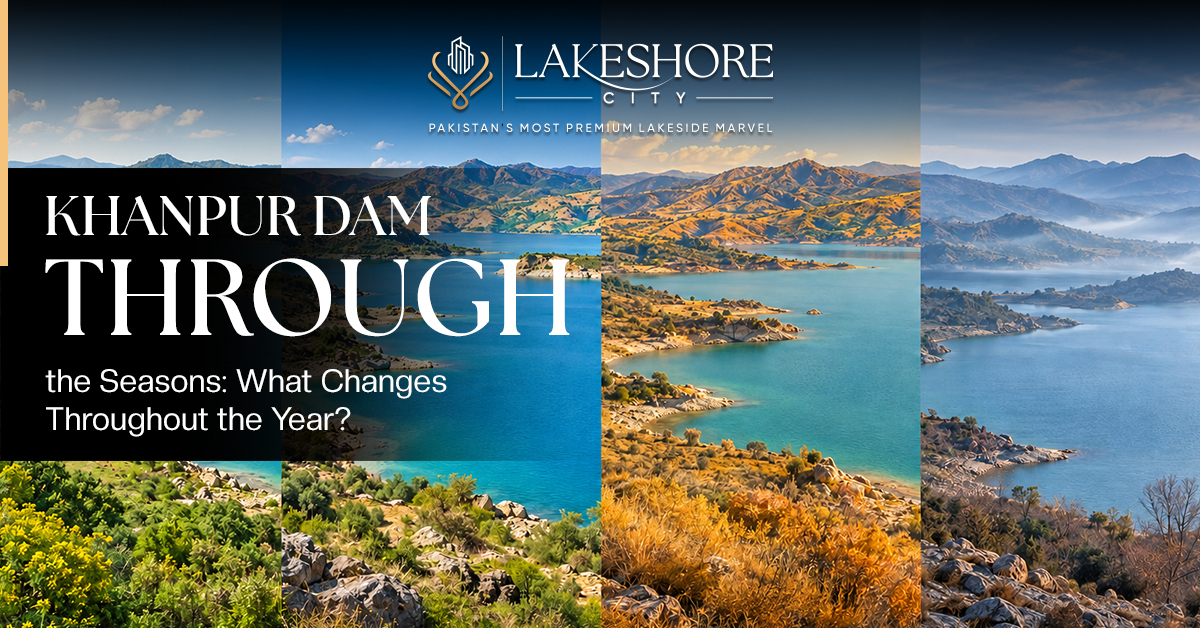
Khanpur Dam changes character with every season. Spring is mild and photogenic, summer is peak water-sports season despite the heat, monsoon swells the lake and reveals dramatic scenery (with slippery trails as a trade-off), autumn offers the clearest all-round conditions, and winter suits slower boating trips and quiet lakeside afternoons. June to October is generally best for water sports; October to March is generally best for comfortable sightseeing.
Ask five people about the best time to visit Khanpur Dam and you’ll likely get five different answers. That’s because the dam, built on the Haro River in Haripur district and roughly 40 to 60 kilometres — about a 90-minute drive — from Islamabad along the Taxila-Haripur Road, behaves like several different destinations depending on the month. The water level shifts, the hills around it change colour, and the activities that make sense in July aren’t the ones that make sense in January. Here’s what actually changes, season by season, so you can plan around it instead of guessing.
How Khanpur Dam Changes Throughout the Year
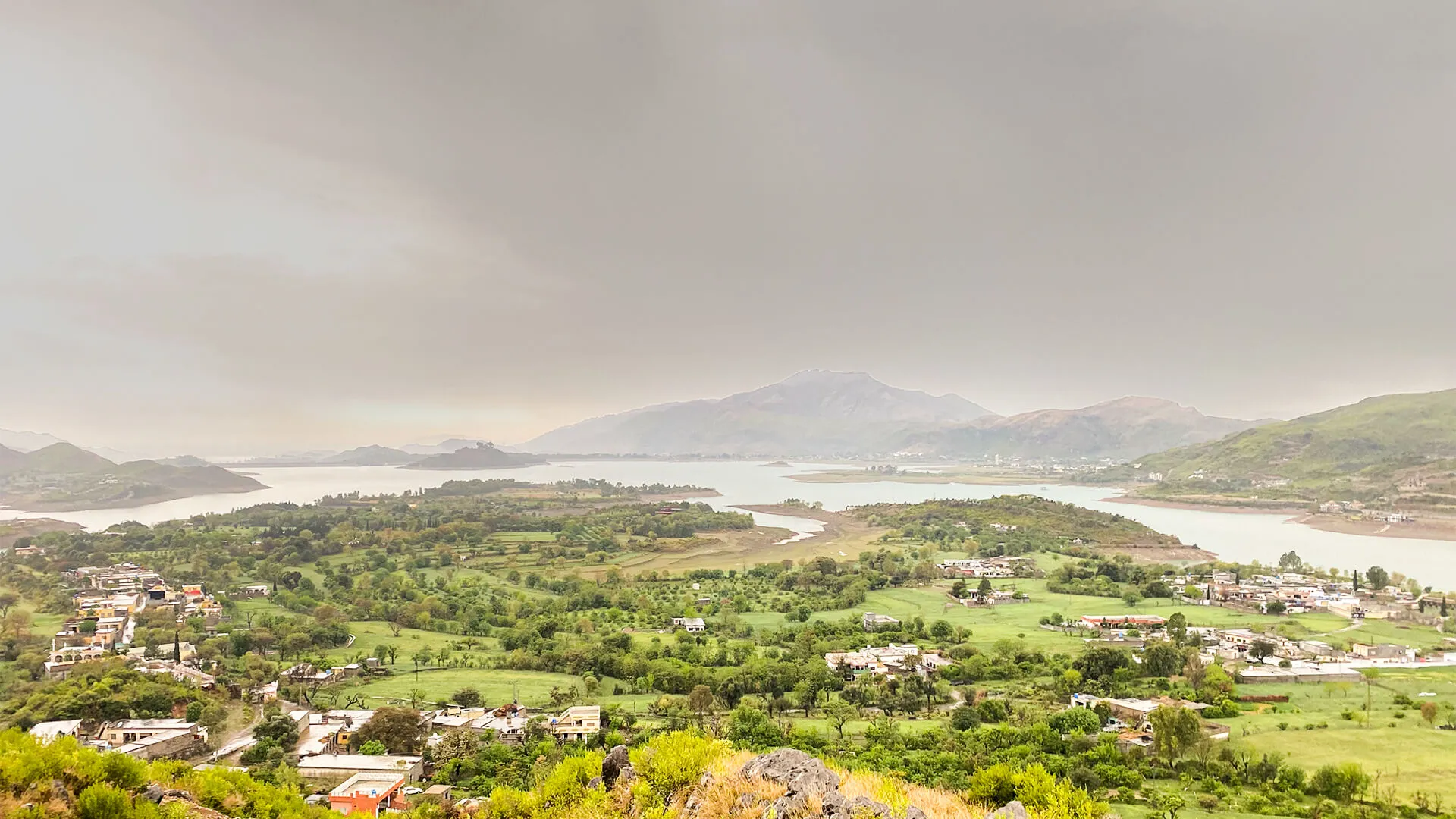
Khanpur Dam sits in a semi-arid pocket of the Pothohar region, which means hot, dry summers and short, mild winters, with the rocky hills around the lake holding on to daytime heat longer than the water itself does. That single fact explains most of what follows: warm-weather sports peak when the sun is strongest, the lake visibly rises during the monsoon months, and the calmest, clearest days tend to fall on either side of summer.
| Season | Typical Weather | Best For |
|---|---|---|
| Spring (Mar–Apr) | Mild to warm, clear skies | Hiking, photography, easy water sports |
| Summer (May–Aug) | Hot, strong sun | Swimming, jet skiing, cliff diving |
| Monsoon (Jul–Sep) | Warm with rain, rising water | Scenery, weather permitting |
| Autumn (Oct–Nov) | Dry, comfortable | Cliff diving, boating, sightseeing |
| Winter (Dec–Feb) | Cool, crisp, sunny days | Boating, quiet lakeside visits |
Khanpur Dam in Spring
March and April bring some of the most comfortable conditions of the year. The heat hasn’t set in yet, the surrounding hills still hold a touch of winter greenery, and the water stays calm enough for beginners to try boating or jet skiing without the crowds that show up later in summer. It’s also a strong stretch for photography, since the light is softer and the air clearer than the hazier months that follow. If you want to explore the trails around the dam on foot, spring is usually the easiest season to do it in without fighting the heat.
Khanpur Dam in Summer
From May through August, Khanpur Dam turns into one of the busiest water-sports spots near Islamabad. Boating, jet skiing, and cliff diving all pick up, and the lake’s blue-green water — a look it partly gets from mineral content — is at its most photogenic against the bare hills. The trade-off is the heat: daytime temperatures climb, and the rocky terrain around the reservoir can feel considerably hotter than the water itself. Most repeat visitors plan activities for the morning or the couple of hours before sunset, carry more water than they think they’ll need, and save harder hikes for a cooler season. Timings at the dam generally run from around 9 a.m. to sunset.
Khanpur Dam During Monsoon
July through September brings rain, and with it, a noticeably fuller lake. The scenery turns greener, and the water-level rise is dramatic enough that a landmark like the 19th-century Rajgan Mosque near the dam gets partially submerged, leaving only its minarets visible at higher conservation levels. It’s a striking sight, but the monsoon months come with real caveats: trails and rocks near the water get slippery, water-sports operators sometimes pause activities during heavy rain or sudden level changes, and access roads can be harder to drive. Check the forecast before heading out, and treat a monsoon visit as scenery-first rather than sports-first.
Khanpur Dam in Autumn
October and November are often cited as the strongest all-round months to visit. The rain has cleared, the heat has broken, and dry, comfortable air makes both sightseeing and more active outings easier to plan. This stretch is also popular for cliff diving, since water levels are still relatively high from the monsoon while the weather itself has calmed down. If your priority is clear, uncluttered views of the lake and the hills around it, autumn tends to deliver more consistently than the hazier summer months.
Khanpur Dam in Winter
December through February brings cool, crisp air and generally sunny days, with daytime temperatures that stay mild rather than cold by regional standards. Water sports thin out, but this is a comfortable season for slower activities — boating, sitting along the dam wall to take in the view, or a quieter picnic without the summer crowds. Some local guides list winter, particularly January and February, as a solid choice for visitors who’d rather trade adrenaline sports for a calmer lakeside afternoon. It’s also one of the more forgiving seasons for a day trip, since there’s no midday heat to plan around.
Which Season Is Best for Khanpur Dam?
There isn’t one universal answer, and most local guides split it two ways. For water sports specifically, June through October covers the window when levels and weather line up best for boating, jet skiing, and cliff diving. For general sightseeing and comfort, October through March is the more commonly recommended stretch, since the heat has broken and the roads and trails are drier than during monsoon. If you’re choosing based on what you actually want to do — adrenaline versus a calm afternoon by the water — that split matters more than picking a single “best month.”
Why Khanpur Dam Matters Beyond a Weekend Trip
For a lot of Islamabad and Rawalpindi residents, Khanpur Dam isn’t just a once-a-year excursion — it’s a reminder of how close open water and hill scenery actually are to home. That proximity is part of a broader shift along the Taxila-Haripur corridor, where interest in weekend nature access has started to translate into interest in living closer to it year-round. Lakeshore City, positioned within this same heritage-rich corridor near Taxila and Khanpur Dam, has been part of that conversation — not as a substitute for the dam itself, but as an example of what a slower, waterfront-adjacent lifestyle near Islamabad could look like outside the city’s density.
Nature, Accessibility and Lifestyle Around Islamabad
The appeal of this corridor isn’t only about the dam. It’s the combination of accessible nature, a rich historical backdrop — Taxila’s UNESCO-listed ruins sit nearby — and relatively easy road access from Islamabad and Rawalpindi. Developments in the area, including Lakeshore City, have leaned into that positioning, framing themselves around open space and proximity to natural landmarks rather than dense, purely urban living. Property and land values along growth corridors near major cities can shift over time, though outcomes vary by location and market conditions, and any appreciation is not guaranteed. For readers weighing the seasonal appeal of Khanpur Dam against a longer-term interest in the area, that distinction is worth exploring independently of any single weekend visit.
FAQs
Is Khanpur Dam open all year round?
Yes. It’s accessible year-round, with timings generally running from around 9 a.m. to sunset. What changes across the year is which activities make sense, not whether you can visit at all.
What is the best time to visit Khanpur Dam for water sports?
June through October is the window most local guides point to for boating, jet skiing, and cliff diving, since water levels and weather line up best during this stretch.
Is Khanpur Dam better in summer or winter?
Summer suits swimming and water sports but comes with strong heat. Winter is cooler and calmer, better suited to boating and sightseeing than high-adrenaline activities.
Should I visit Khanpur Dam during monsoon season?
You can, and the rising water and greener hills make for dramatic scenery, but trails get slippery and water activities may pause during heavy rain. Check the forecast first.
How far is Khanpur Dam from Islamabad?
It’s roughly 40 to 60 kilometres away, about a 90-minute drive along the Taxila-Haripur Road, making it a common day-trip or weekend destination for Islamabad and Rawalpindi residents.
What can I do at Khanpur Dam besides water sports?
Hiking, photography, picnicking, and simply sitting along the dam wall to take in the view are popular year-round, especially in spring and autumn when the weather is milder.