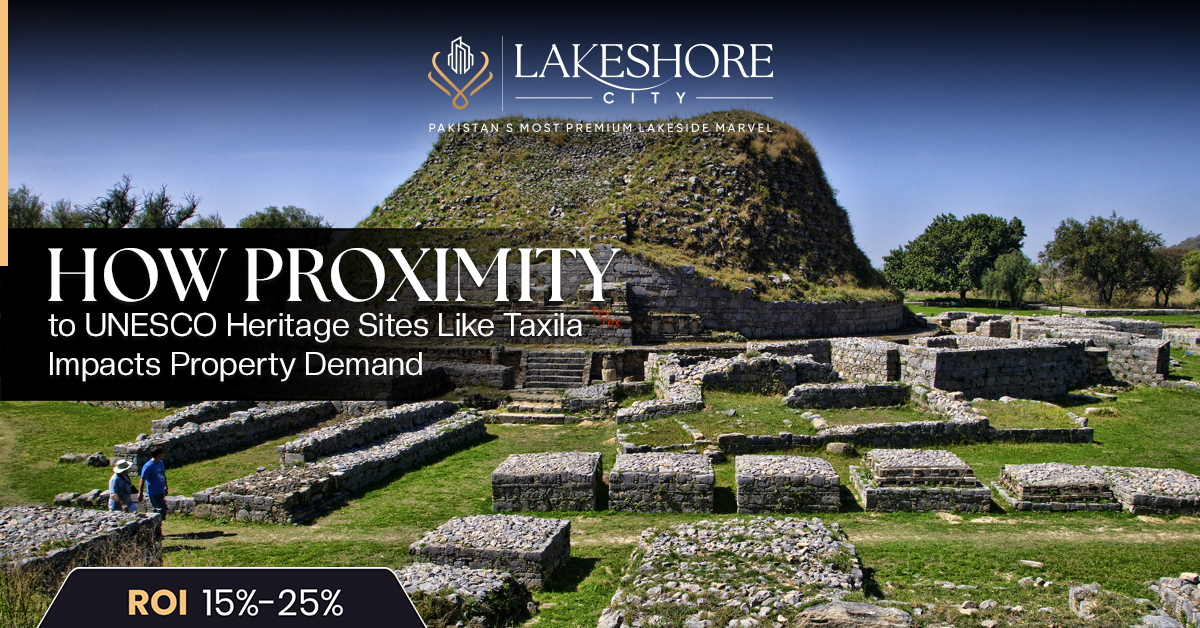
Here is something most property buyers in Pakistan have not thought about — Taxila is a UNESCO World Heritage Site sitting roughly 30 kilometres from Islamabad, and the land around it has been quietly attracting a different kind of attention for the past few years.
Not just from history enthusiasts. From investors.
When a location carries that kind of international recognition — archaeological museums, ancient Buddhist ruins, foreign tourists, government-supported development — the areas around it tend to grow differently from your average suburban plot. Infrastructure improves. Tourism spending comes in. Families start looking at the region as somewhere worth living, not just passing through.
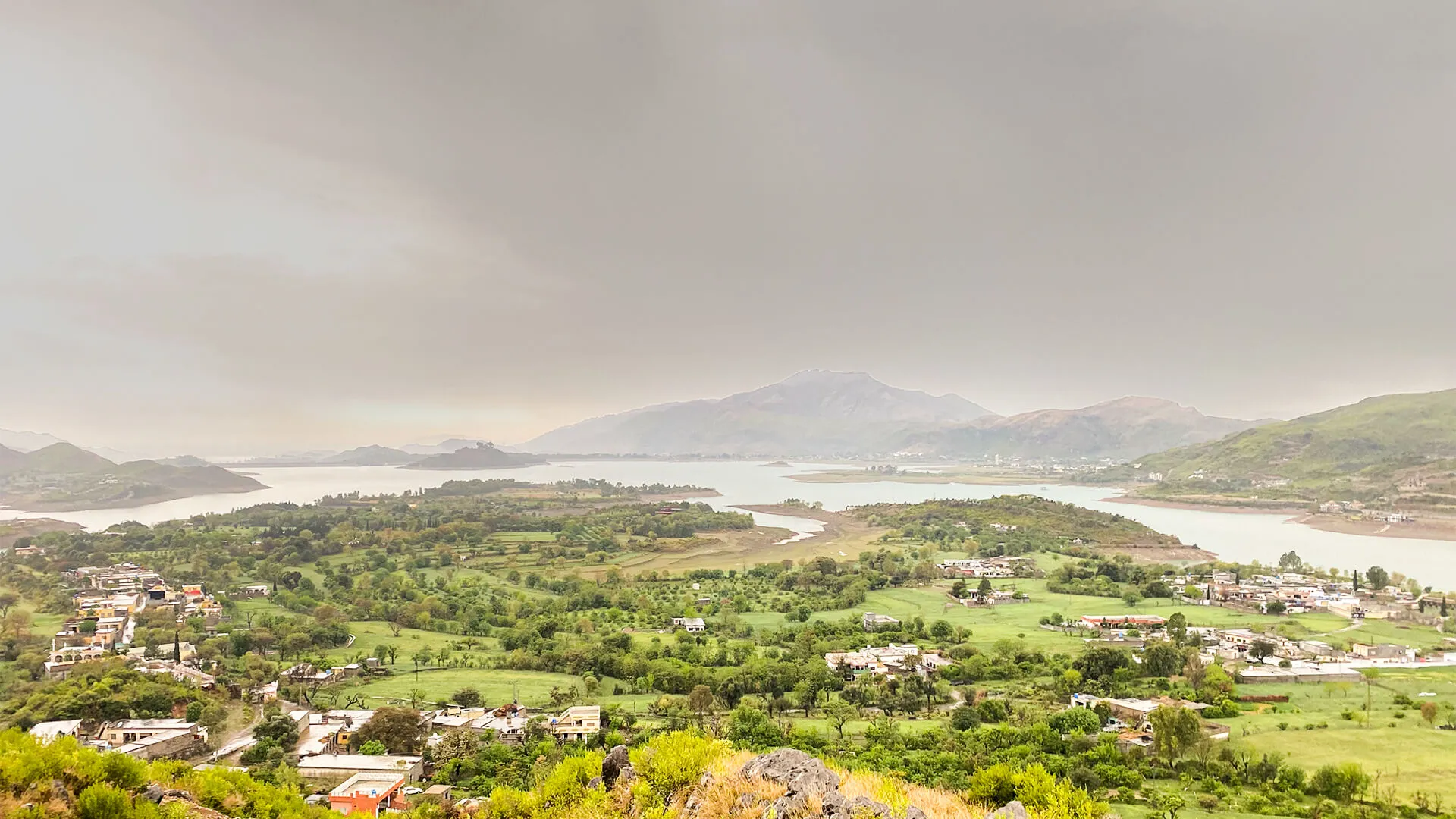
Lakeshore City sits within this broader corridor. It is close to Taxila, close to Khanpur Dam, and not far from Islamabad. That combination of factors is what makes it worth understanding properly — not just as a housing project, but as a location with real reasons behind the buyer interest it is generating.
This article explains what those reasons are, what kind of return investors have historically seen in similar locations, and what you should think through before deciding whether Lakeshore City fits your investment goals.
What Makes Taxila Relevant for Real Estate — Not Just History
Most people know Taxila as an ancient city with deep historical roots. It was one of the great centres of learning in the ancient world, home to the famous Taxila University that drew students from across Asia. The Archaeological Museum of Taxila holds thousands of artefacts dating back more than two thousand years.
UNESCO gave it World Heritage Site status because the ruins there — Dharmarajika, Jaulian, Sirkap — represent one of the most significant collections of Gandharan Buddhist archaeology on earth.
That is the history. Here is the real estate logic.
When UNESCO designates a heritage site, a few things happen consistently across different countries. The national and provincial government started paying more attention to that area. Roads get improved to bring in tourists. Visitor infrastructure — hotels, rest stops, signage, public facilities — gets built or upgraded. International organizations sometimes contribute funding. The location starts appearing on maps that previously ignored it.
All of that raises the profile of the surrounding region. And a higher-profile region attracts more buyers, more development applications, and eventually more demand for residential property.
This is not a theory specific to Pakistan. It is a pattern that plays out in real estate markets near heritage zones globally. Taxila is simply the local version of that story.
The presence of a UNESCO site does not guarantee property appreciation. But it creates conditions — tourism, infrastructure, government attention — that consistently attract development interest over time.
How This Affects Property Demand in the Taxila Region
Tourism Brings Steady Outside Attention
Taxila draws a consistent flow of domestic and international tourists every year. That visitor traffic has a direct economic effect on the surrounding area — restaurants, guesthouses, fuel stations, and small businesses all grow around it. Where economic activity grows, people want to live nearby.
For property investors, an area with steady tourism is more likely to maintain demand than an area with no external traffic. Rental potential also increases when tourists and visiting professionals need short-term accommodation.
Infrastructure Investment Follows Heritage Zones
The road network around Taxila has seen gradual improvement over the years, partly because of the need to make the heritage sites accessible. The Grand Trunk Road runs through the area. Connectivity to the Islamabad-Peshawar Motorway (M-1) makes the broader region accessible for daily commuters as well as weekend visitors.
Better roads reduce travel time. Reduced travel time makes a location more attractive to buyers who work in Islamabad but do not want to pay Islamabad prices for a home.
Government Development Attention
Taxila sits in the Rawalpindi Division, which has seen significant planning activity over the past decade. Between the CPEC corridor, the Rawalpindi Ring Road project, and the Heritage Tourism Development programs, this is an area with government attention from multiple directions. That kind of policy focus tends to have a positive effect on surrounding land values over time.
Buyer Preference for Recognisable Locations
This one is simple but real. When a buyer is choosing between two plots at similar prices, one near an area they have heard of and one they have not, they almost always prefer the familiar location. Taxila is a name that Pakistanis know. International Pakistanis know it. That name recognition carries some weight in purchase decisions, especially for buyers who research before they invest.
Where Lakeshore City Fits Into This Picture
Lakeshore City is a planned housing development located near Khanpur Dam, within the broader Islamabad–Taxila–Attock corridor. It sits in a zone that benefits from multiple demand drivers at once — proximity to Islamabad, access to the Khanpur Dam recreational area, and the broader heritage tourism belt that includes Taxila.
That last point matters more than it might first appear. Buyers today are not just looking for a cheap plot. They want a location with a story — somewhere they can explain to their family or to another investor and have the location make sense. Being near Khanpur Dam makes sense. Being within the heritage tourism corridor near Taxila makes sense. Being within reasonable distance of Islamabad makes sense. Lakeshore City sits at the intersection of all three.
The project also has planned community infrastructure — which is not something you can take for granted in Pakistan’s real estate market. A lot of affordable land near Islamabad is either unapproved, undeveloped, or missing basic infrastructure. A scheme with actual roads, utilities, and a defined layout removes the biggest risks for first-time investors.
What Planned Community Status Actually Means for Buyers
In Pakistan, the difference between a planned approved society and raw agricultural land is not just legal — it is practical. Banks will finance properties in approved societies. Resale is easier. Future residents can connect to utilities. And when you eventually want to sell, buyers do not spend six months doing legal due diligence before they will touch it.
For investors thinking about long-term appreciation, buying in a properly planned project near a high-profile location like the Taxila-Khanpur belt is a stronger position than buying raw land nearby at a slightly cheaper price per marla.
Investment Potential and Realistic ROI Expectations
This is the section most investors scroll to first. Let me be direct about what the numbers look like and what they depend on.
Based on how similar developing projects in the Islamabad–Rawalpindi corridor have performed historically, early-stage investors in planned communities with good location fundamentals have seen returns in the range of 15% to 25% over a holding period of several years. Some projects have done better, particularly when a major infrastructure announcement came through during the holding period. Some have done less, particularly when development timelines stretched or market conditions softened.
For Lakeshore City specifically, the factors that support the investment case are:
- Location near both Khanpur Dam and the Taxila heritage corridor — two independent demand drivers
- Distance from Islamabad that puts it within the commuter belt as road infrastructure improves
- Entry pricing that is accessible for middle-income buyers, with installment options starting at affordable monthly amounts
- Planned community status with proper documentation — which matters for resale and bank financing
- A region with active government infrastructure investment through multiple federal programs
The factors that could affect returns downward include: broader market slowdowns in Pakistan’s property sector, delays in surrounding road or utility development, or macroeconomic pressure on buyer purchasing power.
Why Investors Are Paying Attention to Lakeshore City Right Now
Installment Plans Make Entry Accessible
One of the most common reasons buyers miss good early-stage opportunities is capital. They see the project, they understand the location, but the upfront cost puts it out of reach.
Lakeshore City offers plots on installments, with monthly payment plans that start from around Rs. 25,000 per month depending on the plot size and payment structure. For a salaried family or a small investor who cannot park a large lump sum, this kind of entry point changes the conversation.
You are not borrowing to invest — you are spreading payment over time while the property develops. That is a materially different financial position from taking a loan.
The Islamabad Buyer Pool Is Large and Growing
Islamabad’s real estate prices have moved significantly in recent years. Many families who want to own property near the capital cannot afford plots inside the city or in established societies like DHA or Bahria. They are actively looking one ring outward — to areas like the Taxila belt, the Khanpur corridor, and similar zones where prices are still reasonable but the location story is solid.
Lakeshore City sits in the middle of that search. It is the kind of project that makes sense to a family in Islamabad looking for a weekend home, a long-term investment plot, or eventually a primary residence when they are ready to move out of a rented apartment.
Appreciation Requires a Holding Mindset
Property near Islamabad is not a trade — it is a hold. Investors who have done well in this market are almost always the ones who bought at an early stage, sat on it for five to eight years, and sold when the area had developed enough to command a premium.
The investors who got frustrated and sold early — often during a flat period two or three years in — are the ones who missed the appreciation that came later. If you are thinking about Lakeshore City, go in with that mindset or do not go in at all.
So — Does Proximity to Taxila Actually Increase Property Demand in Lakeshore City?
The direct answer is yes, it can — and here is why that answer is conditional rather than absolute.
Taxila’s UNESCO status brings tourism, government infrastructure investment, and name recognition to the broader region. Those three things have a consistent historical record of supporting property demand in surrounding areas. Lakeshore City sits within that zone of influence.
At the same time, proximity to Taxila alone does not make any property a good investment. What matters is the combination: a strong location anchor (Taxila heritage, Khanpur Dam), genuine development activity on the ground, a project with clean legal status, and a buyer who is realistic about timelines.
If those four things are in place — and for Lakeshore City, the evidence suggests they are — then the UNESCO heritage proximity is a real demand factor, not just a marketing talking point.
Buy with a clear head, verify the documentation, and think in years rather than months. That is the honest framework for this investment.
Frequently Asked Questions
Is Lakeshore City a good investment near Islamabad?
Lakeshore City has several factors that support its investment case: location near both Khanpur Dam and the Taxila heritage corridor, planned community infrastructure, installment-based entry pricing, and proximity to Islamabad’s expanding buyer pool. Whether it is right for you depends on your investment timeline, budget, and how much you have verified about the project’s development progress.
How does Taxila’s UNESCO heritage status affect property prices nearby?
UNESCO designation brings consistent tourism traffic, government infrastructure investment, and broader name recognition to a region. All three tend to support property demand over time. Areas near Taxila have seen road improvements, increased visitor activity, and growing interest from buyers who want location value without Islamabad’s price tag.
What is the expected ROI on plots in Lakeshore City?
Based on how similar projects in the Islamabad–Rawalpindi corridor have performed, early investors in well-located developing communities have historically seen returns in the 15% to 25% range over several years. This figure is market-dependent and not guaranteed. Returns depend on holding period, development progress, and broader market conditions.
Can I buy plots in Lakeshore City on installments?
Yes. Lakeshore City offers installment-based payment plans with monthly amounts starting from around Rs. 25,000 depending on plot size and payment structure. This makes it accessible for buyers who cannot arrange a lump-sum payment upfront.
Is property near UNESCO heritage sites safe for investment in Pakistan?
Heritage zones tend to attract consistent government attention, tourism infrastructure, and long-term development interest — all of which support property demand. However, no location is risk-free. Before investing, verify the project’s legal status, check development activity on the ground, and make sure the documentation is clean.
What makes Lakeshore City different from other housing projects near Islamabad?
Its location sets it apart. Most affordable housing projects near Islamabad are in purely suburban zones with no independent demand driver. Lakeshore City sits near both Khanpur Dam and the Taxila heritage corridor — two locations that bring in tourism, government infrastructure, and buyer interest separately from the project itself. That combination is less common at its price point.
Can property near Taxila increase in value in Pakistan?
It has historically, in areas where planned development followed the tourism and infrastructure investment that came with Taxila’s heritage status. Growth is not automatic — it depends on the specific project, its legal standing, and how surrounding infrastructure develops. But the location fundamentals around Taxila are stronger than most comparable zones at the same distance from Islamabad.
Does living near a heritage site increase rental demand?
In areas with active tourism, yes. Short-term rental demand tends to grow near heritage destinations as visitor numbers increase and locals look for accommodation options. For Lakeshore City, the combination of Khanpur Dam tourism and Taxila visitor traffic creates more potential rental demand than a purely residential suburban project would have on its own.