- Infrastructure changes how a location gets evaluated by shaping accessibility, livability, and buyer confidence before price ever enters the conversation.
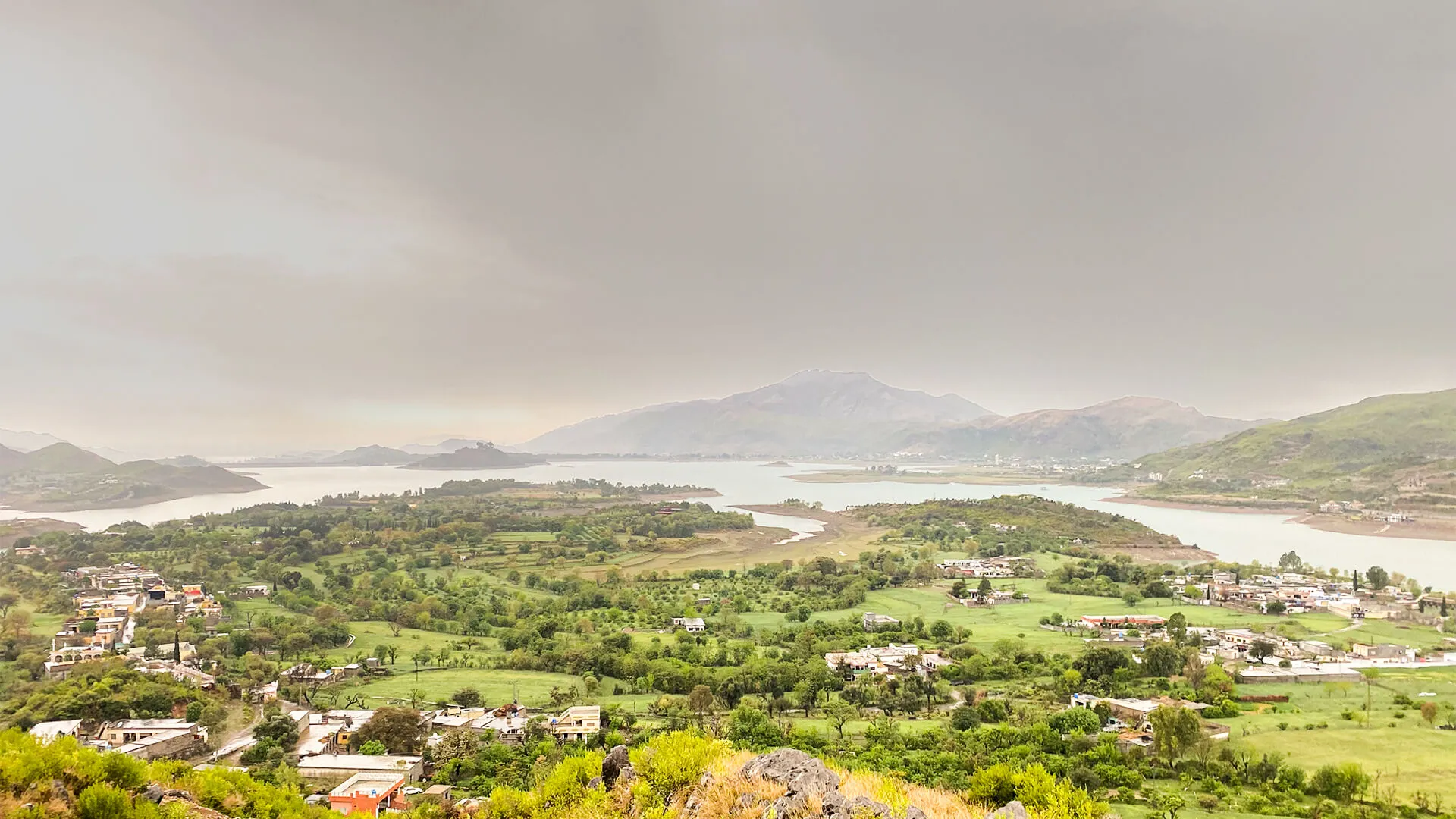
- Lakeshore City sits on the Taxila-Haripur GT Road near Khanpur Dam, about a 15-minute drive from Islamabad’s D-12 sector.
- The Rawalpindi Ring Road’s main phase was reported to be substantially complete and awaiting inauguration by mid-2026, improving motorway access toward the area.
- A second Ring Road phase toward the CPEC/M5 route is still in feasibility — a planned factor, not a finished one.
Why Infrastructure Decides How a Location Gets Read
Buyers rarely fall for a plot number. They react to how hard it is to get somewhere, whether the utilities work on day one, and whether the road outside is paved or just promised. Infrastructure is the quiet variable that turns a patch of land into somewhere people actually want to live.
That variable matters more in a developing corridor than in an already-built city. In Lahore’s DHA or Islamabad’s F-sectors, roads and utilities are assumed and barely discussed. In a peri-urban development like Lakeshore City, near Khanpur Dam on the Taxila-Haripur GT Road, they are still being written into the story. That is exactly why the infrastructure question deserves real scrutiny rather than a line in a brochure, and why separating what is built from what is proposed changes the entire investment calculation.
Four things tend to move together with infrastructure spending:
- Accessibility — a signed, paved, 30-minute commute reads very differently from an unpredictable 45-minute one, and resale buyers price that difference in.
- Livability — schools, hospitals, and reliable utilities decide whether people move in and stay, or buy and wait.
- Buyer confidence — private development rarely outruns public infrastructure for long, so government spending patterns tend to signal where confidence is justified.
- Development momentum — visible progress, paved roads, functioning amenities, tends to attract more of the same behind it.
Where Lakeshore City Actually Sits
Lakeshore City is located at Jabbri on the Taxila-Haripur GT Road in Khyber Pakhtunkhwa, close to the KP-Punjab boundary and the Khanpur Dam reservoir on the Haro River. Worth being precise about: the dam is not part of the development. It is a government reservoir that has supplied drinking water to Islamabad and Rawalpindi since 1984, and it functions today as a public recreational lake for boating, fishing, and picnicking. What the project sells is proximity to that lake, not the lake itself.
From the site, Islamabad’s D-12 sector is roughly a 15-minute drive, and Mabali Island, a well-known lakeside spot, sits about 2.5 kilometres away. The location also falls within reach of the M2 Motorway, which links into the broader Lahore-Islamabad corridor, and connects onward toward Wah Cantt, Taxila, and Haripur along the GT Road.
What’s Built, and What’s Still Coming
This is where the distinction between fact and promise matters most, and where most marketing copy gets vague on purpose.
Current infrastructure
- Khanpur Dam and Khanpur Lake — operational since 1984, functioning water source and recreational facility.
- Taxila-Haripur GT Road — existing paved arterial connecting the site to Taxila, Haripur, and Wah Cantt.
- M2 Motorway proximity — an existing national motorway link toward Islamabad, Rawalpindi, and Lahore.
- Rawalpindi Ring Road, Phase I — the 38.6-km corridor from Banth on GT Road to the Thalian Interchange on the M2 was reported substantially complete by mid-2026, with carpeting largely finished and the project awaiting formal inauguration.
Planned or proposed infrastructure
- Rawalpindi Ring Road, Phase II — a proposed extension toward the M5 and the CPEC route, still at feasibility and design stage as of mid-2026, with no confirmed completion date.
- Industrial and commercial zones along the Ring Road corridor — discussed by planning authorities, pending further government approval.
- Any Ring Road-linked transport terminals, education, or health zones mentioned in early planning documents remain proposals, not built assets.
The comparison below sums up that split. It’s the single most useful table for anyone trying to separate what they are actually buying access to today from what they are betting on for later.
| Currently in place | Planned or in progress |
|---|---|
| Khanpur Dam and Lake (operational since 1984) | Rawalpindi Ring Road Phase II toward M5/CPEC route |
| Taxila-Haripur GT Road access | Industrial estates along the Ring Road corridor |
| M2 Motorway link via Thalian Interchange | Broader master-plan commercial/education zones |
| Rawalpindi Ring Road Phase I (near-complete, awaiting inauguration) | Formal Ring Road inauguration date (not yet fixed at time of writing) |
What This Means for the Investment Narrative
None of this guarantees appreciation, and no credible advisor should tell you it does. What a clearer infrastructure picture does is change the risk profile of the area. A location with a functioning water source, an existing GT Road connection, and a near-complete ring road linking it to the motorway network carries a different risk profile than one where all of that still lives in a feasibility report.
The lifestyle layer plays into this too. Waterfront and hill-view plots carry a different appeal than a flat urban grid, and a development built around recreation — Lakeshore Club facilities, farmhouse zones, and residential blocks such as Lakeshore Residencia — tends to draw a different kind of buyer than one built purely on commuter logic. That’s a livability argument, not a price prediction, and it’s worth treating it as exactly that.
What a Serious Buyer Should Verify Before Committing
Infrastructure headlines are a starting point, not a substitute for due diligence. Before signing anything, work through the basics:
- Confirm the project’s regulatory and NOC status directly with the relevant development authority — not just through marketing material.
- Ask for the current, written payment plan rather than relying on a verbal quote, since schedules and rates get revised over time.
- Clarify possession timelines against actual, on-site construction progress rather than launch-date promises.
- Total the full acquisition cost — booking, confirmation, monthly installments, balloting charges, and any development charges — instead of anchoring on the advertised base price.
- Visit the site in person and assess road access, utility connections, and distance to the nearest functioning amenities.
For the current numbers, the payment plan page lists booking, confirmation, and installment structures across farmhouse and commercial categories, though rates are subject to revision, so treat any figure as a starting point for a direct conversation rather than a locked-in quote.
Frequently Asked Questions
Does Lakeshore City have direct motorway access?
It sits near the M2 Motorway and the Taxila-Haripur GT Road, with the Rawalpindi Ring Road, reported near-complete by mid-2026, improving onward connectivity toward Islamabad and Rawalpindi through the Thalian Interchange.
Is the Rawalpindi Ring Road finished?
Phase I, the main 38.6-km corridor from Banth to Thalian, was reported substantially complete and awaiting formal inauguration as of mid-2026. Phase II, extending toward the CPEC route, remains at the planning and feasibility stage.
How far is Lakeshore City from Islamabad?
Roughly a 15-minute drive to Islamabad’s D-12 sector, based on the location details published for the project.
What should I check before buying a plot here?
NOC and regulatory status, the current written payment plan, possession timelines measured against real construction progress, and the total acquisition cost including all charges — not just the advertised base price.
Is Khanpur Dam part of the development, or a separate facility?
Khanpur Dam is a pre-existing government reservoir on the Haro River, operational since 1984. Lakeshore City is a private development located near it — it did not build or own the dam, and buyers should treat proximity, not ownership, as the actual selling point.
The Bottom Line
Infrastructure doesn’t guarantee that a plot becomes a good investment. It does determine whether the story around that plot is grounded in something real. For Lakeshore City, the honest read is mixed in a genuinely useful way: some of what matters most — the dam, the GT Road access, a nearly finished ring road — already exists. Other pieces, including the Ring Road’s second phase and any industrial zones tied to it, are still working through approval and have no confirmed completion date.
A serious buyer weighs both sides, checks the paperwork, and decides against the actual timeline in front of them rather than the promotional one. If that homework checks out and the numbers work for you, you can register your interest to get current figures directly from the sales team, or move ahead by completing the client booking form once you’re ready to formalize a purchase.