Key Takeaways
- Syed Sadat Hussain Shah’s vision behind Lakeshore City connects real estate to tourism, community life, and long-term regional development.
- “From Land to Legacy” reflects a shift from viewing land as a transaction to viewing it as a foundation for lasting community value.
- The project’s positioning near Khanpur Dam and the Taxila corridor ties ownership to a broader destination experience.
- No investment, appreciation, or completion timeline claims are guaranteed; readers should verify current details directly with Lakeshore City.
Every development starts with land. Few start with a philosophy. Lakeshore City, positioned along the Khanpur Dam and Taxila corridor near Islamabad, carries the imprint of a vision associated with Syed Sadat Hussain Shah, one that treats real estate as a starting point rather than an end goal. Rather than framing the project purely around plots and pricing, the thinking behind Lakeshore City connects land ownership to tourism, community life, and long-term regional value. Understanding that vision matters for anyone deciding whether this development fits their goals as a resident, investor, or visitor.
A Vision That Goes Beyond Real Estate
Real-estate developments are usually judged by unit sizes, payment plans, and possession dates. The thinking behind Lakeshore City starts from a different question: what does a piece of land near a lake, hills, and a historic trade corridor actually enable, once it is shaped by people instead of left as raw terrain? Syed Sadat Hussain Shah’s vision treats Lakeshore City as an attempt to answer that question through planning that considers tourism, recreation, and community life alongside residential and commercial plots.
Who Is Syed Sadat Hussain Shah?
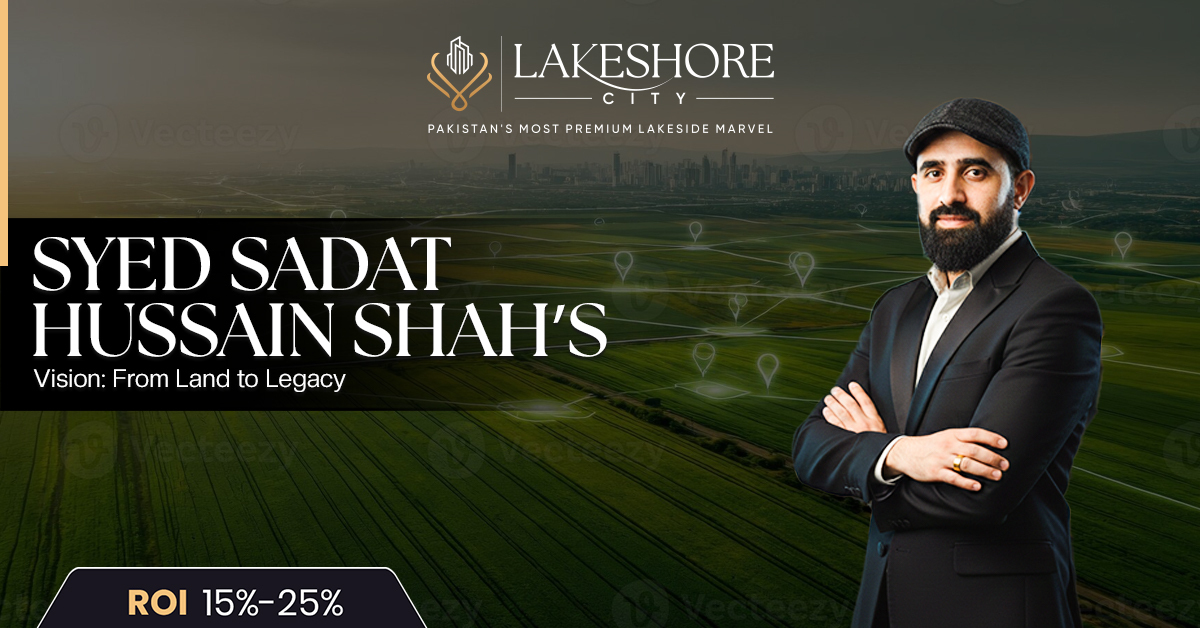
Syed Sadat Hussain Shah is associated with the vision and development direction behind Lakeshore City, a project positioned along the Khanpur Dam and Taxila corridor near Islamabad. His role centers on shaping the project’s underlying philosophy, connecting real estate to tourism, community planning, and long-term regional development rather than treating land as a standalone commodity.
From Land to Legacy
“From Land to Legacy” describes a shift in how the project is meant to be understood. Land, on its own, is inert. It becomes something else once roads, water access, planning, and community infrastructure are layered onto it, and once people actually live, work, and gather there. Shah’s vision frames Lakeshore City’s growth in those terms: not as plots changing hands, but as a place that, over years, accumulates the kind of identity a legacy implies. That framing sets expectations. A legacy is not delivered in a single phase or a single announcement. It builds gradually, through the choices made about how the land is used and who it serves.
What Is the Vision Behind Lakeshore City?
The vision behind Lakeshore City is to build a destination where residential living, tourism, nature, and community life develop together, rather than a single-purpose housing scheme. It positions the Khanpur Dam and Taxila corridor as a setting for long-term regional development, connecting property investment to the area’s recreational and cultural potential.
Connecting Community, Nature and Opportunity
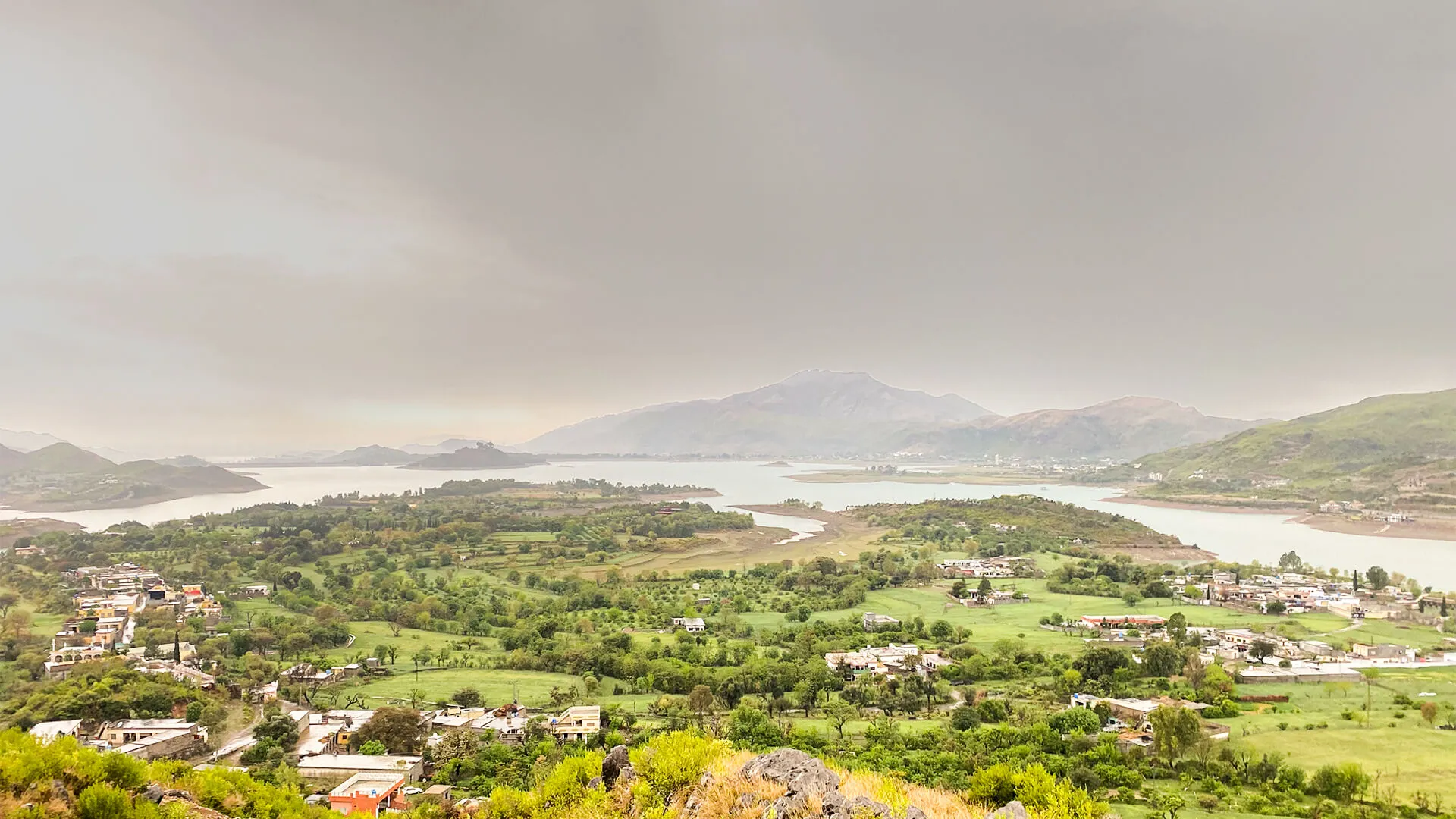
Lakeshore City’s location near a reservoir, within reach of the Margalla Hills, and close to Taxila’s archaeological heritage gives the vision a natural starting point. Water and green space attract visitors and residents on their own; the harder work is designing a community around that appeal instead of simply building near it. That is where Shah’s vision draws a line between a housing development and a destination-oriented one: it treats recreation, tourism, and everyday community life as connected pieces rather than separate features pitched after the fact. Economic opportunity follows the same logic. A place that draws visitors, supports local commerce, and gives residents a reason to stay creates value that outlasts the initial sale of a plot.
A Destination With a Long-Term Purpose
None of this happens on a fixed timeline, and no responsible reading of the vision should suggest otherwise. Development of this scale unfolds in stages, shaped by approvals, infrastructure, and market conditions that no single announcement can guarantee. What the vision does commit to is direction: building toward a destination rather than a transaction. That distinction is worth sitting with before comparing Lakeshore City to a conventional housing scheme, because the two are trying to solve different problems.
What Makes Lakeshore City Different From a Conventional Real-Estate Development?
Lakeshore City is framed around tourism, recreation, and community identity in addition to residential and commercial development, rather than plots alone. The project’s positioning near Khanpur Dam and the Taxila corridor is intended to connect ownership with a broader destination experience, a framing more common in tourism-led developments than in standard housing schemes.
What This Vision Means for the Future
Pakistani homebuyers and investors increasingly weigh more than square footage and price per marla. They ask what a place will feel like in ten years, whether it will attract visitors and businesses, and whether it connects to something beyond its own boundary wall. Shah’s vision speaks to that shift by positioning Lakeshore City within a wider regional story, one where tourism and real estate reinforce each other instead of competing for attention. For families evaluating where to settle, for investors weighing long-term potential over quick turnover, and for visitors drawn to the Khanpur Dam area, that vision offers a way to think about the project beyond its immediate listings.
Explore the Lakeshore City Vision
Understanding the thinking behind a development is a reasonable first step before evaluating its plots, pricing, or timelines. Readers interested in Syed Sadat Hussain Shah’s vision for Lakeshore City can learn more about the project’s location, planning direction, and available opportunities through the official Lakeshore City website, or reach out to the Lakeshore City team directly for current, verified project information.
Frequently Asked Questions
Where is Lakeshore City located?
Lakeshore City is positioned along the Khanpur Dam and Taxila corridor, within driving distance of Islamabad, in an area known for its lake, hills, and archaeological heritage.
Does Lakeshore City guarantee investment returns or appreciation?
No. Real-estate value depends on market conditions, planning progress, and regional development, none of which any project can guarantee. Prospective buyers should evaluate Lakeshore City on its location, planning direction, and long-term vision rather than promised returns, and confirm current figures directly with the developer.
What role does tourism play in the project’s vision?
Tourism is treated as a companion to residential and commercial development rather than a separate feature, drawing on the area’s natural landmarks, including Khanpur Dam and the nearby Margalla Hills.
Who is Lakeshore City intended for?
The vision speaks to homebuyers seeking a community-oriented setting, investors interested in long-term, destination-led value, and visitors drawn to the Khanpur Dam and Taxila region.
How can I get verified information about the project?
Readers should confirm current project details, including approvals, pricing, and timelines, directly through the official Lakeshore City website or by contacting the Lakeshore City team.