| Ask for documents, then verify each one with the authority that issued it.Compare what is promised, what is built and what the booking terms actually say.No plot purchase is risk-free, and no developer can guarantee returns. |
A booking receipt feels like progress. It is also the point where you hold the most leverage, because you have paid little and the developer still wants your signature. That is the right moment to ask uncomfortable questions.
Pakistan’s regulators say the same thing. Khyber Pakhtunkhwa recently began a province-wide drive against housing societies that lack the required approvals, and officials told buyers to verify NOCs on their own before investing. The Lahore Development Authority has issued similar warnings for years.
If you are searching for questions to ask before booking a plot in Pakistan, these seven cover what matters most. Each one explains what a good answer looks like and, where it helps, points to Lakeshore City’s published information as something to test rather than simply trust.
1. Is the project approved, and can I verify that myself?
Start with paper. Ask for the NOC, the approved layout plan and the land ownership records. Then take copies to the issuing office, whether that is the Tehsil Municipal Administration, a development authority or the provincial land use body, and confirm them there. A developer’s photocopy proves nothing on its own.
Ask two follow-ups. Is the NOC final or provisional, and does it cover the exact land your plot sits on? Authorities in Pakistan have cancelled approvals after ownership disputes, so title matters as much as the certificate.
Lakeshore Residencia’s project page states that it received a TMA NOC covering 16,000 kanals, numbered 145-50. Treat that as a lead, not a conclusion. Take the number to the TMA and ask them to confirm it.
2. Where exactly is my plot, and can I get there easily?
Ask for the approved layout plan with block and plot numbers. Confirm that your plot is allotted and is not marked as a park, road or utility site. Then visit.
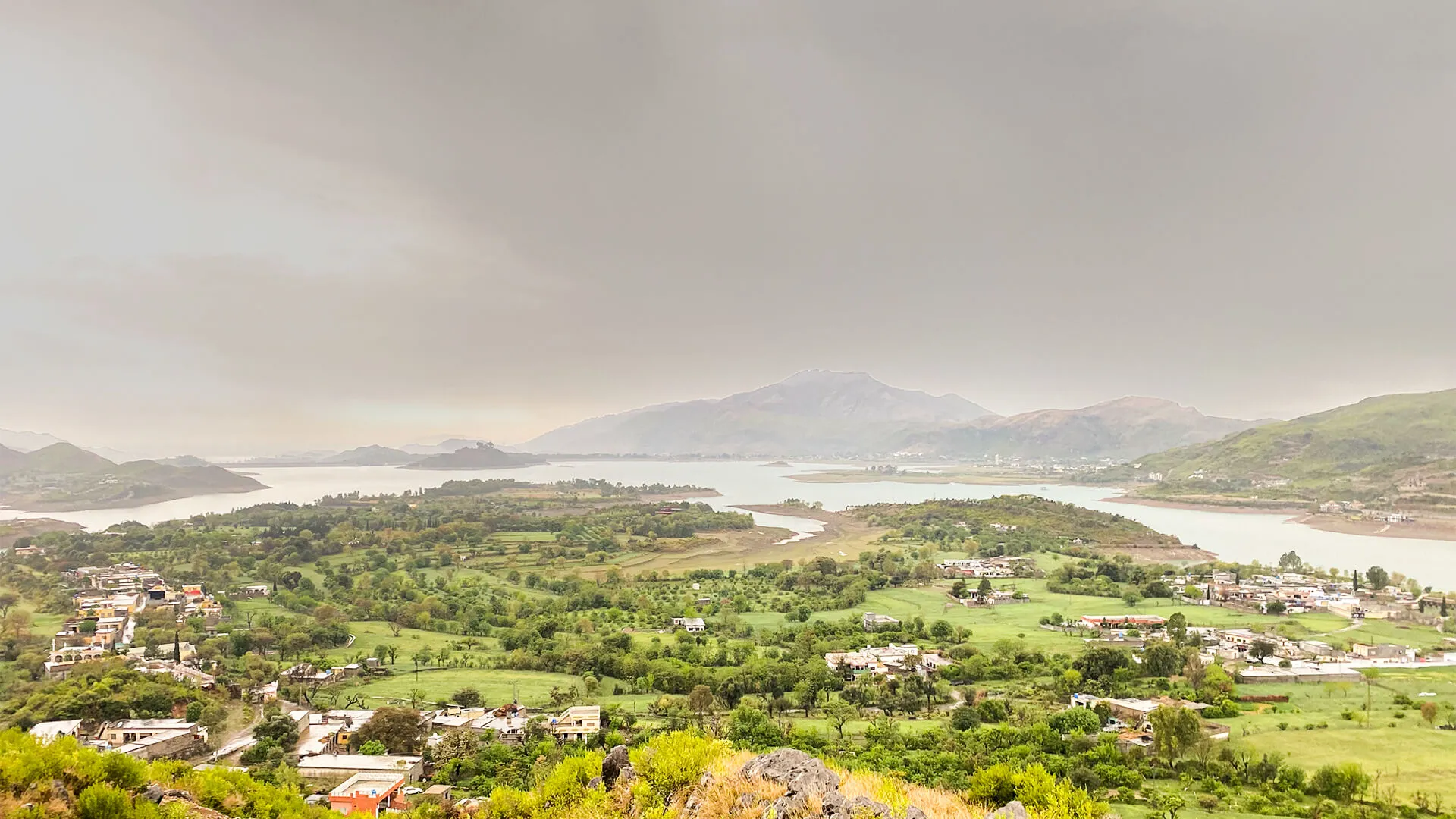
Lakeshore City sits at Khanpur Dam. Its location page lists about 15 minutes to Islamabad’s D-12, while the Residencia page says 25 minutes. Drive the route yourself at the hour you would actually travel, and judge the road, not just the distance.
3. How much is built today, and what is the schedule?
Renders show intent. Dated site photos, finished road sections and named contractors show progress. Ask which phases are under development, which are only planned, and whether the timeline appears in your agreement.
Ask Lakeshore City’s team for a site tour and a phase-wise schedule; you can register your interest with Lakeshore City to set that up. Then compare what you see with what you were told. A confident developer arranges both without fuss.
4. Which utilities and amenities are funded, and which are promises?
Water, electricity, sewerage, roads and gas are not extras. Ask who supplies each, who pays the connection fees and whether development charges cover them.
Lakeshore Residencia’s page lists an education sector, hospitals, restaurants and a cinema among its planned facilities. Ask where each sits on the master plan, when it is due and what happens if it arrives late. An amenity you cannot find on a map is still only an idea.
5. What will I pay in total, and when?
Request one written schedule that lists every charge. Use this table as a checklist.
| Charge | What to ask |
|---|---|
| Booking and confirmation | Are they separate payments, and are they refundable? |
| Monthly installments | Fixed for the full term, or open to revision? |
| Balloting and final payment | What are the amounts and due dates? |
| Development charges | Included in the price or billed later? |
| Possession and transfer fees | Who pays, and how much? |
| Late payment and cancellation | What are the penalties and refund terms? |
Lakeshore City’s own site shows why this matters. The Residencia page advertises no down payment and a 60-month plan, yet its payment table also lists balloting and final payment amounts. The farmhouse tables are split into with and without development charges. Ask which version applies to your plot and get it confirmed in writing before you pay. To see what the application itself asks for, review the clients booking form.
6. When do I get possession, and how does transfer work?
Ask what triggers possession: a payment milestone, completed development, or both. Look for a clause that says what happens if the developer is late.
Then ask about transfer. You need an allotment letter, a clear fee schedule and an official registration process. Pay through traceable bank channels and keep every receipt. Lakeshore City’s booking form asks for the drawing bank, branch and date, so a paper trail is part of the process.
7. What are the risks, and how easily can I resell?
Ask whether the society has a working resale market, which transfer rules apply and whether the developer can point to recent transfers. Check demand independently by speaking with local dealers and current plot holders.
Be wary of anyone who promises fixed returns. Plot values can rise, stall or fall, and outcomes depend on development pace, infrastructure and market conditions. Lakeshore City’s setting at Khanpur Dam may attract interest, but location alone does not guarantee appreciation.
From questions to a confident decision
Put your answers side by side for two or three societies. The strongest option is rarely the cheapest or the loudest. It is the one where the documents, the site visit and the payment terms all tell the same story.
If Lakeshore City is on your shortlist, register your interest with the Lakeshore City team to receive project details and arrange a visit. Once the paperwork satisfies you, submit a booking inquiry through the clients booking form. You can complete it online or download it and submit it at the office.
Frequently Asked Questions
What should I check before buying a residential plot in Pakistan?
Check the NOC, the approved layout plan, land ownership records and the plot’s allotment status with the issuing authority. Then confirm the full payment schedule, possession terms and transfer procedure in writing, and visit the site in person.
How do I verify a housing society before investment?
Collect the NOC and layout plan, then confirm them directly with the relevant authority, such as the TMA or development authority. Check land title with the revenue office, compare development on site with the promised timeline, and avoid relying on advertising or sales claims alone.
Is an NOC enough to prove a project is safe to buy into?
No. An NOC is one required approval, not a full guarantee. You also need clear land title, an approved layout that includes your plot, a realistic development schedule and transparent payment terms.
Can a developer guarantee returns on a plot?
No developer can promise a fixed return, because property values depend on market conditions, development progress and demand. Treat any guaranteed-profit claim as a reason to ask for evidence, and consider speaking to an independent adviser.