
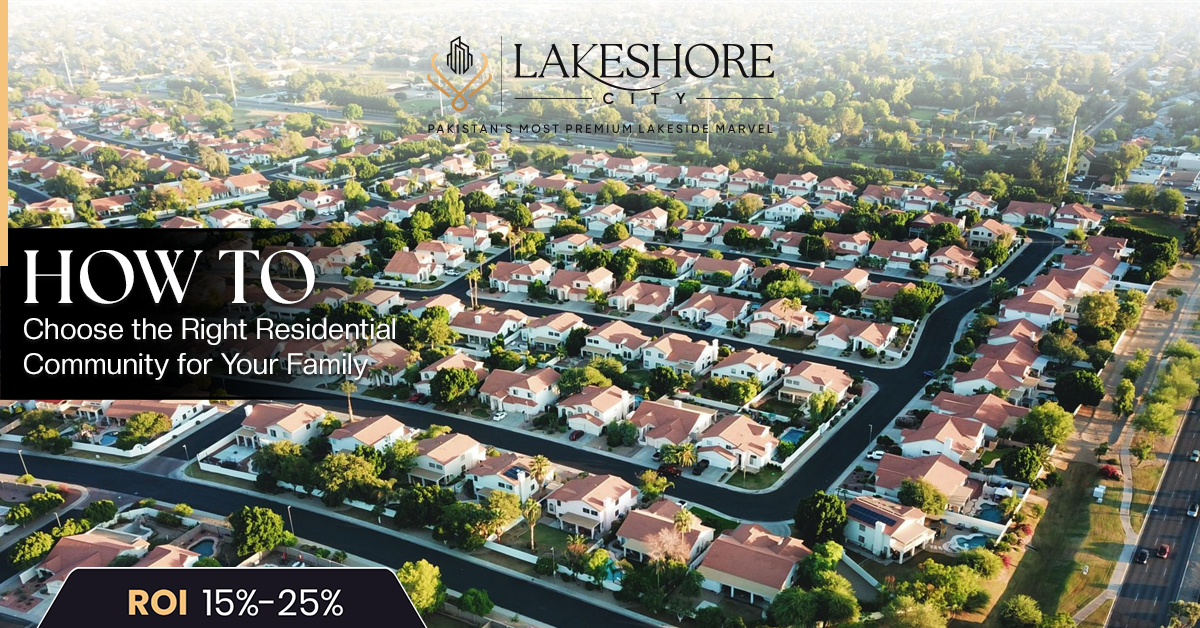
- Evaluate location, security, master planning, amenities, and developer credibility together — not in isolation.
- A genuinely family-friendly community combines safe streets, usable green space, and schools or healthcare nearby.
- Payment flexibility and a developer’s delivery track record matter as much as amenities for long-term value.
- Site visits and document verification remain essential before any booking decision.
Choosing a residential community in Pakistan is rarely a single decision. It is a series of smaller judgments about location, safety, planning, and long-term value that together decide whether a family will actually be comfortable living there years from now. Families searching for the best housing community for families often start with price and end up overlooking factors that matter more once they have moved in.
Start With Location and Accessibility
Before anything else, check how a community connects to daily life. A location close to major roads, the city center, and your workplace saves time every week and keeps resale demand healthy over the years. For families based in or around Islamabad, communities along established corridors — near dams, highways, or existing towns — tend to hold their appeal better than developments isolated from any surrounding infrastructure.
Look at the Master Plan, Not Just the Brochure
A housing society in Pakistan is only as good as its master plan. Ask how residential, commercial, and recreational zones are separated, how wide the roads are, and whether the plan accounts for growth over the next decade. Planned residential communities in Pakistan that publish clear sector maps and phase-wise development schedules give buyers something concrete to check, rather than a promise on a hoarding.
Security and a Genuinely Family-Friendly Environment
What makes a residential community family-friendly comes down to a few practical things: gated access, boundary walls, patrolled streets, and enough everyday activity in common areas that children are naturally supervised. Where possible, ask current residents how the community actually feels after dark, since this rarely comes through in marketing material.
Green Spaces and Everyday Lifestyle
Parks, walking trails, and open spaces are not decoration — they are where children play and where families spend their weekends. A community built around a lake, a park system, or a similar natural feature usually offers more usable open space by design than a purely grid-based housing scheme.
Schools, Healthcare, and Essential Facilities
Before buying, confirm what schools, clinics, and daily-use shops exist inside or near the community today, not what is planned for a later phase. A society still years away from completing its education or health sector may leave your family depending on nearby towns for these essentials in the meantime.
Recreation and Community Amenities
Clubs, sports facilities, and event spaces add real value to modern family living in Pakistan, provided they are operating rather than only rendered on a website. Lakeshore City, for example, positions its Lakeshore Club as a shared recreational hub for residents, with membership options that extend access beyond the immediate residential sector.
Infrastructure and Utilities
Reliable electricity, water supply, sewerage, and road surfacing are unglamorous but shape day-to-day comfort more than any clubhouse. Ask specifically which utilities are already installed in your target block, since infrastructure often lags behind the marketing timeline in newer societies.
Residential and Commercial Facilities
A community that includes its own commercial sector — shops, offices, and small businesses — reduces how often residents need to leave for basic errands, and it can support property value if the commercial area develops well. Buyers weighing a commercial plot alongside a residential one should review current commercial plot prices and what determines them before comparing blocks.
Property Value and Long-Term Potential
Residential community investment in Pakistan carries the same risks as any real estate: no fixed appreciation rate, no guaranteed timeline, and outcomes that depend heavily on how quickly a project actually develops on the ground. Buyers who verify development progress in person, rather than relying only on projected value, are generally better positioned than those chasing a fast resale.
Payment Flexibility and Affordability
Flexible instalment structures make homeownership realistic for more families, but the details matter more than the headline number. Review a project’s payment plan in full — booking percentage, instalment size, and any balloting or possession charges — before assuming a plot fits your budget.
Developer Credibility and Development Progress
Finally, check the developer’s track record: how many phases they have delivered, whether regulatory approvals are in place, and how transparent they are about current construction status. A site visit tells a buyer more in twenty minutes than a brochure does in twenty pages.
Where a Project Like Lakeshore City Fits In
Communities that combine a defined master plan, an active club sector, and phased residential options — such as Lakeshore Residencia — give families a concrete example of how these factors come together in practice. Even so, every project should be evaluated on its own current facts rather than general reputation.
Decision Factors at a Glance
| Decision Factor | What to Verify |
|---|---|
| Location & Accessibility | Proximity to main roads, city center, and workplace |
| Master Planning | Clear sector map, phased development schedule |
| Security | Gated access, boundary walls, patrolled streets |
| Green Spaces | Parks, walking trails, open community areas |
| Schools & Healthcare | What exists today vs. what is planned |
| Amenities | Clubs, sports facilities, event spaces — functioning, not just listed |
| Infrastructure | Electricity, water, sewerage, road surfacing already installed |
| Commercial Facilities | On-site shops and offices for daily needs |
| Property Value | Development pace, verified in person, not projected only |
| Payment Flexibility | Booking %, instalment size, balloting/possession charges |
| Developer Credibility | Delivered phases, approvals, transparency on progress |
Frequently Asked Questions
What should families consider when choosing a residential community?
Families should weigh location, security, master planning, green spaces, nearby schools and healthcare, amenities, infrastructure, and the developer’s track record together, since no single factor determines whether a community will suit long-term family life.
What makes a residential community family-friendly?
A family-friendly community typically has controlled access, active common areas, parks and open spaces, and functioning schools or healthcare nearby, rather than relying on any one amenity alone.
How important is location when buying a home?
Location affects daily commute time, access to essential services, and resale demand, which makes it one of the most consistent factors in long-term property value.
What amenities should a modern residential community provide?
Useful amenities include parks, clubs or recreational facilities, functioning schools and clinics, reliable utilities, and a commercial sector for everyday needs — ideally already operating rather than only planned.
How can buyers evaluate the long-term potential of a housing community?
Buyers should review the developer’s completed phases, current on-ground infrastructure, regulatory approvals, and payment terms, and treat any appreciation projection as an estimate rather than a guarantee.
Ready to Take the Next Step?
Families who find that a project’s location, planning, and amenities match their priorities can move forward directly. Those ready to proceed can complete the clients booking form, while anyone who wants more information first can register their interest and have the Lakeshore City team follow up with current details.