You have saved up. You are ready to move. And now you are staring at two options that could not feel more different.
One is a city apartment or plot — familiar, busy, close to everything. The other is a piece of land beside a lake, surrounded by mountains and quiet. One feels safe. The other feels exciting. But which one actually makes you more money over time?
This is not a simple question, and anyone who gives you a one-sentence answer is probably trying to sell you something. The right choice depends on your timeline, your goals, and — honestly — how much uncertainty you can stomach.
I have seen investors in Pakistan make serious wealth from both. I have also seen people buy in the wrong category for their situation and spend years waiting for a return that never quite arrived. So let me walk you through this properly.
1. Location Still Decides Everything — But Not the Way Most People Think
Ask any property professional in Pakistan what matters most and you will hear the same word three times: location. Fair enough. But location means different things depending on what you are trying to achieve.
City properties score on access. Schools, hospitals, offices, main roads — all of it within reach. That access creates consistent demand, which is why city rental markets rarely go cold.
Waterfront properties score on something harder to replicate: scarcity. There is a fixed amount of land next to a lake or a dam. You cannot build more of it. Once that land is developed and sold, prices for what remains tend to go in one direction.
The fundamental difference: city land is valuable because people need to be nearby. Waterfront land is valuable because there is not much of it — and that gap only widens as urban life gets more exhausting.
2. What Buying Near Water Actually Gets You
Setting aside the obvious appeal of waking up to a view of the water, there are real financial reasons why lakeside property investment in Pakistan is drawing serious attention right now.
You Are Buying Before the Market Catches On
Waterfront real estate in Pakistan is still early-stage compared to developed markets. The benchmark comparisons are instructive — early buyers near Dubai Marina or Danube riverfront communities in Europe bought at prices that looked expensive at the time and turned out to be cheap within a decade. Pakistan’s lakeside developments are at a similar inflection point.
The Supply Problem Works in Your Favour
No developer can manufacture more lakefront land. When demand grows — and it is growing, driven by domestic tourism and a generation of urban professionals who want somewhere to escape on weekends — prices for existing lakefront plots respond accordingly.
Two Ways to Generate Income
Waterfront properties give investors real flexibility:
- Long-term tenants — families and remote workers who want a permanent lifestyle change
- Short-term holiday rentals during peak seasons, long weekends, and school holidays
That flexibility matters. A city apartment is locked into one income model. A lakeside property near a tourist destination can switch between them based on what the market is doing.
Tourism Is Doing a Lot of the Work
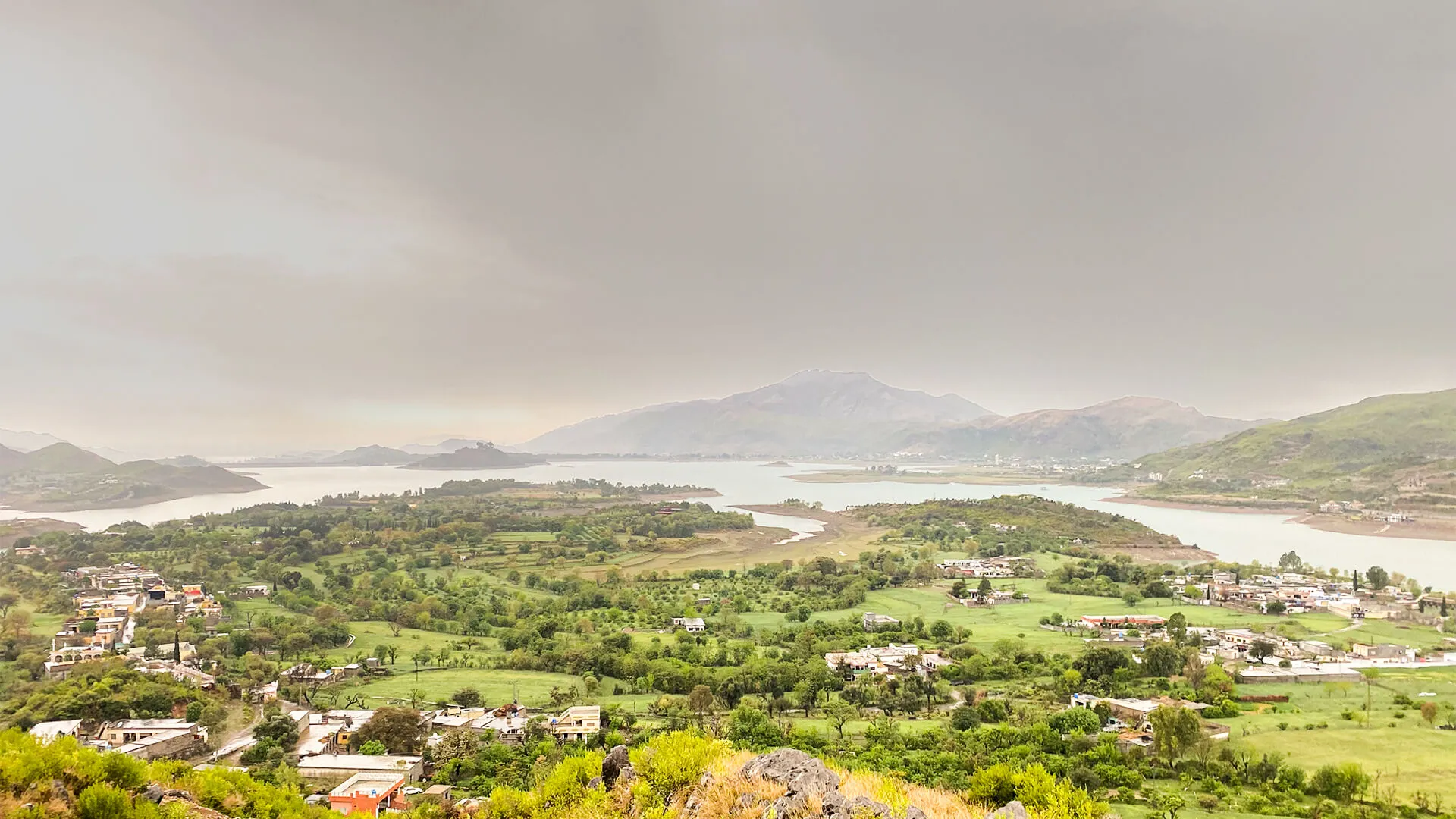
Pakistan’s domestic tourism has grown noticeably over the last several years. Places like Khanpur Dam, which were once weekend spots for locals in the know, now draw visitors from across the country. That consistent tourist traffic is a demand driver that city property simply does not have.
3. What City Property Investment Still Does Well
City investment gets a bad reputation in conversations like this one, which is unfair. It has real advantages — you just need to be clear about what they are.
Income From Day One
A city apartment or commercial space can start generating rental income within weeks of purchase. Demand is stable because there is always someone who needs to live or work in an urban centre. That predictability has real value.
You Can Exit Quickly
City property is liquid in a way that waterfront property is not yet. If something changes in your financial situation and you need to sell, the buyer pool in Lahore or Islamabad is far deeper than in an early-stage lakeside development. That liquidity is worth something.
Infrastructure Is Already There
You are not waiting for roads to be built or utilities to connect. The schools, hospitals, and commercial areas already exist. For families who want a primary residence, that certainty matters a great deal.
Commercial Flexibility
City plots often come with the option to convert to commercial use. That optionality adds value over time, especially in areas where retail and office demand are growing.
4. Long-Term Appreciation: Which One Actually Grows More?
This is the question that matters most, and the honest answer is: it depends on your timeframe.
Over one to three years, city property in an established area tends to show steadier, more predictable gains. The market is active, transactions are frequent, and price discovery is continuous.
Over five to fifteen years, the picture changes. Waterfront property near a growing tourism destination has historically outperformed city property in percentage terms — in Pakistan and in comparable markets elsewhere. The reasons are structural:
- Early-stage pricing means you are buying before institutional money arrives
- Tourism infrastructure — better roads, hotels, entertainment — lifts surrounding land values
- Urban fatigue is real; demand for quieter, nature-adjacent living keeps growing
- Supply stays fixed while demand compounds
A reasonable way to frame it: city property is more like a bond — steady, predictable, lower ceiling. Waterfront property in the right location is more like an equity position — more variable early, but higher potential over a long horizon.
5. Rental Income: A Realistic Side-by-Side
Pakistan does not have clean public data on rental yields by category, so I will be upfront that these figures are based on market observation rather than a government report. But they reflect what informed investors are actually seeing.
City Rental Income
- Consistent monthly income, 12 months a year
- Low vacancy in well-located units
- Typical yield: 4% to 7% annually in Islamabad, Lahore, Rawalpindi
- Easier tenant management with established property management infrastructure
Waterfront Rental Income
- Strong seasonal peaks — Eid holidays, summer, long weekends
- Short-term rates can be 3 to 5 times higher than monthly equivalents during peak periods
- Estimated yield in well-managed waterfront communities: 8% to 12%+ annually
- More management effort required, or a property manager needed
The honest trade-off: city rentals are easier to manage and more predictable. Waterfront rentals can generate significantly more — but require more active management or a reliable partner to handle bookings and maintenance.
6. Lifestyle Value Is a Real Financial Variable
Something tends to get skipped in investment discussions: the actual experience of owning the property.
A city apartment is functional. It generates income. When you visit it, you are visiting an asset. There is nothing wrong with that, but it is transactional.
A property near the water is something you actually use. Your family spends weekends there. You decompress after a difficult week. Your children remember it. Over time, that personal value compounds alongside the financial value in a way that is hard to quantify but very real.
I have spoken with investors who bought lakeside plots purely for ROI and ended up visiting every month. And I have spoken with others who bought for the lifestyle and were pleasantly surprised by how the financial returns followed. Both outcomes are common. Neither is an accident.
7. The Risks — And I Am Not Going to Understate Them
Every investment has downsides. Here are the ones that matter most for each category.
City Property Risks
- Oversupply is a real problem in parts of Islamabad and Lahore — too many similar units chasing the same pool of tenants
- Premium city locations are expensive to enter, which compresses your yield from day one
- Urban liveability is declining in some areas due to pollution and congestion, which affects long-term desirability
- Regulatory and zoning changes can alter a commercial property’s use case overnight
Waterfront Property Risks
- Early-stage developments have a thinner secondary market — selling quickly can be harder
- Income fluctuates with tourism seasons; an over-reliance on peak-period bookings creates cash flow gaps
- Infrastructure timelines in new developments can slip, which delays the return timeline
- Developer risk is real — projects have stalled in Pakistan when developers ran into financial or legal trouble
The single biggest risk in waterfront investment is picking the wrong developer. A credible track record, transparent financials, and a legally registered project are non-negotiable. Do not skip that due diligence.
8. Where Lakeshore City Fits Into This Conversation
I want to be straightforward about something: Lakeshore City is the client here, so you should weigh that accordingly. But the reason this project comes up in a conversation about waterfront vs city investment is that it genuinely sits at an interesting point in the market.
Lakeshore City is a master-planned development near Khanpur Dam — one of the more consistently visited natural attractions in the Potohar region, roughly 90 minutes from Islamabad. What separates it from a standard lakeside housing scheme is the scope of what is being built:
- Residential plots and farmhouses with direct dam views
- Commercial zones designed for the tourism economy — not just residential buyers
- Road access, utilities, and community infrastructure planned as part of the development
- A location close enough to Islamabad and Rawalpindi to function as a weekend retreat for the twin cities market
That last point matters more than it sounds. A waterfront project two hours from the nearest major city has a smaller addressable market. Ninety minutes keeps Lakeshore City within realistic weekend-trip distance for a large population — which directly supports both rental demand and resale value.
It is not the only waterfront project worth looking at in Pakistan, and I would encourage any buyer to compare options before committing. But in terms of the criteria that determine whether a waterfront investment performs over time — location, developer credibility, infrastructure scope, proximity to a tourism anchor — it checks the boxes that matter.
9. Waterfront Investment Is a Good Fit If…
Lakeside property makes sense for you if your situation looks like this:
- You are comfortable holding for five years or more without needing to sell
- You want a second property that your family can actually use, not just an asset on paper
- You are interested in the short-term rental market and willing to manage it — or hire someone who will
- You want to diversify out of city property, which you may already hold
- You believe Pakistan’s domestic tourism will continue growing, and you want to position ahead of that
10. City Investment Makes More Sense If…
City property is still the right call in several situations:
- You need rental income within the next 12 months and cannot wait for a market to develop
- You may need to liquidate in one to three years — waterfront markets are not set up for quick exits yet
- You have a specific near-term goal: school fees, a business investment, a loan repayment
- You want exposure to commercial real estate with zoning that is already established
There is no shame in the steady choice. Not every investment needs to be a ten-year horizon play.
11. Final Verdict: What Wins Long-Term?
If the question is purely about long-term appreciation over a decade or more, waterfront property — in the right location, with a credible developer — has the structural edge. Scarcity does not go away. Tourism demand does not reverse. And the price gap between early-stage waterfront and established city property narrows over time, usually in favour of the waterfront buyer.
If the question is about reliable income and flexibility over a shorter window, city property wins. The market is deeper, the income is steadier, and the exit is cleaner.
The more useful question, though, might be: why pick just one category? The investors I have seen build real wealth in Pakistan typically hold both — city assets for stability, waterfront assets for growth. If the budget only stretches to one right now, the honest answer is to figure out which problem you are solving. Need income today? City. Building wealth for the next decade? The water has a better argument.
Common Questions from Investors
Is waterfront property more expensive than city property in Pakistan?
Not at the entry level. Early-stage lakeside developments like Lakeshore City near Khanpur Dam are often priced lower than comparable plots in Islamabad or Rawalpindi right now. The appreciation potential over five to ten years, however, tends to be higher for waterfront — especially in locations with strong tourism fundamentals.
What is the rental yield difference between city and lakeside property?
City properties in major Pakistani cities typically yield 4% to 7% annually. Well-managed waterfront properties, particularly those near active tourist destinations, can reach 8% to 12% or more when short-term holiday rentals are factored in. The waterfront figure requires more active management to achieve.
Is property near Khanpur Dam a good investment right now?
The timing looks reasonable. Khanpur Dam sees consistent domestic tourism traffic, the road infrastructure serving the area has improved, and prices are still below what comparable waterfront developments eventually reach once they are fully built out. The risk, as with any early-stage development, is developer execution. Research that carefully before committing.
How is Lakeshore City different from a standard housing scheme?
The main difference is scope. A typical housing scheme sells plots and leaves buyers to figure out the rest. Lakeshore City is being developed as a planned community — with commercial zones, visitor infrastructure, and a tourism economy built into the design. Whether that translates into the promised returns depends on execution, which is why due diligence on the developer matters.
Can I earn rental income if I do not live at a waterfront property?
Yes. Most lakeside investors do not live on-site. Short-term rental platforms have made it practical to earn income from a property you visit occasionally, provided you have someone managing check-ins and maintenance. In tourist-heavy areas like Khanpur Dam, demand during peak seasons — Eid, summer, school breaks — is strong enough to cover annual costs and then some.
What is the biggest risk of buying in a new waterfront development?
Developer reliability. Infrastructure delays and stalled projects have been a real problem in Pakistani real estate. The mitigation is straightforward: check the developer’s completed projects, verify the legal status of the land, and read the sale agreement carefully before signing anything.