

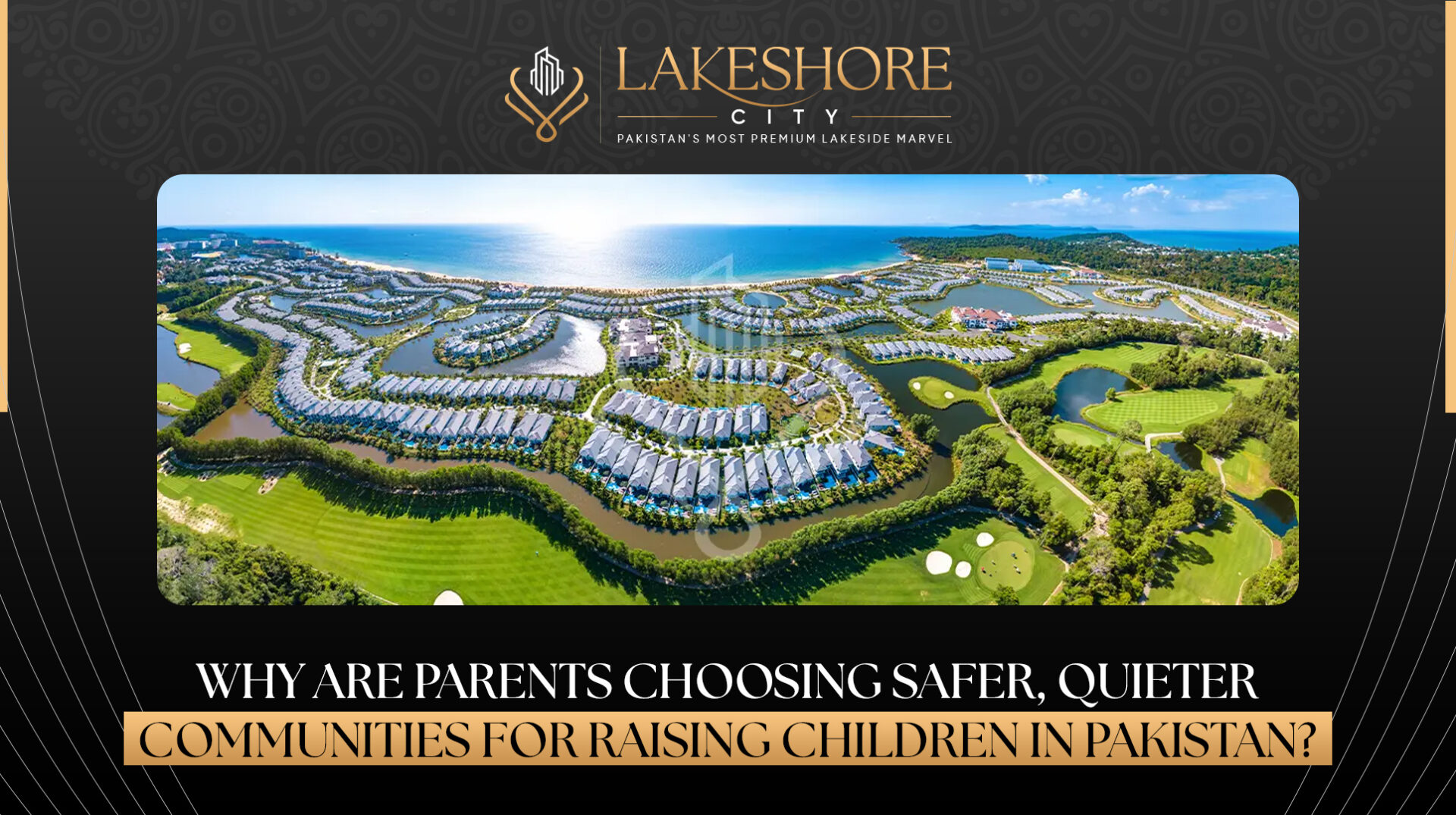
Parents are choosing safer, quieter communities because they want a stable, healthy, and stress-free environment for their children to grow up in. Across Pakistan, families are moving away from crowded, noisy neighborhoods and toward areas where safety, calm routines, and long-term well-being are easier to maintain. This shift is not about luxury. It is about daily life, peace of mind, and giving children a better foundation.
Over the past few years, parents have become more aware of how their surroundings affect behavior, health, and learning. As a result, housing decisions are now closely linked to child safety and emotional stability rather than convenience alone.
Why Safety Has Become a Top Priority for Parents
Safety is no longer seen as just locked gates or boundary walls. Parents now think about traffic flow, crowd control, visibility, and how children move around the neighborhood daily. In many urban areas, fast-moving traffic, unplanned streets, and constant noise increase risk and stress. Parents worry about children playing outside, walking to nearby areas, or even riding bicycles.
Safer communities reduce these concerns by offering quieter streets, predictable layouts, and fewer daily hazards. When parents feel their children can move freely without constant fear, it changes how families live and interact.
Are Planned Communities Safer for Children in Pakistan?
Planned communities are generally safer because growth is controlled and intentional. Roads, residential zones, and shared spaces are designed before people move in, rather than adjusted later. This planning reduces traffic congestion, limits overcrowding, and improves visibility.
Children are less exposed to unpredictable risks that are common in unplanned neighborhoods. Parents also benefit from knowing that development follows rules instead of changing randomly. While no place is risk-free, planned environments make safety easier to manage daily.
Also Read: How Does Access to Open Spaces Improve Mental Wellbeing in Modern Housing Projects?
What Makes Quieter Residential Areas Better for Children
Quieter areas support routine, focus, and emotional balance. Children learn better, sleep better, and feel more relaxed when their environment is not filled with noise, crowds, and pressure. In calm neighborhoods, daily life follows a natural rhythm. Homework time is less disturbed. Outdoor play feels safer.
Family interactions improve because stress levels are lower. Parents often notice that children become more patient, attentive, and socially comfortable in peaceful surroundings. Noise pollution may seem small, but over time, it affects concentration, mood, and overall well-being.
How a Peaceful Environment Supports Child Development
A peaceful environment allows children to develop emotionally and mentally without constant pressure. Children growing up in calm settings tend to feel more secure, which supports confidence and independence. When surroundings are predictable and safe, children are more likely to explore, ask questions, and engage with others.
Reduced stress also helps children manage their emotions more effectively, especially during early growth years. Over time, this shapes behavior, learning habits, and social skills in subtle but lasting ways. Many parents only realize the impact of environment on personality after seeing these positive changes firsthand.
Why Families Are Leaving Congested Urban Neighborhoods
Congestion increases stress, risk, and daily uncertainty. Many families living in dense city areas face constant noise, limited outdoor space, and heavy traffic. Over time, this affects both parents and children. Rising population density has also reduced privacy and increased pressure on basic services.
Parents feel they are constantly managing problems rather than enjoying family life. Moving to quieter communities becomes a way to regain control over daily routines and long-term stability. This shift is not sudden. It is a gradual response to lived experience.
What Defines a Child-Friendly Housing Society
A child-friendly community is one where safety, space, and calm living come together naturally. Instead of relying on restrictions, such societies are designed to support everyday family life through thoughtful planning.
Key features usually include:
- Clear and predictable road layouts that reduce confusion and risk
- Lower traffic movement, making outdoor play safer
- Open spaces that allow children to move freely and confidently
- Calm surroundings that reduce noise and daily stress
Equally important is the sense of security parents feel. When families trust their environment, children gain the freedom to grow, play, and learn with confidence. True child-friendly housing societies are shaped around daily routines and long-term well-being, not just visual appeal.
Conclusion
Parents in Pakistan are choosing safer, quieter communities because they understand how deeply environment shapes childhood. Calm surroundings support learning, emotional balance, and physical safety in ways crowded neighborhoods often cannot. This shift reflects practical thinking, not trend-following.
As families continue to prioritize long-term well-being over short-term convenience, many are quietly exploring well-planned communities near natural surroundings where safety, calm living, and future stability come together.
FAQs
Why are parents prioritizing safety when choosing housing communities?
Parents prioritize safety to reduce everyday risks linked to traffic, overcrowding, and noise. Safer communities allow children to move more freely and play with fewer hazards. This gives parents peace of mind and supports healthier daily routines.
What makes quieter residential areas better for raising children?
Quieter areas help children sleep better, concentrate more easily, and feel emotionally stable. Reduced noise lowers daily stress and creates a sense of security. Over time, this supports better learning habits and calmer behavior.
How does a peaceful environment impact child development?
A peaceful environment supports emotional control, confidence, and social development. Children in calm surroundings experience less stress and feel safer exploring their environment. This positively affects behavior, learning, and communication over time.
Are planned communities safer for children in Pakistan?
Planned communities are generally safer because roads, spaces, and residential zones are designed in advance. Controlled growth reduces traffic pressure and overcrowding. This makes daily movement more predictable and manageable for families.
Why are families moving away from congested urban neighborhoods?
Congested areas increase noise, stress, and safety concerns. Many families leave to escape constant traffic, limited space, and pressure on daily life. Moving to calmer areas helps restore routine, comfort, and long-term stability.
What factors define a child-friendly housing society?
A child-friendly society includes safe road layouts, low traffic flow, open spaces, and calm surroundings. Just as important is how secure parents feel about daily life. These factors together support healthy family living.