Sustainability in real estate is no longer limited to environmental factors. In modern property markets, sustainable housing projects in Pakistan are defined by long-term usability, consistent infrastructure, and the ability to support stable communities over time.
For buyers and investors, sustainability means choosing projects that remain functional, livable, and valuable even as market conditions change. In emerging markets, long-term value is closely linked to how well a project transitions from planning to actual settlement.
Legal Clarity and Structured Planning
A sustainable housing project begins with strong legal foundations. Approved layout plans, verified land ownership, and regulatory compliance reduce the risk of disputes and ensure long-term usability.
Projects that lack legal clarity often struggle with delayed development and reduced buyer confidence. In contrast, legally compliant developments tend to attract more consistent demand and maintain value stability over time.
Infrastructure That Supports Real Living
Infrastructure is one of the strongest indicators of long-term sustainability. Property value is not created by land alone, but by how effectively it is supported by utilities and accessibility. In most emerging markets, infrastructure development is the primary factor that converts land into a usable and investable asset.
Key elements include:
- Electricity, water supply, and sewerage systems
- Internal road networks and drainage
- Connectivity with major roads and nearby cities
In most cases, projects with visible infrastructure progress attract end users faster, helping stabilize prices and reduce speculative volatility.
Community Development and Demand Stability
A sustainable housing project evolves from investor activity to real community formation. When families begin to live in the area and businesses start operating, demand becomes more organic and less dependent on short-term trading.
Markets supported by real usage tend to perform more consistently than those driven only by buying and reselling activity. This transition from speculation to settlement is a key indicator of long-term value.
Accessibility and Urban Integration
Accessibility plays a critical role in sustainability. Projects that are well-connected to nearby cities are more likely to benefit from long-term demand.
As urban expansion continues, areas within practical driving distance of major cities often experience gradual integration into broader economic activity. This improves both livability and investment potential over time.
Long-Term Development Vision and Execution
A project’s sustainability depends on its ability to execute long-term plans, not just announce them. Phased development, expansion of facilities, and continuous infrastructure improvement are all signs of a project designed for lasting growth.
Projects that maintain consistent development momentum are more likely to build trust and retain value over time.
Role of Planned Developments in Sustainable Growth
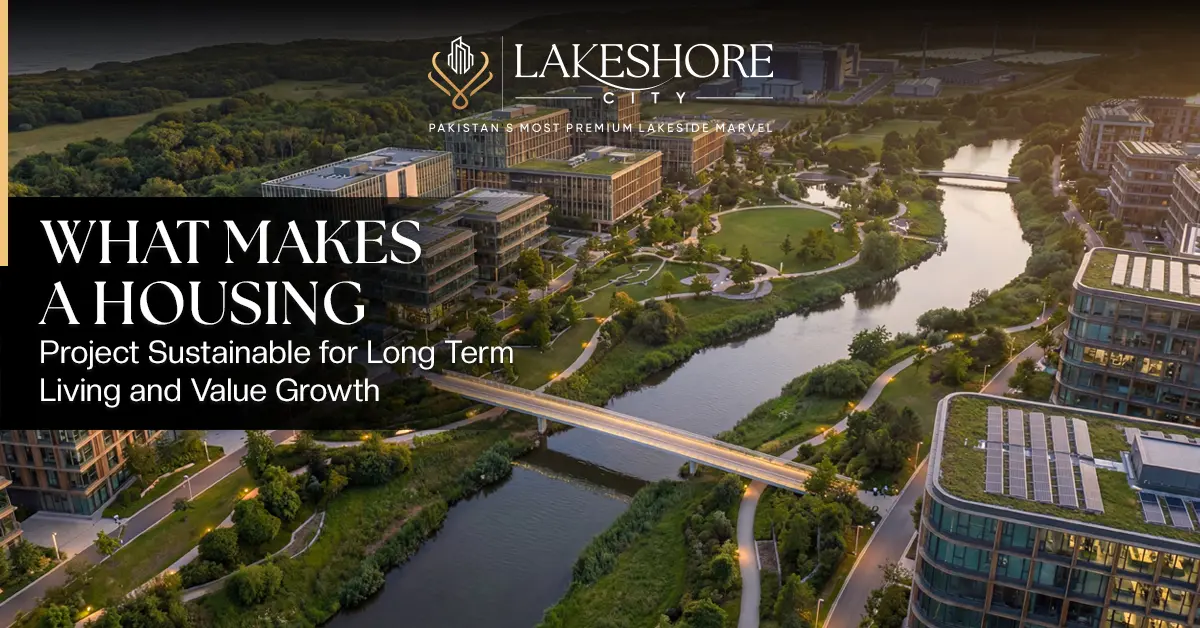
Modern planned communities aim to combine infrastructure, lifestyle, and long-term planning into a single framework. For example, developments such as Lakeshore City reflect this approach by integrating residential zones, commercial areas, and tourism-linked planning within a structured layout.
Such projects highlight how sustainability depends not only on design but also on consistent execution and real community development.
Also Read: Why More Families Are Leaving City Centers for Quieter Communities
Stability Over Speculative Growth
Sustainable housing projects are defined by stability rather than rapid price spikes. While short-term gains may occur in speculative markets, long-term value is typically driven by infrastructure, accessibility, and real demand.
Investors who focus on these fundamentals are more likely to achieve consistent returns over time.
Conclusion
Sustainable housing projects in Pakistan are built on legal clarity, infrastructure strength, accessibility, and long-term planning. These elements ensure that a project remains livable and valuable as it develops.
For investors and families alike, sustainability is not just about where a project is located, but how well it is planned and executed over time.
FAQs
What makes a housing project sustainable in Pakistan?
A housing project becomes sustainable when it has legal approvals, reliable infrastructure, strong community development, and long-term planning. These factors ensure that the project remains usable and valuable over time.
How does infrastructure affect long-term property value?
Infrastructure affects property value by improving accessibility, utilities, and usability. Projects with strong infrastructure attract more residents and businesses, which supports stable and gradual price growth.
Why is community development important in housing projects?
Community development is important because it creates real demand. When people live and work in an area, property value becomes more stable compared to markets driven only by investor activity.
Are planned housing projects more sustainable than unplanned ones?
Yes, planned housing projects are generally more sustainable because they include structured development, proper infrastructure, and long-term community planning, which supports consistent growth.
How can buyers identify a sustainable housing project?
Buyers can identify a sustainable project by verifying legal approvals, reviewing infrastructure progress, and assessing whether real community development has started. Projects with visible progress and clear planning are usually more reliable.