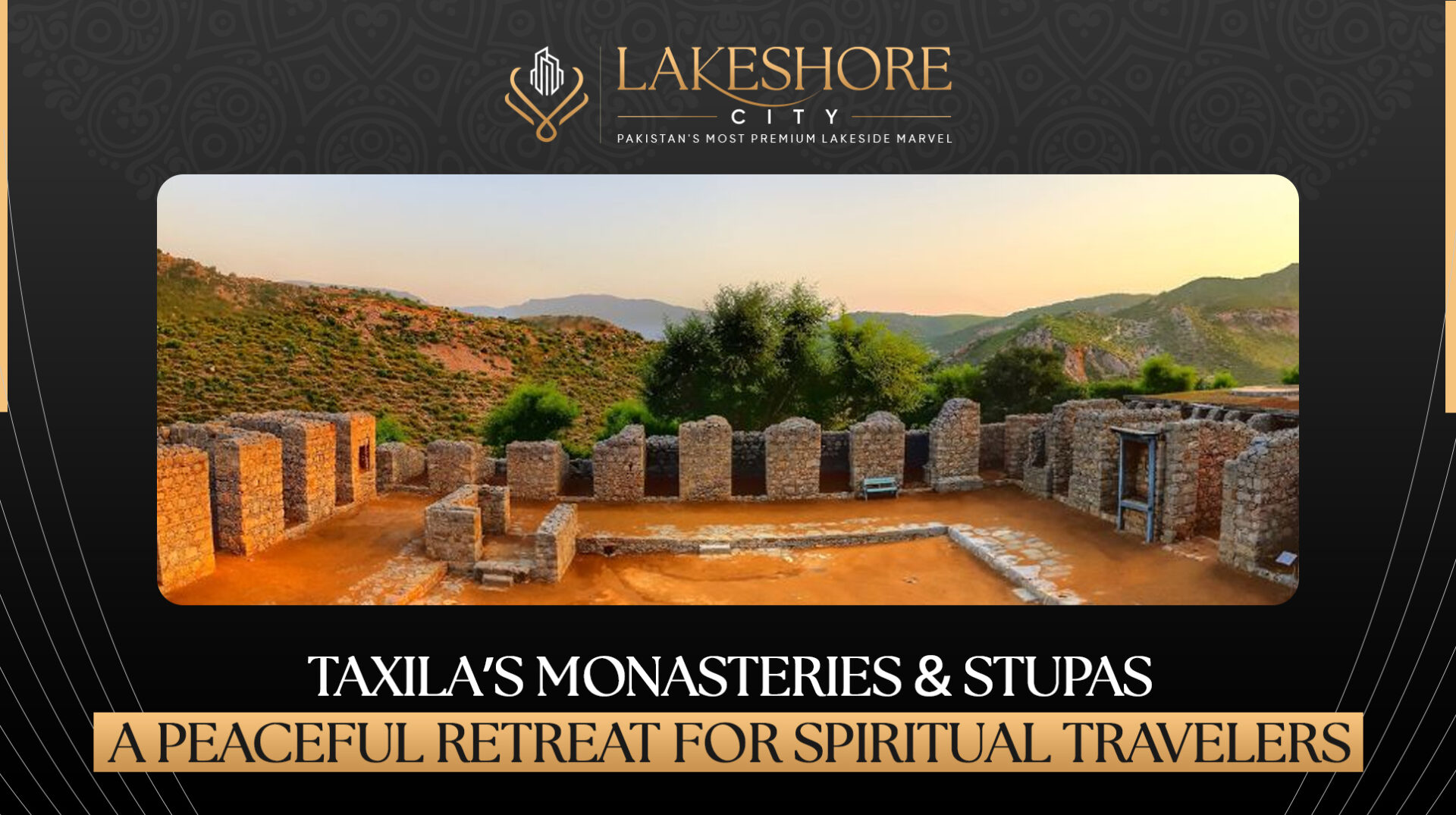
Taxila is one of the most peaceful and spiritually rich regions in Pakistan. Known for its ancient monasteries and sacred stupas, the area attracts travelers who seek calm, reflection, and cultural depth. Over time, spiritual tourism in Pakistan has grown steadily, and Taxila now stands as a key destination for Buddhist pilgrims and heritage lovers. Because of its quiet surroundings and historical value, the region offers a rare escape from modern-day noise and stress.
In this blog, we explore the spiritual importance of Taxila’s monasteries, the role of Buddhist stupas in Pakistan’s heritage, and how the peaceful environment around these sacred sites creates both spiritual and lifestyle value for visitors and residents alike.
The Spiritual Significance of Taxila Monasteries
Taxila monasteries were once major centers of learning, meditation, and spiritual growth. Monks from different regions gathered here to study Buddhist teachings and practice mindfulness. Even today, the ruins reflect silence, balance, and discipline. As visitors walk through these ancient spaces, a deep sense of calm is often felt.
Also Read: Lakeshore City at Pakistan International Tourism Conference 2025
Moreover, places like Jaulian, Mohra Moradu, and Dharmarajika offer open courtyards and meditation areas that naturally encourage reflection. Because of this peaceful atmosphere, spiritual travelers often return again and again.
Buddhist Stupas in Pakistan and Their Timeless Message
Buddhist stupas in Pakistan are symbols of peace, wisdom, and enlightenment. In Taxila, these stupas were built to preserve sacred relics and to serve as meditation points for monks and pilgrims. Even after centuries, their presence continues to inspire visitors.
Additionally, these stupas are surrounded by natural beauty, which strengthens their spiritual impact. As a result, many travelers describe their visit as calming and emotionally uplifting. This connection between nature and spirituality is what makes Taxila unique.
Gandhara Meditation Sites and Inner Peace
Taxila was a central part of the Gandhara civilization. Gandhara meditation sites were designed to support silence, focus, and learning. These locations were carefully chosen near hills and open land to create harmony with nature.
Today, spiritual tourists visit these sites to reconnect with themselves. Because the environment remains undisturbed, meditation and mindfulness practices feel more natural here. This is why Gandhara sites are often considered spiritual retreats rather than simple tourist attractions.
Spiritual Tourism in Pakistan Is Growing
Spiritual tourism in Pakistan is gaining international attention. Buddhist pilgrims from Sri Lanka, Thailand, China, Korea, and Japan regularly visit Taxila. At the same time, local travelers are also showing increased interest in heritage and spiritual journeys.
As tourism grows, nearby regions benefit from improved infrastructure and facilities. Therefore, areas close to Taxila’s sacred sites are becoming more attractive for long-term stays and peaceful living.
Living Close to Spiritual and Natural Landscapes
The region near Taxila combines spiritual heritage with natural beauty. Surrounded by majestic mountains and a beautiful dam view, the environment supports a calm and balanced lifestyle. Many people prefer living near such places because they offer mental peace and cultural connection.
Modern housing options nearby include residential plots, Lakeshore Residencia apartments, commercial areas, and Lakeshore Farms. Moreover, affordable plans make ownership easy. A 5 marla plot can be booked for only 25,000 PKR, with no down payment and no confirmation charges. This amount is also adjusted in the first installment, while the remaining payment is spread over easy 60-month installments.
Lakeshore City and the Spiritual Connection
Being located near Taxila’s monasteries and stupas gives this development a unique spiritual advantage. Residents can easily explore ancient sites, enjoy quiet surroundings, and live close to nature. As spiritual tourism continues to rise, the cultural and investment value of the area also strengthens naturally.
Conclusion
Taxila’s monasteries and stupas are more than historical remains. They are places of peace, learning, and spiritual renewal. As Buddhist tourism grows, these sacred sites are attracting travelers who seek calm and meaning. Combined with natural beauty and modern living options nearby, the region offers a rare opportunity for spiritual travelers and future-focused residents. Living close to such heritage allows people to enjoy both inner peace and long-term value.
FAQs
1. Why is Taxila important for spiritual tourism?
Taxila is home to ancient monasteries and Buddhist stupas that once served as major spiritual centers. These sites still offer calm surroundings and deep cultural value, which attract spiritual travelers from around the world.
2. Which monasteries are most visited in Taxila?
Popular monasteries include Jaulian, Mohra Moradu, and Dharmarajika. These sites are known for their peaceful settings and historical importance in Buddhist learning.
3. What makes the Gandhara meditation sites special?
Gandhara meditation sites were designed in harmony with nature. Their quiet locations, open spaces, and historical atmosphere make them ideal for reflection and mindfulness.
4. Is spiritual tourism growing in Pakistan?
Yes, spiritual tourism in Pakistan is increasing. More international pilgrims and local visitors are exploring Buddhist heritage sites, especially in Taxila and the surrounding areas.
5. Are there affordable living options near Taxila?
Yes. Buyers can book a 5 marla plot for only 25,000 PKR with no down payment and no confirmation charges. The payment plan also offers easy 60-month installments.
6. Why do people prefer living near spiritual sites?
Living near spiritual sites offers peace, cultural depth, and a balanced lifestyle. Many people feel mentally relaxed and emotionally connected when surrounded by such environments.