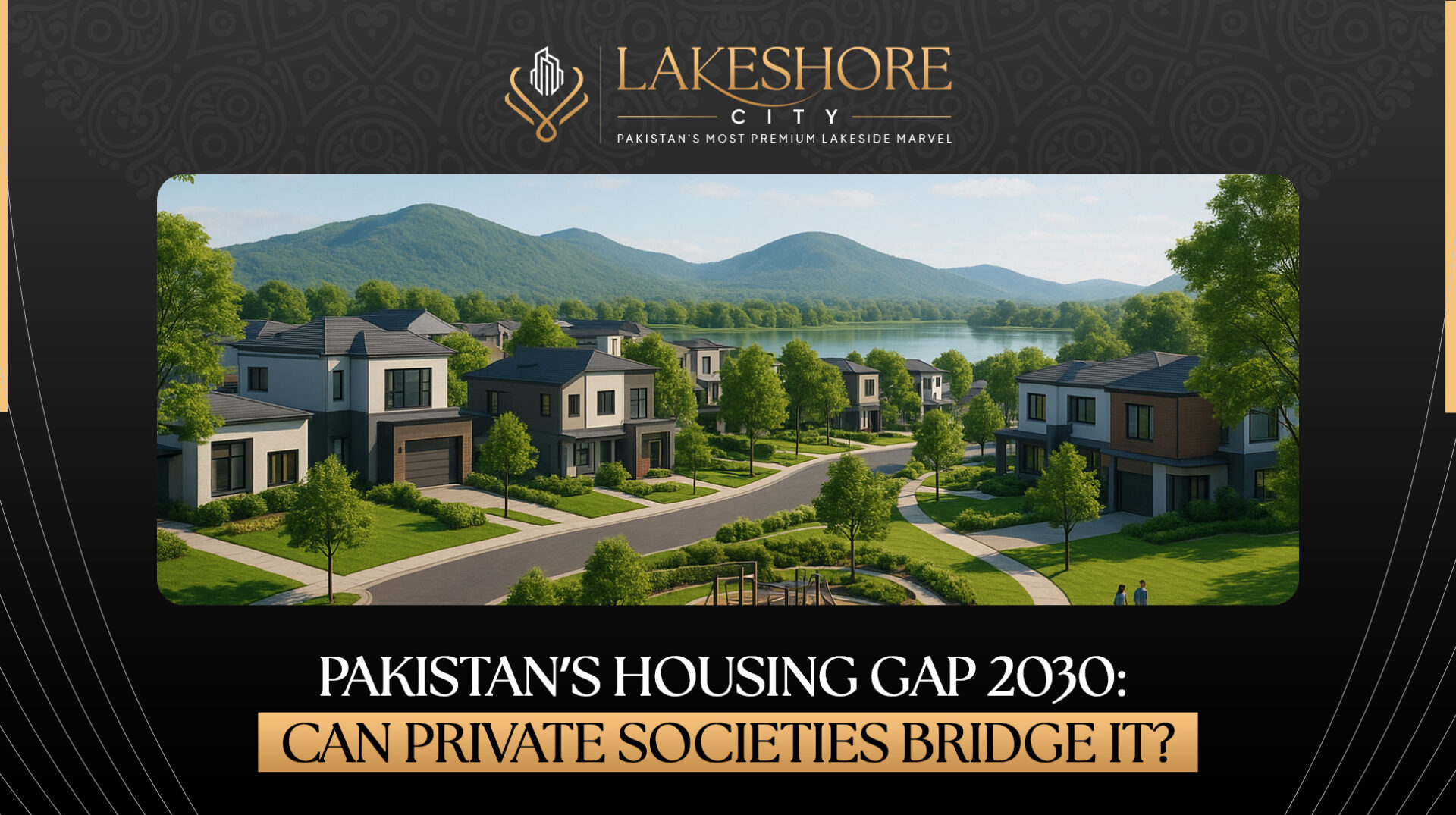
Pakistan is facing a growing housing challenge. According to estimates, by 2030, the country will have a shortfall of over 10 million housing units. This gap affects both urban and semi-urban areas, leaving millions without proper homes. Rising population, rural-to-urban migration, and limited government resources make it difficult to meet demand through public projects alone.
Consequently, private housing societies have emerged as crucial players. They provide not only residential solutions but also commercial and lifestyle-oriented developments. These societies combine affordability, modern infrastructure, and secure investment options, making them an attractive alternative for homebuyers and investors alike.
The Growing Housing Gap in Pakistan
Pakistan’s population is increasing every year. As more people move toward cities for education, jobs, and better living conditions, the demand for housing continues to rise. However, the supply is not increasing at the same pace. This widening difference creates what experts call the housing gap.
Also Read: IMF Agreements and Real Estate: How Economic Policy Impacts Property Prices
Rapid Urbanization and Limited Space
Cities such as Karachi, Lahore, Islamabad, and Rawalpindi are expanding quickly. New families are forming, and more people are shifting to urban centers. Yet, land within city limits is limited. Because of this, housing becomes expensive, and middle-income families struggle to find affordable homes.
Key Factors Behind the Housing Shortage
1. Increasing Family Sizes
Most households in Pakistan are joint or extended families. Over time, as children grow and start their own families, the number of required housing units increases. Thus, demand grows faster than supply.
2. Migration from Rural to Urban Areas
Young people move to cities for better job opportunities. Therefore, the number of urban residents grows every year. However, new houses are not being constructed fast enough.
3. Limited Government Land for Housing Projects
Government housing schemes exist, but the land available for large-scale public housing projects is limited. Because of this, development cannot match population growth.
Also Read: The Role of Religious Tourism in Property Price Growth
4. Rising Construction Costs
Prices of cement, steel, labor, and land continue to rise. As a result, even when development is possible, affordability becomes difficult for the average family.
Consequences of the Housing Gap
If the housing gap remains unaddressed, many families will continue to live in informal settlements, slums, or rented houses. Furthermore, property prices in major cities will keep rising, making homeownership more difficult, especially for the middle and lower-middle class.
Role of Private Housing Societies
Private housing societies are stepping in where public initiatives are unable to meet demand. They are becoming a strong solution to Pakistan’s housing shortfall by offering structured, planned, and affordable residential communities.
Modern Infrastructure and Community Planning
These societies are designed with a proper master plan. Roads, drainage, schools, parks, and commercial areas are included from the beginning. Because of this, families can enjoy a modern and comfortable lifestyle.
Secure and Organized Living
Most private societies are gated and have 24/7 security. They also provide a peaceful environment away from city noise, which improves the overall quality of life.
Investment Opportunity for Everyone
Private societies are not only for end-users. Investors also find them attractive because property prices increase as development progresses. This makes such projects strong real estate investment opportunities in Pakistan.
Flexible and Easy Payment Plans
One of the biggest advantages is affordability. Many societies offer installment-based plot purchasing. This allows working families to plan their budget and still own property without feeling burdened.
Scenic and Eco-Friendly Locations
Because central city space is expensive, many societies are developed near scenic landscapes like lakes, mountains, and green belts. This also helps reduce population pressure on city centers while offering healthier living environments.
Why Private Societies Are the Solution
Private housing societies are not just providing homes, they are reshaping the way people live in Pakistan.
1. Rapid and Efficient Development
Unlike government housing schemes, private developers usually finish projects faster due to better management and private funding. Therefore, residents and investors benefit sooner.
2. Strong Investment Returns
Property values in planned societies generally increase over time. Because of secure infrastructure and demand, these developments often offer high ROI (Return on Investment).
3. More People Can Afford Homes
Through installment plans, even middle-income families can own houses. Consequently, private societies help reduce the housing gap directly.
4. Complete and Sustainable Communities
With schools, hospitals, playgrounds, and commercial zones, these societies function as self-sufficient neighborhoods. Residents don’t need to travel far for daily needs.
5. Spreading Urban Growth
By developing areas outside crowded city centers, private societies help distribute the population evenly. This reduces traffic, pollution, and pressure on existing cities.
Conclusion
Pakistan’s housing gap in 2030 is a pressing challenge. Government initiatives alone are insufficient. Private housing societies, through affordable payment plans, modern infrastructure, and strategic locations, can bridge this shortfall. Investing in such societies allows individuals to secure homes while contributing to national housing solutions.
With careful planning and continued development, private societies will remain key to solving Pakistan’s housing challenges while offering sustainable urban living.
FAQs
1. What is the housing gap in Pakistan by 2030?
Estimates suggest Pakistan will face a shortfall of over 10 million housing units by 2030 due to urbanization and population growth.
2. Can private housing societies solve this shortfall?
Yes, private societies offer planned communities, flexible payment plans, and modern infrastructure, helping to bridge the gap effectively.
3. Are installment plans available for all plots?
Many private societies provide long-term installment options, some up to 60 months, making homeownership affordable for more people.
4. What types of properties do private societies offer?
Most offer residential plots, commercial areas, and farmhouses, catering to both investment and lifestyle needs.
5. How do private societies benefit investors?
They provide secure investments with potential property value appreciation and rental income opportunities.
6. Why are scenic locations important in housing societies?
Scenic locations improve quality of life, attract residents, and increase property value, contributing to sustainable urban development.