
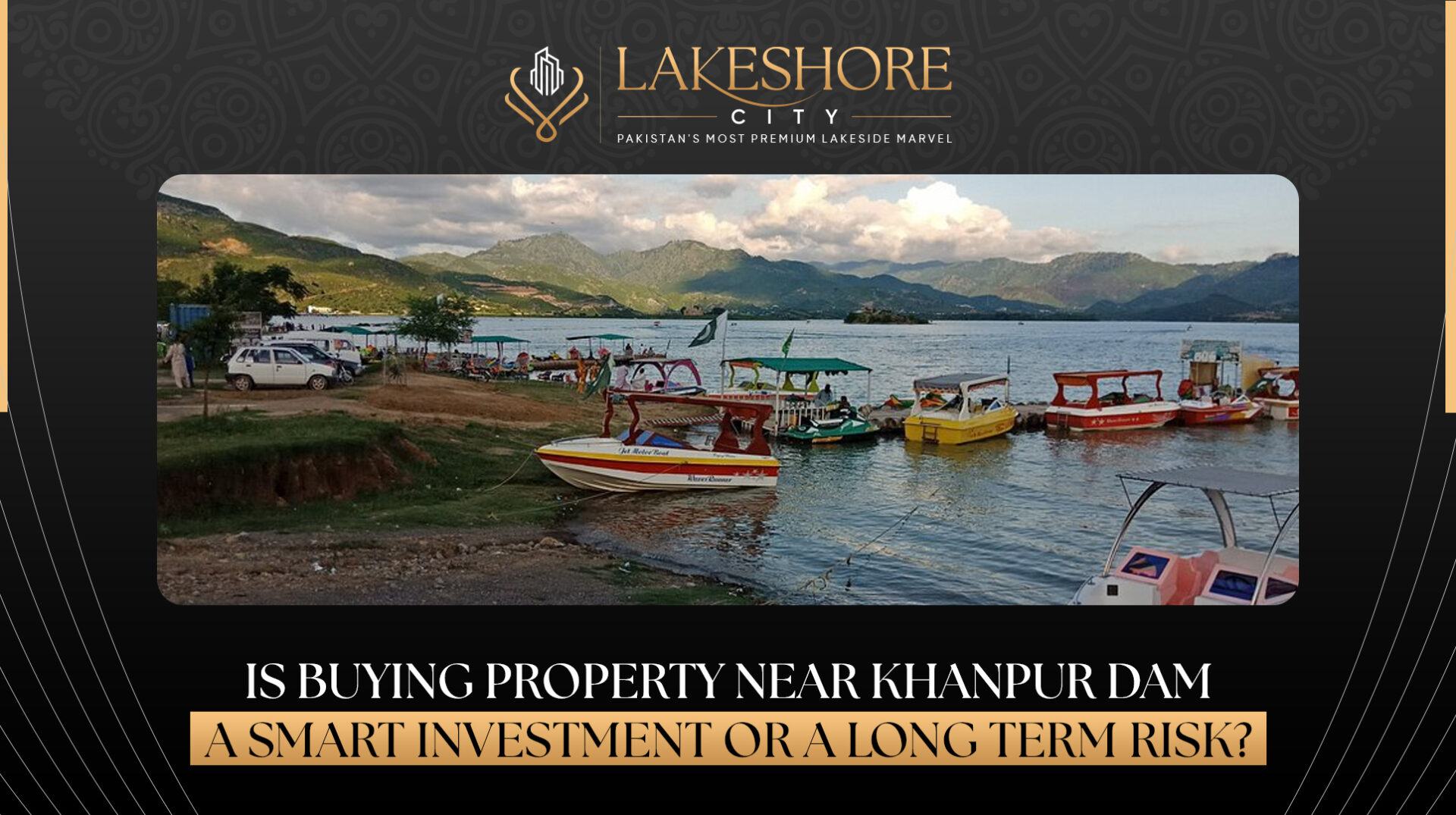
Scenic real estate markets often generate strong attention. Natural landscapes, tourism flow, and proximity to major cities create emotional appeal. However, experienced investors understand that attractive views alone do not guarantee sustainable value.
The real question is whether property investment near Khanpur Dam represents structured long-term potential or carries risks that require careful evaluation. Smart investors focus on structure, legal clarity, and development momentum before committing capital.
Islamabad’s Expansion and Peripheral Growth Trends
Islamabad’s prime sectors have reached pricing maturity. As affordability tightens inside the capital, expansion gradually shifts outward toward connected corridors.
Regions within practical driving distance are attracting attention due to motorway connectivity, lower entry points compared to central Islamabad, rising interest in second homes, and lifestyle-driven migration. Over the past few years, buyers priced out of central sectors have increasingly explored planned communities beyond the city core.
However, outward expansion alone does not create appreciation. Growth becomes sustainable only when supported by infrastructure, utilities, and steady population movement.
Tourism vs Residential Demand: What Actually Drives Value?
Visitor traffic can create early momentum. Tourism increases visibility and may support short-term rental demand. However, long-term appreciation depends on consistent residential occupancy.
Seasonal tourism cannot replace permanent infrastructure, schools, healthcare access, and commercial activity. Investors should assess whether the area is evolving beyond recreation into livable, serviced development. That transition determines whether prices stabilize or stall.
Execution Defines Value, Not Location
Location may attract attention, but infrastructure determines sustainability. In emerging markets, appreciation follows construction progress, not marketing brochures. Disciplined investors evaluate measurable indicators such as connectivity, internal road networks, utility readiness, structural planning standards, and community infrastructure development.
The gap between visible execution and prolonged announcements often defines long-term market strength. Projects demonstrating consistent on-ground progress tend to build confidence gradually, while conceptual projects struggle to sustain momentum.
In this context, for example, projects like Lakeshore City illustrate how execution-led planning can strengthen investor confidence in developing corridors. When road networks, utilities, and community facilities move beyond concept into tangible progress, the real estate market begins to mature more predictably.
Where Investors Can Miscalculate
Emerging corridors rarely fail because of location. They struggle when expectations are unrealistic.
Before committing capital, investors should consider that infrastructure timelines may extend beyond projections, early oversupply can slow resale momentum, liquidity during initial phases may remain limited, and tourism does not automatically convert into permanent residency.
If price growth stabilizes instead of accelerating, short-term strategies face pressure. This type of market rewards patience, not impulse.
How Value Actually Builds in Emerging Corridors
Price growth in peripheral markets rarely happens overnight. It develops in stages, beginning with announcements and early investor positioning, followed by infrastructure execution, gradual residential absorption, commercial activation, and eventual market consolidation.
The region is moving beyond early speculation toward infrastructure-led development in selected projects. If execution continues consistently, appreciation is more likely to compound steadily rather than spike abruptly. Measured growth tends to be more durable than hype-driven acceleration.
Buyer Psychology: Aligning Expectations with Reality
In emerging scenic markets, buyers generally fall into three broad categories. Lifestyle buyers seek peaceful, low-density environments near the capital and prioritize long-term living.
Long-term investors understand that infrastructure takes time and are prepared to hold property for several years while development matures. Short-term traders, however, enter during early excitement expecting rapid price increases.
Historically, long-term holders perform better in developing corridors. Real estate markets need time to stabilize, and infrastructure rarely progresses overnight. Aligning expectations with realistic development timelines is therefore essential.
Smart Investment or Long-Term Risk?
It depends on the approach. It becomes a smart investment when development is visible on the ground, legal documentation is clear, and the holding period aligns with realistic infrastructure timelines. In emerging areas, the real estate market strengthens gradually, not instantly.
It becomes risky when decisions are driven by excitement, short-term gains are prioritized, and execution quality is ignored. Scenic appeal attracts attention, but consistent development creates real market stability.
Conclusion
Investing in property near Khanpur Dam is neither automatically a smart opportunity nor inherently a long-term risk. The outcome depends on execution, infrastructure progress, and disciplined expectations.
In this corridor, market strength will be defined by development delivery, not tourism visibility alone. Scenic appeal creates attention, but infrastructure and residential growth create stability.
Emerging markets reward those who understand development cycles and align their strategy accordingly. Treat it as a structured, long-term positioning decision, not a tourism-driven speculation.
FAQs
Is buying property near Khanpur Dam a safe investment?
Buying property near Khanpur Dam can be safe if the project has legal approval, visible infrastructure progress, and structured planning. Safety depends more on development execution than on scenic appeal. Investors should verify documentation and on-ground progress before committing.
What are the main risks of investing near Khanpur Dam?
The main risks include delayed infrastructure development, oversupply in early phases, limited liquidity during initial years, and seasonal demand fluctuations. Investors expecting quick resale gains may face longer holding periods if development moves gradually.
Does tourism increase property value near Khanpur Dam?
Tourism can increase visibility and short-term rental demand. However, long-term property value depends on permanent residential growth and infrastructure completion. Tourism alone does not guarantee stable appreciation.
Is property near Khanpur Dam good for long-term investment?
Property in developing corridors can offer gradual long-term growth if infrastructure continues improving and residential demand increases. Investors should approach it with a medium- to long-term horizon rather than expecting rapid price spikes.
Who should invest in property near Khanpur Dam?
This type of market suits long-term investors, lifestyle buyers, and those diversifying outside central Islamabad. Short-term traders should carefully assess liquidity risk and development timelines before investing.
Is living near Khanpur Dam suitable for families?
Living near Khanpur Dam can be suitable for families if the development provides utilities, security, healthcare access, and connectivity to schools and commercial areas. Livability depends on infrastructure maturity.
How does development affect property prices near Khanpur Dam?
Infrastructure development directly impacts property prices. Visible roads, utilities, and community facilities reduce risk perception and build buyer confidence. Consistent execution typically supports gradual and stable price growth.